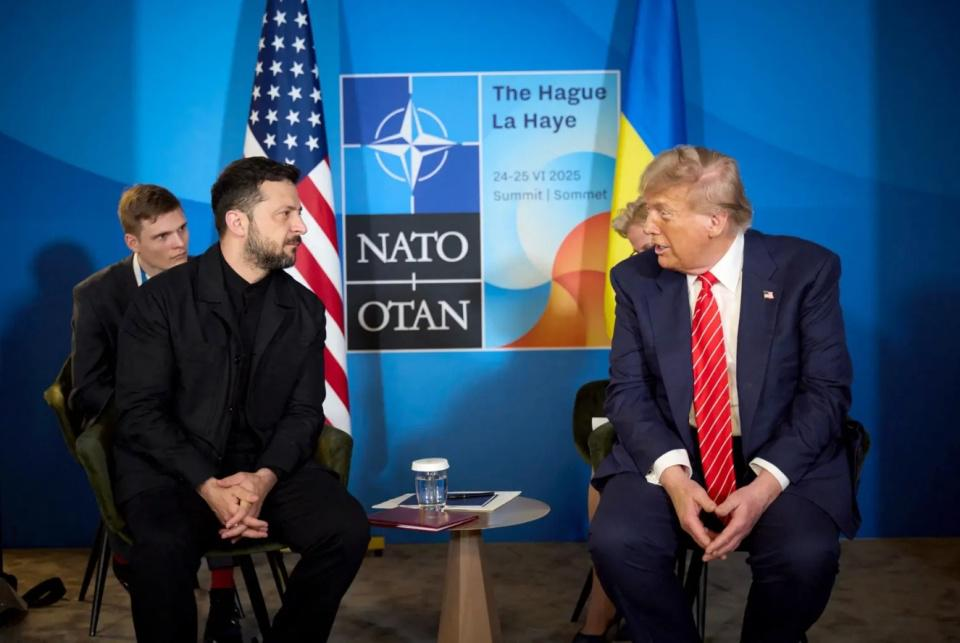
I. Deal Background & Key Terms
- Complementary Strengths
Zelensky noted that hundreds of drones daily have transformed air warfare in Ukraine, where Kyiv has mastered swarm tactics and long-range strikes. The U.S., by contrast, lags Russia and Iran in small tactical UAVs but fields world-class missile, radar, and naval systems. The two sides aim to exchange drone know-how for U.S. weapons to mutual advantage. - Proposed Structure
- Ukraine Provides: Design schematics, source code, and operational data for suicide and swarm drones.
- U.S. Provides: Patriots, naval anti-ship missiles, short-range rocket defense systems, and other precision arms.
- Knowledge Transfer: Ukrainian engineers deploy to U.S. test sites for trials and training; select U.S. defense plants produce drones under license.
II. Ukraine’s Combat Drone Edge
- Operation “Spider Web”
In October, 117 Ukrainian drones simultaneously destroyed over twenty Russian bombers at four bases, proving swarm strikes can overwhelm heavy defenses. - Precision Long-Range Strikes
This year a Ukrainian drone flew 1,280 km to demolish an air-defense factory in Izhevsk, then maritime drones downed a Russian Su-30 over the Black Sea. - Rapid Iteration Loop
Inspired by Iran, Russia deployed kamikaze UAVs; Ukraine responded by fast-tracking upgrades in signal jamming, low-altitude penetration, and miniaturized munitions, creating a tight develop-test-field feedback cycle.
III. U.S. Drone Capability Gaps & Urgency
- Field Test Failures
Defense Innovator Trent Emeneck admitted U.S. soldiers repeatedly failed to intercept prototype drones in Alaska, even accidentally downing friendly targets—exposing sensor and autonomy shortfalls. - Bureaucratic Hurdles
Defense Secretary Pete Hegseth ordered streamlined approval and production after lamenting, “Adversaries have mass-produced millions of cheap drones while we’re mired in red tape.” Acquiring Ukraine’s proven systems could close the tactical gap swiftly. - Multi-Domain Roles Needed
With unmanned ships and electronic-warfare drones emerging, the U.S. military needs small UAVs for reconnaissance, decoys, and precision strikes across land, sea, and air domains.
IV. NATO Partners & Geostrategic Impact
- Allied Follow-On Deals
Zelensky said Ukraine is also in talks with Denmark, Germany, and Norway for similar swaps. A U.S. breakthrough could prompt rapid UAV upgrades across NATO. - New Aid Paradigm
Swapping high-value technology for weapons may become a model: it reduces budget strain and protects sensitive designs while supplying frontline arms. - Long-Term Security Gains
For the U.S., integrating Ukraine’s drones strengthens posture in the Indo-Pacific, Ukraine front, and Middle East; for Kyiv, it cements air-power ahead of future counteroffensives.
Ukraine’s proposal to trade its battle-tested drone expertise for U.S. precision arms marks a tactical leap and introduces a novel “tech-for-weapons” framework in modern warfare. If the “UAV-for-arms” mega-deal closes, it will redefine U.S.–Ukraine cooperation, supercharge NATO’s unmanned arsenal, and reshape future security assistance.