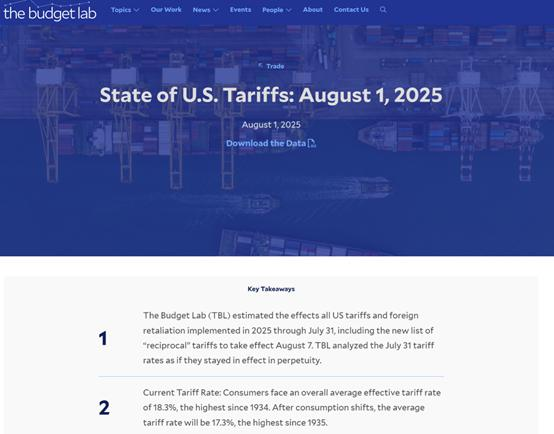
Following President Trump’s July 31 executive order imposing sweeping “reciprocal tariffs” on multiple countries, American consumers are now facing the steepest tariff burden in nearly a century. A new study released on August 1 by Yale University’s Budget Lab shows the average effective US tariff rate has surged to 18.3%—the highest since the Reciprocal Tariff Act of 1934.
1. Rising Tariffs to Cost Families Thousands
The study estimates that US households will spend an additional $2,400 on average in 2025 due to the new tariff regime, with clothing and footwear among the most affected categories. In the short term, shoe prices may rise by 40% and clothing by 38%. Even in the long run, prices are expected to remain elevated by 19% and 17%, respectively.
While consumers may mitigate some of these costs by switching to cheaper products, the average burden is still projected to hover around $2,000 per household.
2. Economic Growth Slows, Job Market at Risk
Using a “real-time policy” model—assuming that existing policies will remain in place long-term—Yale’s analysts forecast a 0.5 percentage point reduction in real GDP growth for both 2025 and 2026. Meanwhile, unemployment is expected to rise by 0.3 percentage points by the end of 2025, and by 0.7 percentage points by the end of 2026.
These warnings come amid unexpectedly weak job growth data released last Friday, adding to concerns that American families may soon face a tougher economic environment.
3. Tariff Details: 10% to 41%, Effective August 7
Trump’s executive order outlines tariff rates ranging from 10% to 41% on imports from various countries and regions, with most taking effect on August 7. Several trading partners have already vowed retaliatory tariffs, heightening global trade tensions.
Conclusion:
While the US aims to use tariffs to restructure its manufacturing landscape, the immediate cost is being borne by ordinary consumers. Yale’s report serves as a stark reminder of how quickly trade policies can ripple through the economy, showing up as higher bills for families and job insecurity across the country.