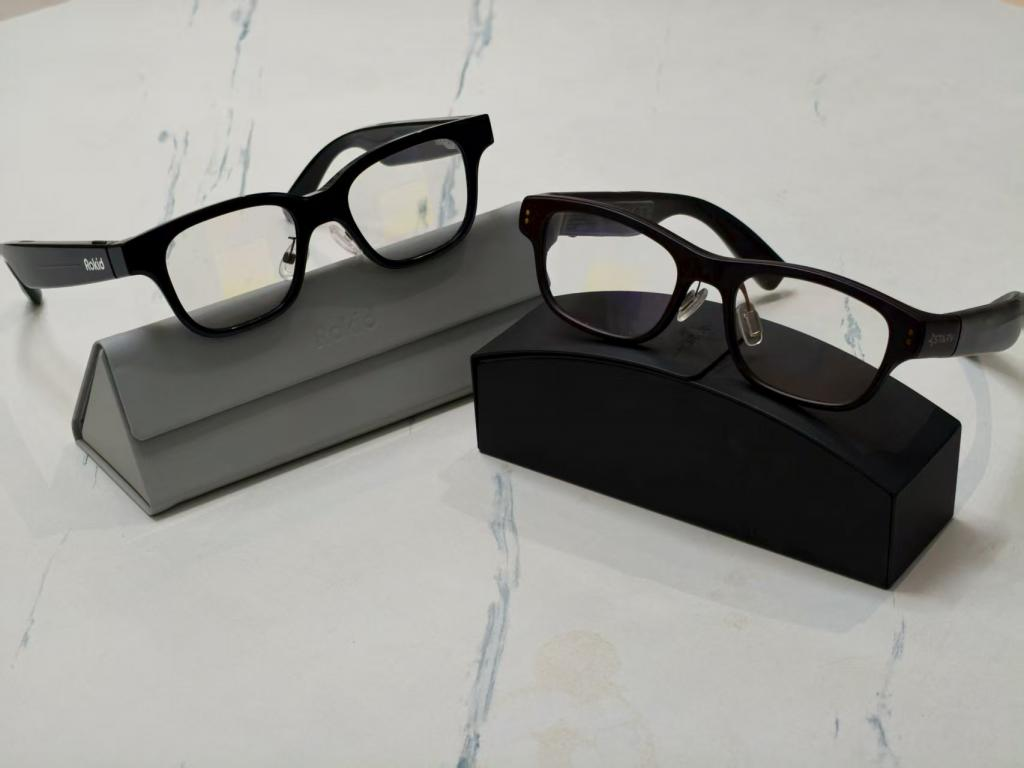
Once seen as tech enthusiast toys, smart glasses are finally becoming functional in 2025. With Meta’s Ray-Ban collaboration making waves globally, Chinese brands like ThunderBird, Meizu, Rokid, and Xiaomi are launching their own takes—each with a different approach: some focus on imaging, others on AR displays, and some aim to become full-time AI companions.
雷科技 tested five of the most representative smart glasses on the market across multiple key areas:
- Meta Ray-Ban Wayfarer
- ThunderBird V3
- Rokid Glasses
- Meizu StarV Air2
- Xiaomi AI Smart Glasses
1. Comfort: Meizu and Rokid Lead, Meta Struggles
Meizu’s StarV Air2 and Rokid Glasses ranked highest for comfort among 10 testers. Meizu’s larger frame and flatter design appealed to many, while Rokid’s flexible hinge and classic Wayfarer look also scored well.
Meta Ray-Ban fared the worst due to its Western-centric design, ill-suited for Asian facial features.
2. Camera Capabilities: Rokid and Meta Excel, Others Lag
All glasses except Meizu’s include cameras. Rokid and Meta delivered the most natural photos and stable video. ThunderBird V3’s HDR was overly aggressive, and Xiaomi’s video suffered from motion blur—though sharpness was decent.
3. AI Performance: Chinese Brands Deliver, Meta Is Basically “Mute” in China
Meta glasses provide only basic features (photos, video, music) and lack Chinese language or AI support. In contrast:
- Xiaomi’s Xiao Ai assistant performs well, but sometimes talks too much.
- Rokid delivers reliable interaction with visual object recognition and display-based translation.
- ThunderBird has improved post-updates, now supporting contextual memory and useful features like parking spot reminders.
- Meizu, while lacking a camera, still offers smooth voice-based AI—ideal for those valuing privacy and battery life.
4. Display & Audio: Rokid for AR, Meta for Audio
Only Rokid and Meizu feature optical waveguide displays. Both are bright and clear, even outdoors, but Rokid’s center-aligned display felt more intuitive.
Surprisingly, Meta’s audio performance was top-tier—loud, crisp, and with excellent leak control, sounding more like high-end headphones than smart glasses.
5. Battery & Accessories: Xiaomi Lasts Longer, ThunderBird and Meta Offer Charging Cases
Battery life is mediocre across the board. Xiaomi performs best. ThunderBird drains quickly but, along with Meta, is one of the only brands offering a charging case.
Meta’s case is higher quality but harder to use, while ThunderBird’s is more practical.
Conclusion: Which Glasses Are Worth Buying?
If you want well-rounded functionality, Rokid Glasses are the best choice—offering solid imaging, AI, display, and wearability.
If budget is a concern, Meizu StarV Air2 (lightweight, no camera) and ThunderBird V3 (with camera, no display) offer good trade-offs.
Xiaomi’s AI Glasses are disappointing in design and material quality, feeling like a prototype from years ago.
Meta Ray-Ban is only suitable if you're overseas and tech-savvy enough to bypass its regional restrictions. For most Chinese users, it’s a stylish but hollow shell.
In short, the smart glasses market is splitting between lightweight and all-in-one. But as tech matures, the future clearly belongs to the all-in-one category—poised to be the next iPhone of wearables.