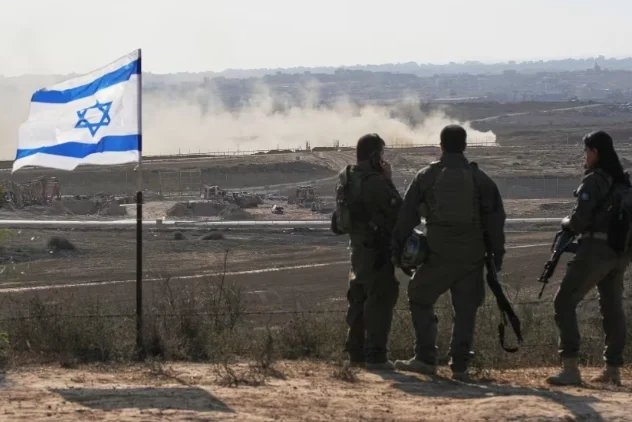
On August 4, multiple international media outlets reported that Israeli Prime Minister Benjamin Netanyahu is preparing to move forward with a controversial and aggressive military strategy — the full occupation of the Gaza Strip. This development comes as Israel continues to face international condemnation over the worsening humanitarian crisis in Gaza.
According to CNN, negotiations regarding a ceasefire and hostage release have stalled. While Hamas insists that any renewed dialogue must begin with resolving the humanitarian disaster in Gaza, Israel appears inclined to ramp up military pressure instead.
Israeli news outlet Ynet reported that Netanyahu plans to convene a security cabinet meeting on August 5 to seek formal approval for the full conquest of Gaza. A senior official close to Netanyahu was quoted as saying: “The decision has already been made — we are going to conquer Gaza completely. If the Chief of Staff disagrees, he should resign.”
However, the plan faces significant resistance within Israel's own defense establishment. Military officials have reportedly expressed serious concerns that expanding ground operations would endanger the roughly 50 Israeli hostages still held in Gaza.
The U.S. position remains unclear. President Trump’s Middle East envoy, Jason Witecoff, recently spent three hours meeting with hostage families in Israel. According to the “Hostage and Missing Families Forum,” Witecoff emphasized that “the goal is not to escalate the war, but to end it — and bring all 50 hostages home. That’s the only way forward.”
The Times of Israel also reported that Netanyahu told ministers earlier this week that he would press ahead with his Gaza occupation plan despite opposition from within the Israeli Defense Forces.
🎯 Strategic & Policy Analysis|Is Israel Headed for a Strategic Trap?
From a geopolitical and military standpoint, Netanyahu’s move reflects an increasingly militarized decision-making approach, which may lead to unintended consequences:
- Escalation vs. Humanitarian Fallout
A full occupation could drastically worsen civilian casualties and infrastructure damage, drawing harsher responses from the UN, EU, and other global actors. - Potential U.S.-Israel Policy Divergence
If not coordinated with Washington, Netanyahu’s plan risks undermining U.S.-Israel relations, especially with differing views on prioritizing hostages vs. military momentum. - Civil-Military Tensions in Israel
Forcing top generals to align under political pressure may erode morale, disrupt operational integrity, and signal internal rifts within the Israeli security apparatus. - Occupation ≠ Long-term Security
History shows that military occupations rarely yield lasting peace. Instead, they often fuel guerrilla resistance, diplomatic isolation, and high long-term costs.
🧭 Conclusion: A Region at the Brink
Netanyahu’s latest maneuver may shift the Gaza conflict into an irreversible phase, putting the broader Middle East at a strategic tipping point. With potential reactions from Hezbollah, Iranian proxies, or other regional actors, restraint and diplomacy may prove more valuable than a ground advance driven by political pressure.