On August 15, U.S. President Donald Trump and Russian President Vladimir Putin will hold their first face-to-face meeting since 2021. While the Ukraine crisis will be on the agenda, analysts say the real focus will be on U.S.-Russia relations, with Europe and Ukraine holding little sway at the negotiating table.
Ukraine and Europe Voice Concerns
Following the summit announcement, Ukrainian President Volodymyr Zelenskyy on August 9 stressed that peace must be decided together with Ukraine and built on a clear and reliable security framework. He noted that Ukraine and the U.S. maintain round-the-clock, multi-level communication, though not all details can be made public.
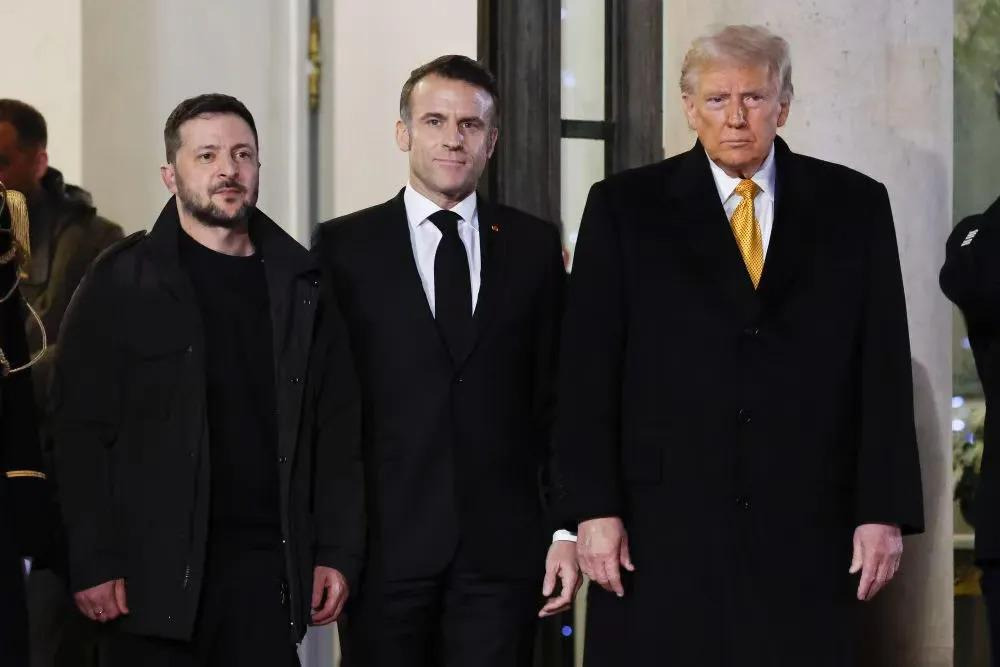
French President Emmanuel Macron bluntly stated that Europe must be involved in resolving the crisis. Leaders from the U.K., Denmark, and Spain also held calls with Zelenskyy in an effort to coordinate positions ahead of the U.S.-Russia summit. However, Trump, during calls with European leaders earlier this month, did not invite them to join direct Russia-Ukraine talks, with some media suggesting he views Europe as “unreliable.”
Experts believe that under current conditions, both Ukraine and Europe have limited influence. Zheng Runyu, a scholar at the Russian Studies Center of East China Normal University, said the chances of Europe or Ukraine “getting a seat at the table” are slim.
Disputes Over Ceasefire Plan
This “Trump-Putin Summit” will mark their first in-person meeting since the 2019 G20 summit. Russia has stated that the talks will include discussions on a long-term peace plan for the Ukraine crisis. Trump has floated a potential ceasefire deal involving “territorial exchanges,” but experts argue that Ukraine’s neutrality is the more critical issue, with territorial disputes only being surface-level.
Zheng noted that Trump is likely more focused on his personal prestige and domestic political reception, while Putin’s stance on Ukraine remains relatively stable. Russia has adapted to battlefield conditions and is accustomed to the unpredictability of the Trump administration’s rhetoric and tactics.
Symbolic Rather Than Substantive
In current U.S.-Russia diplomacy, Moscow remains low-key and pragmatic, while Trump prefers a “headline-making” and “reality-show” style of diplomacy. Zheng believes the summit’s symbolic value for the Ukraine issue outweighs its practical impact, as the conflict is rooted in the broader security dynamics of the U.S., Russia, and Europe.
For now, the feasibility of Trump’s proposed agreement—and whether it can satisfy all parties—remains highly uncertain. A ceasefire is still a distant goal.