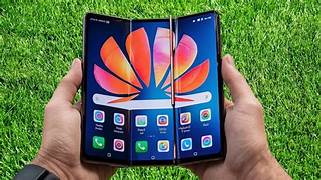
A year has passed, and once again, the world’s second mass-produced triple-fold smartphone comes from Huawei.
The first-generation Mate XT Extraordinary Master made waves when it debuted. Carrying the “world’s first” title, it became a cultural sensation—hailed as the “Electronic Moutai” and even nicknamed the “Cyber Memorial.” When we tested it last year for several weeks, the biggest surprise wasn’t its bold form factor, but rather how polished and mature it already felt for a first-generation product.
Still, there were shortcomings. While its expansive screen was unmatched, it lacked a true “killer app” to distinguish the triple-fold experience from traditional foldables.
Now, in 2025, Huawei has quietly launched the Mate XTs Extraordinary Master. The new model starts at a price 2,000 yuan lower than its predecessor, comes pre-installed with HarmonyOS 5.1, and adds two fresh colorways. These changes signal a shift—Huawei is fine-tuning the product’s positioning and lowering the entry barrier.
From Luxury Status Symbol to High-End Tech Product
This aligns with our earlier prediction: the triple-fold’s aura of rarity has faded. The days of inflated resale prices are gone. The Mate XTs Extraordinary Master is no longer a distant luxury—it’s becoming a more approachable, rational high-end device.
Visit Huawei’s offline stores and you’ll see the difference. The original Mate XT was often locked away behind glass. Today, larger Huawei stores showcase multiple demo units of the Mate XTs, inviting anyone to try. In short—it feels far more accessible.
After spending weeks with the device, we can confidently say: this isn’t just a familiar triple-fold—it’s a more refined, everyday-ready iteration.
Why “Mate XTs” and Not “Mate XT2”?
Huawei’s naming choice makes sense. Without the new white and purple finishes, you might struggle to tell it apart from the first generation. In truth, the Mate XTs is a “half-generation upgrade”—designed to polish details rather than reinvent the formula.
Key Refinements
- Hinge Mechanics: The biggest improvement is in the hinge feel. The first-gen had inconsistent resistance and awkward tension. The Mate XTs delivers a smoother, more uniform opening and closing action, giving it the premium finish it previously lacked.
- Flatter Display: Thanks to redesigned embedded hinges and Huawei’s largest UTG glass yet, the crease is visibly reduced. Opened flat, it looks strikingly like a pure tablet—perfect for media or productivity.
- M-Pen3 Support: Writing or sketching feels natural on the improved flat screen. The stylus also doubles as a presentation tool, though the phone still lacks built-in storage for the pen.
- Durability Details: Huawei added protective injection molding to the charging port, reducing long-term wear from repeated plugging. Small but thoughtful touches like this enhance overall craftsmanship.
Charging & Performance Boosts
Charging was one of the first-gen’s weak points. With the same 66W charger, the Mate XTs now goes from 1% to 100% in just 49 minutes, shaving nearly 30 minutes off its predecessor. Huawei clearly optimized charging strategies and thermal design.
Under the hood, it runs on the Kirin 9020, delivering stronger gaming and multitasking performance. In our test of the newly launched HarmonyOS-native Genshin Impact, the phone ran at high frame rates on maximum settings, with solid thermal control—showing it’s more than capable as a gaming device.
Imaging Upgrades
Huawei refined its already strong camera system:
- The main and ultra-wide cameras now use RYYB sensors for 40% more light intake.
- The Red Maple Color lens ensures accurate color reproduction, compensating for RYYB’s usual shifts.
- Low-light performance, HDR handling, and focus precision have all seen tangible gains.
In practice, night photography showcased vibrant yet natural tones, even under mixed and artificial lighting. Motion tracking was sharp, capturing everything from pets to fluttering ribbons with confidence.
On top of this, Huawei brought over the customizable color tuning tools from the Pura 80 series, giving users both accurate everyday capture and creative, artistic options.
A Pocket-Sized PC
Perhaps the biggest leap lies not in hardware, but in software positioning.
With HarmonyOS 5.1, the Mate XTs embraces the identity of a “Pocket PC”:
- Free Multi-Window only activates when fully unfolded, letting apps float in desktop-style windows.
- PC-grade apps run with optimized layouts, bridging the gap between mobile convenience and desktop productivity.
- Triple-window multitasking supports side-by-side app use, ideal for research, travel planning, or real-time price comparisons across platforms.
This evolution finally delivers the “killer app” for triple-folds: true desktop-like productivity in your pocket.
From Curiosity to Practicality
The first-gen Mate XT was a spectacle—a rare luxury often handled by staff in gloves. The Mate XTs, however, is widely available for hands-on experience. The hype-driven “Electronic Moutai” phase is over.
But that doesn’t mean the triple-fold is fading. On the contrary, it’s maturing into a practical premium device—one that bridges smartphone, tablet, and PC experiences.
Huawei has shifted its narrative: from “try it because it’s new” to “use it because it’s useful.” And until competitors launch their own triple-folds, the Mate XTs Extraordinary Master firmly holds its generational lead—both in hardware polish and software vision.