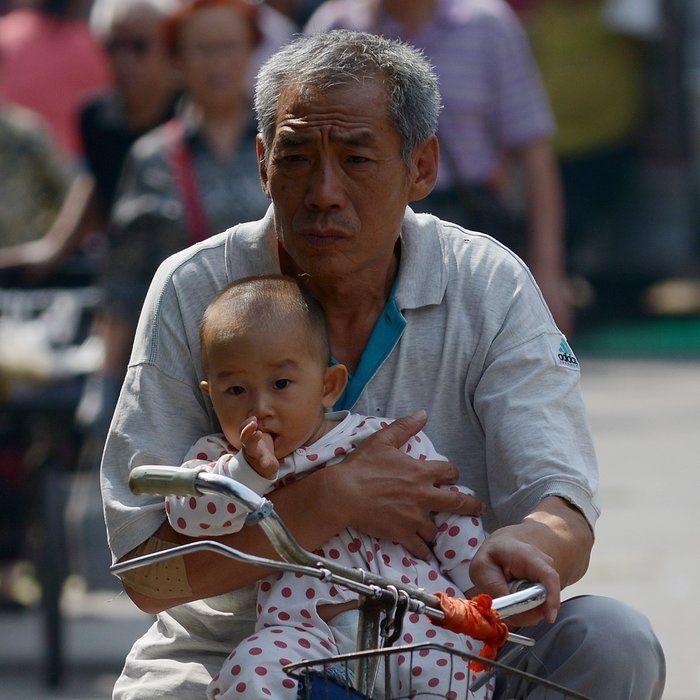
After a quarrel with her daughter-in-law over trivial matters, Shang Ying, in her fifties, packed up and returned to her hometown, leaving behind a blunt message: “If next time I come back and you still give me attitude without gratitude, then I have no obligation to look after the child.” In the summer of 2021, she had traveled from her rural home in Shaanxi to Xi’an to care for her grandson during the school holidays, marking the beginning of her “migrant grandparent” journey. Living under one roof with three generations, tensions gradually surfaced. Beyond managing household chores, Shang Ying also had to adapt to her daughter-in-law’s lifestyle, whether it was tolerating clothes scattered around the house or seeing her spend more than 10,000 yuan on cosmetics. Constant busyness left her exhausted and feeling she had lost herself. When neighbors asked why she had returned so suddenly, she brushed it off with “I’m not used to living there,” but after just a few days back home, she was already worrying about her grandson and preparing to return to city life. The so-called “migrant grandparents” are older adults who leave their hometowns to help their children with childcare and housework in other cities. A 2015 survey by the National Health and Family Planning Commission revealed that mobile seniors accounted for 7.2% of China’s migrant population, and among them, 43% were specifically “migrant grandparents.” By 2020, China’s migrant population reached 376 million, which means the number of such elderly caregivers surpassed 11 million. These seniors arrive as outsiders in their children’s cities. While some quickly adapt, learning to navigate new communities and social circles, most find themselves uprooted from their comfort zones, placed in unfamiliar urban environments, and thrust into a delicate role within their children’s households. Online, they are often depicted as outdated, criticized for old habits, and seen as both indispensable and troublesome. As the book Silver Ferryman describes, migrant grandparents often feel like outsiders both in the city and sometimes even within their own families. For a decade, Professor Chen Hui of Northwest A&F University has been conducting in-depth interviews with over 100 families, including Shang Ying’s, to study this phenomenon. His 2025 book Silver Ferryman outlines how these grandparents have become both pillars of urban family life and sources of intergenerational tension. On one hand, their presence allows urban couples, who often struggle to balance careers and child-rearing, to continue working. On the other, their involvement reshapes family dynamics, sparking conflicts, especially in parenting approaches. Many young parents expect refined, “intensive” parenting, but lack the time to execute it themselves, leaving grandparents to bear the responsibility. Yet, these seniors may not agree with—or be capable of—meeting such high standards, creating friction. Chen Hui explains that the rise of intensive parenting and educational competition has inflated family costs and demands. Migrant grandparents are often seen as the perfect solution—ensuring children are cared for and meals are ready after work. But in reality, many grandparents find themselves trapped in endless cycles of caregiving, sacrificing their own health and emotional well-being, sometimes even developing depression. One grandparent, after a decade of caring for three grandchildren, sighed that raising children for their offspring felt like a “long march.” His research highlights three recurring themes: integration, conflict, and systemic roles. Integration means adapting not just to new family routines but to urban life itself—from using public transport to coping with cramped apartments. Many grandparents feel restricted, even describing the experience as “like being imprisoned.” Yet, they also find joy in family reunions, breaking years of “empty nest” loneliness, and taking comfort in sharing meals and daily life with their children and grandchildren. Conflict, however, is inevitable. From disputes over how often a child’s clothes should be washed to whether a toddler can watch a smartphone, differences in parenting philosophies often spark tension. Grandparents may believe in simple, practical care, while younger parents push for sterilization routines, dietary precision, or educational strictness. These frictions often leave grandparents feeling like unpaid, unappreciated nannies, lacking both voice and recognition, yet enduring for the sake of family harmony. At the same time, younger women, despite frustrations, often come to realize how critical their mothers-in-law’s help is to sustaining both career and household. Systemically, migrant grandparents have become indispensable. With childcare services scarce and costly—nannies charging 7,000 to 10,000 yuan per month—families overwhelmingly rely on parents for help. Their unpaid labor makes dual-income households possible and keeps family life running. Yet, their contributions often go unacknowledged. As urbanization accelerates toward 70% by 2030, Chen Hui predicts migrant grandparents will remain a defining feature of Chinese family life. However, he warns of hidden risks: strained relationships, psychological stress, and even depression among these seniors, compounded by their own parents still needing care. Policies must evolve to reduce their burdens and provide support, especially in rural retirement. At the same time, he suggests that middle-aged children must learn not only to be dedicated parents but also attentive sons and daughters—making time to converse with their parents and respond to their emotional needs. Likewise, grandparents must express their feelings more openly, seek outside social engagement, and preserve their own sense of identity. Ultimately, the story of migrant grandparents is one of resilience, sacrifice, and the quiet power sustaining millions of families. They are the unsung guardians of modern urban life—keeping homes running, enabling careers, and binding generations together, even as they themselves wrestle with loneliness and unspoken burdens.
Millions of Elderly Migrants Struggling Under the Burden of Grandchild Care
After a quarrel with her daughter-in-law over trivial matters, Shang Ying, in her fifties, packed up...
Source: https://www.myzaker.com/
Keep a little curiosity for the next story.
Back to reading