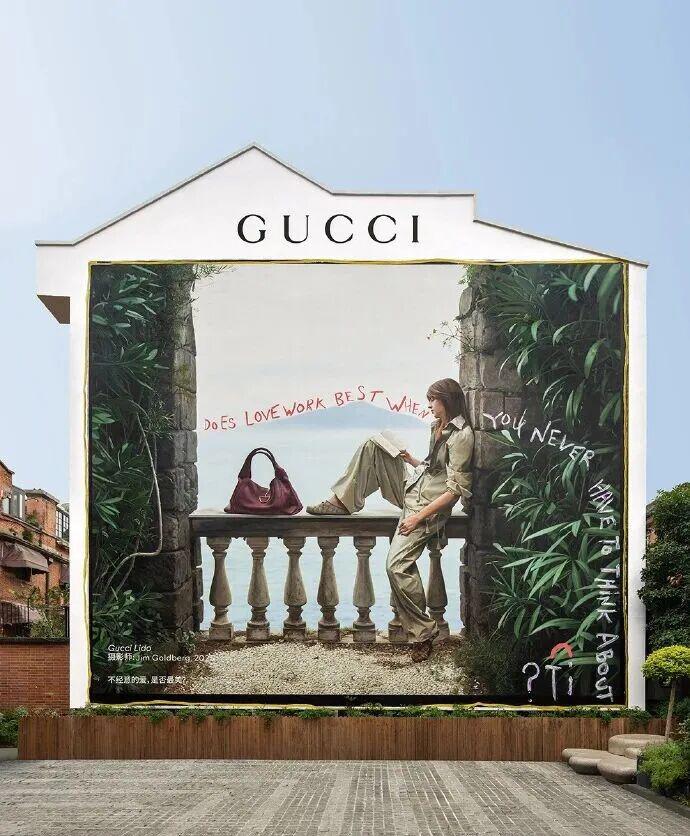
Gucci’s recent store closures are more than just an isolated move—they symbolize a broader transformation sweeping through the luxury sector. As market conditions cool, the once ambitious push into China’s second- and third-tier cities is slowing down, with brands retreating from lower-tier markets to refocus on their most strategic locations.
According to the Luxury Brand China Vitality Index 2025H1 by Luxe.CO, the number of new luxury store openings in China dropped by 38% year-on-year in the first half of 2025. In non-first-tier cities, only 42 new luxury boutiques opened—an alarming 48% decrease compared to the same period in 2024, a decline far sharper than the 10% dip in first-tier cities.
Several brands are scaling back aggressively in second-tier cities, or even withdrawing entirely. In Guiyang’s Lixing Center, where Gucci recently closed its doors, Cartier also shuttered its store earlier this year, just two years after entering the location. Cartier now maintains only one watch boutique in Guiyang. Over the past year, Loewe and Tiffany & Co. closed their sole stores in Kunming; Pomellato exited Harbin, Changchun, Xi’an, and Suzhou; while Bottega Veneta and Dolce & Gabbana have pulled out of cities like Taiyuan and Jinan.
This wave of exits underscores a clear strategy: luxury powerhouses are deliberately abandoning marginal markets in lower-tier cities, choosing instead to consolidate resources into core flagship locations in first- and quasi-first-tier cities.
On the flip side, while smaller stores are vanishing, investment in flagship spaces is accelerating. Since the beginning of the year, brands including Gucci, Balenciaga, Tiffany, Louis Vuitton, and Miu Miu have unveiled or upgraded massive multi-level flagship stores in Beijing, Shanghai, Guangzhou, and Shenzhen—some even the largest of their kind in Asia or the world.
Gucci follows a similar path. Executives emphasize that these changes are not a “simple contraction,” but rather a strategic restructuring aimed at optimizing the retail network and elevating quality. The group estimates that overall retail space in the first half of 2025 will remain stable, with a focus on efficiency and repositioning rather than raw downsizing.
For Gucci, the real challenge lies in striking the right balance—shuttering stores while simultaneously expanding flagship footprints—while ensuring its elite positioning continues to resonate with consumers.
Industry observers point out that retreating from lower-tier cities helps prevent brand dilution at a time when Chinese consumer behavior is shifting. True luxury shoppers increasingly see value in “destination stores” located in first-tier cities, where shopping is seamlessly integrated with a premium lifestyle and experiential journey.
In today’s luxury landscape, buying is no longer just about the product—it’s about the experience. Flagship stores capture this sentiment perfectly: they reinforce exclusivity, amplify a brand’s prestige, and create far greater cultural and marketing impact than scattered small boutiques ever could.