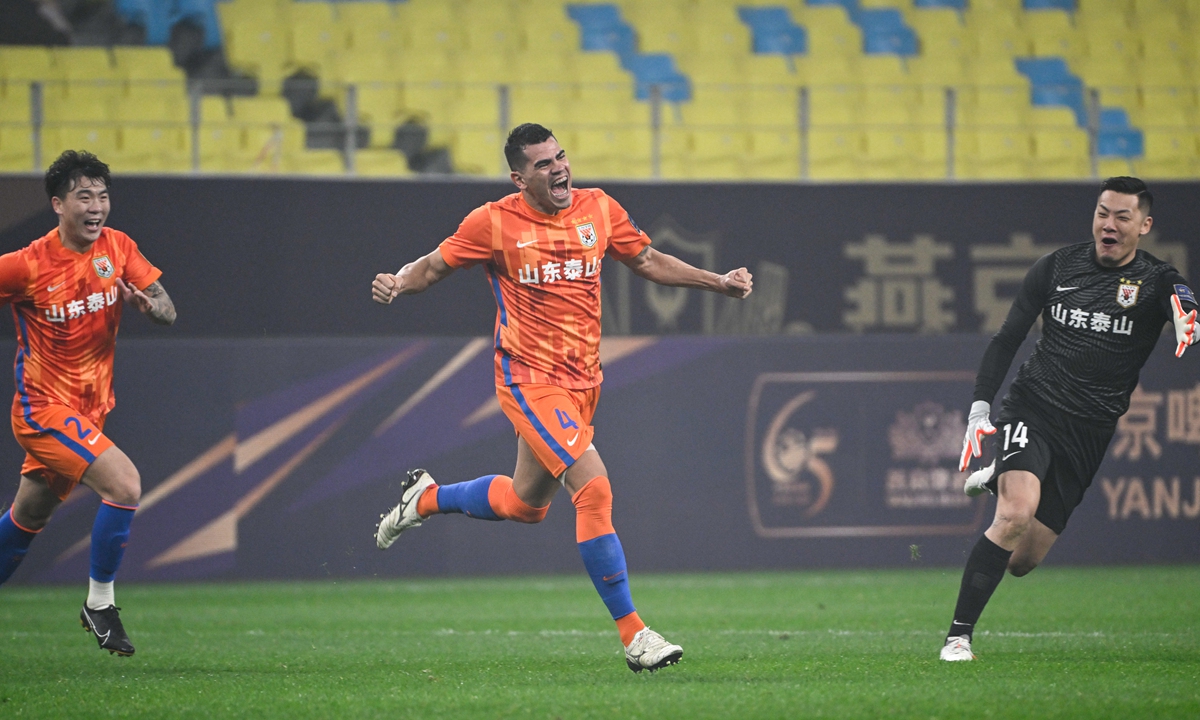
When the Chinese Football Association (CFA) dismissed Shandong Taishan’s appeal on the grounds that “the video could not confirm effective contact,” the focus of debate had already shifted away from Manafa’s handball to the CFA’s questionable handling of the incident—a tactic many now describe as “creating ambiguity, then shifting the blame to FIFA.” What began as a disputed call in Round 24 of the Chinese Super League has spiraled into a crisis, pushing Chinese football dangerously close to the edge: if Taishan retreats, can the league survive the collapse? On September 12, in a decisive title-race clash between Shenhua and Taishan, Liu Yang’s cross struck Manafa’s outstretched arm. Despite a VAR prompt, referee Maimaitijiang refused to review the footage and denied a penalty. Soon after, Li Ke shoved Wang Dalei before scoring a goal—yet it was ruled valid. Taishan submitted a detailed appeal, but the CFA’s Referee Committee revealed internal disagreements. They struggled to categorize the handball, eventually claiming they would “seek input from FIFA experts.” Weeks later, the conclusion was even more baffling: acknowledging that Manafa’s arm movement had “unnaturally enlarged his body,” yet citing “blurry footage” to uphold the original decision—ultimately pinning the responsibility on FIFA’s “technical judgment.” This “blame-shifting counterattack” laid bare the CFA’s indecision and lack of accountability. As the governing body, the CFA should have launched a rigorous review process. Instead, it passed the buck to FIFA—despite admitting the video evidence itself was flawed. Netizens mocked this reasoning as “an international joke”—has the CSL truly sunk to the point where decisions require the Galactic Federation’s arbitration? The unanswered question remains: why was VAR’s clear intervention ignored, why was the referee shielded from scrutiny, and why are key communications still hidden from public view? Unsurprisingly, whispers of “behind-closed-doors manipulation” refuse to die down. Even more alarming than the scapegoating is the troubling immunity enjoyed by controversial referees. Maimaitijiang, who officiated this match, has presided over 11 Taishan fixtures with the team managing only three wins. His track record includes multiple disputed calls, yet he continues to be assigned to high-stakes matches. The CFA’s much-publicized Referee Accountability Regulations—stating that three major errors in a season should result in suspension—have been reduced to empty words. Referees with repeated errors face little more than “internal criticism.” In some cases, referees with four blatant errors against Taishan in a single season have still not been suspended. For clubs and fans alike, this undermines confidence in the very foundation of fair play. When officiating becomes a hammer striking disproportionately against one team—when identical fouls earn Taishan players three times more cards than their opponents—the league’s credibility erodes rapidly. The CFA may not fully grasp the price of “forcing out” Shandong Taishan. This is not comparable to Jiangsu’s exit. Taishan is a 28-year-old institution, the cornerstone of Chinese football development. In the 2024 season alone, it contributed 74 players to national teams—nearly one-fifth of the league’s talent pool. Countless youth academies rely on Taishan’s ecosystem to survive. On the commercial side, sponsors could walk away. Contracts with major brands reportedly include exit clauses if “core teams” withdraw. The greater damage, however, lies in public trust. Fans who have stood by a club committed to youth training and fairness may abandon a league that pushes such a team to the brink of withdrawal. Once faith is broken, what audience will remain? “Withdrawal” is no longer an emotional outburst from fans—it has become a painful reality Taishan’s players, coaches, and supporters must confront. Players second-guess every tackle, coaches can only clench their fists in frustration, and loyal fans shake their heads in disbelief. Former captain Shu Chang summed it up perfectly: “We’re not afraid of losing—we’re afraid of losing without clarity, of seeing our players’ efforts erased by the whistle.” The CSL now teeters on the edge of a cliff, with Shandong Taishan acting as the rope keeping it from falling. If the CFA continues to “protect referees” instead of enforcing accountability, and keeps dodging responsibility by “passing the buck,” it risks cutting that rope with its own hands. Should Taishan’s withdrawal move from possibility to reality, the consequences will be devastating: youth development broken, commercial partnerships shattered, and fans disillusioned. By then, talk of reform will be nothing more than empty rhetoric. This controversy, born of a single handball incident, has become a litmus test of the CFA’s commitment to safeguarding the league’s integrity. And the question remains: if that commitment is already lost, can Chinese football really afford to let its sky come crashing down?
From Internal Conflicts to Blaming the Federation: A Ruthless Counterattack—If Taishan Falls, Who Can Withstand It?
When the Chinese Football Association (CFA) dismissed Shandong Taishan's appeal on the grounds that ...
Source: https://www.myzaker.com/
Keep a little curiosity for the next story.
Back to reading