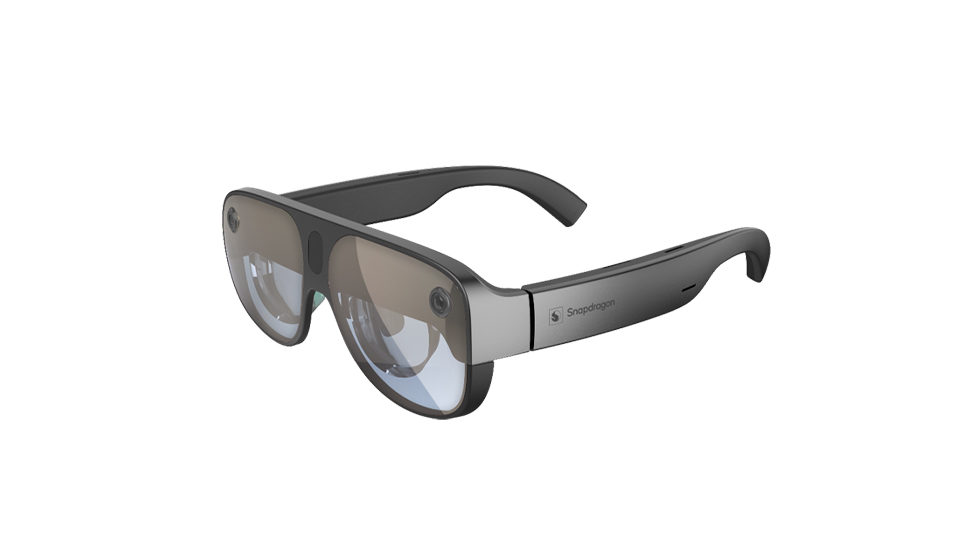
Among today’s most talked-about tech trends, one product stands out alongside humanoid robots — AR glasses.
Recently, Meta CTO Andrew Bosworth revealed that the newly launched Meta Ray-Ban Display has far exceeded sales expectations. Most offline stores have sold out, prompting Meta to expand retail points to meet overwhelming demand. The craze underscores the rising momentum of the AR glasses market worldwide.
Since early 2025, AR glasses have dominated tech expos and social media discussions. Many see them as the next major computing platform, even calling this moment “the iPhone era for AR.” But beneath the excitement lies a more complex reality: skyrocketing sales haven’t yet translated into mainstream adoption.
User complaints such as “blurry screens,” “eye strain,” and “sitting on the shelf after two days” are widespread. So, is the AR glasses boom a true revolution — or just a fleeting bubble?
A Market on Fire — and Giants Racing to Lead
According to IDC’s Top 10 Insights into China’s Smart Glasses Market 2025, global smart-glasses shipments are expected to reach 12.8 million units, up 26% year-on-year. In China, shipments could hit 2.75 million, a staggering 107% increase. CINNO Research reports that in the first half of 2025 alone, consumer AR glasses sales in China reached 262,000 units, up 73% year-on-year — an all-time high.
Investment is surging too: in the first six months of 2025, the AR/VR industry completed 66 funding rounds worth over ¥55.98 billion (USD 7.7 billion). AR glasses have officially become the “centerpiece” of the tech world.
Tech giants including Apple, Google, Huawei, and Xiaomi are betting big on the sector, while innovators like Rokid, XREAL, and Yingmu are making waves with specialized technologies. Advances in MicroLED displays, optical waveguides, and AI integration have made AR glasses lighter, sharper, and far more intelligent.
From entertainment and education to remote work and healthcare, AR glasses are finding their place:
- Immersive movie-watching and gaming;
- Real-time collaboration and data visualization;
- Surgical assistance and telemedicine.
The potential applications are vast — and so is the competition.
The New Battleground: Owning the “Next Interface”
If smartphones were the gateway to the mobile internet, AR glasses are shaping up to be the next computing frontier. Meta’s Ray-Ban Display, a decade in the making, translates neural signals into hands-free commands.
Google is teaming up with Samsung for a new consumer push;
Apple and Amazon are developing competing smart-glasses projects;
Meanwhile, Chinese brands such as Rokid, XREAL, Huawei, Xiaomi, and Meizu are advancing aggressively across display, AI, and ecosystem innovation.
As analysts put it, this is not merely a product race — it’s a fight for dominance over the next tech ecosystem.
Pain Points: High Prices, Shaky Experience, Weak Ecosystem
Despite the buzz, adoption remains slow. The Apple Vision Pro starts at ¥29,999, making it inaccessible for most consumers. Even domestic AR glasses often cost several thousand yuan. Worse still, many users say the experience doesn’t match the marketing: “too bright,” “blurry text,” “hurts my eyes,” or “just collecting dust after a week.”
A lack of apps, fragile after-sales support, and rapid hardware obsolescence further limit growth.
As Galaxy Securities notes, “To become the next mainstream computing device, AR glasses must overcome the triple challenges of cost, battery life, and ecosystem maturity.”
Conclusion: Hot Hype, Cold Reality
There’s no denying the excitement — AR glasses are a technological marvel in progress. Yet for now, they remain more of a promise than a necessity.
When prices fall, ecosystems expand, and user experiences feel natural and seamless, AR glasses may finally earn their “iPhone moment” — not as a flashy gadget, but as an everyday companion that truly changes how we see the world.