A Brilliant Star Has Fallen
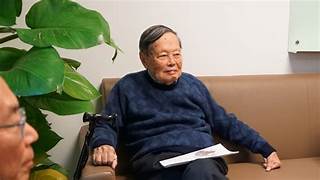
According to Xinhua News Agency, Professor Yang Zhenning passed away in Beijing on October 18, 2025, at the age of 103.
Born in 1922 in Hefei, Anhui Province, Yang Zhenning was one of China’s greatest theoretical physicists. He entered the Southwest Associated University in 1938, joined Tsinghua University’s graduate program in 1942, and obtained his master’s degree in 1944. In 1945, he was sent to the United States as a Tsinghua-sponsored scholar and earned his Ph.D. from the University of Chicago in 1948, where he later stayed on as a researcher.
In 1949, Yang joined the Institute for Advanced Study in Princeton, becoming a permanent member in 1952 and a professor in 1955. In 1966, he was appointed the Einstein Professor at Stony Brook University, where he founded the Institute for Theoretical Physics—later renamed the C.N. Yang Institute for Theoretical Physics—and worked there until 1999. Starting in 1986, he also served as the Bowen Professor at the Chinese University of Hong Kong. In 1997, he became the Honorary Director of Tsinghua University’s newly established Center for Advanced Study (now the Institute for Advanced Study) and officially joined Tsinghua as a professor in 1999.
Yang’s most renowned scientific achievement came in 1956 when, together with Tsung-Dao Lee, he proposed the theory of parity nonconservation in weak interactions. This groundbreaking idea revolutionized physics by overturning the long-held assumption that the laws of nature were symmetric—a discovery that became a cornerstone of 20th-century physics. In 1957, Yang and Lee were jointly awarded the Nobel Prize in Physics for this achievement.
Beyond parity violation, Yang made two other monumental contributions that continue to shape modern physics.
The first was the Yang–Mills Theory, co-developed in 1954 with his student Robert Mills. This theory profoundly influenced both fundamental physics and modern differential geometry, forming the mathematical foundation of the Standard Model of particle physics. The Yang–Mills existence and mass gap problem remains one of the seven Millennium Prize Problems, alongside the Riemann Hypothesis and Poincaré Conjecture.
The second was the Yang–Baxter Equation, discovered in 1967. This equation later became an essential tool for solving integrable systems, influencing diverse areas from quantum field theory to statistical mechanics.
For generations of Chinese scholars, Yang Zhenning was more than a scientist—he was a great educator and mentor.
Since the 1970s, he made multiple trips back to China, giving lectures that introduced frontier theories such as gauge field theory and statistical mechanics. In 1978, inspired by Yang’s vision, the University of Science and Technology of China (USTC) established the pioneering "Young Class" program for gifted students. It was at Yang’s suggestion that the program included a computer software major—planting the seeds for China’s computer science education.
His influence also extended to bringing world-class talent home. Nobel laureate in computer science Yao Qizhi (Andrew Chi-Chih Yao) decided to return to Tsinghua University largely because of Yang’s encouragement. In 1997, Yang helped establish the Institute for Advanced Study at Tsinghua, serving as its honorary director and attracting leading global scholars. At his encouragement, Yao left his tenured position at Princeton in 2004 to teach full-time in China, later founding the Institute for Interdisciplinary Information Sciences (IIIS). The famed “Yao Class” that emerged from this vision has since produced a new generation of global tech leaders.
Notably, by the end of 2016, both Yang Zhenning and Yao Qizhi renounced their U.S. citizenship to become citizens of the People’s Republic of China. In 2017, they transitioned from foreign members to full academicians of the Chinese Academy of Sciences—an unprecedented moment in the academy’s history.
When asked about his feelings on returning to China, Yang once said:
“My friend Xiong Bingming told me, ‘Your father may have passed away, but his blood still flows in your veins.’ I said, ‘Yes, the blood that flows in me is not only my father’s—it is the blood of Chinese culture.’”
In 2004, at the age of 82, Yang personally taught a semester-long general physics course to first-year students of Tsinghua University’s Department of Physics and Fundamental Science Program.
According to Tsinghua University, Yang also raised funds to establish the Committee on Scholarly Communication with China, which sponsored nearly a hundred Chinese scholars to pursue advanced studies in the United States. Many of these scholars later became leading figures in China’s scientific development. Yang devoted immense energy to fostering scientific collaboration, advising on national science and education policies, and helping shape China’s major scientific endeavors. His leadership profoundly influenced Tsinghua’s advancement in physics and fundamental research, as well as the broader reform of China’s higher education system.
Professor Yao Qizhi once shared how Yang’s mentorship shaped his own life and career:
“When Professor Yang and Professor Lee won the Nobel Prize, I was 11 years old. That moment inspired me to pursue physics at National Taiwan University. My deep interest in physics and scientific thinking began with their influence. I’ve always believed that studying physics as an undergraduate gives you the best foundation for any future research—it teaches you how to think, how to investigate, and how to build a scientific mindset that remains valuable across any discipline.
I never imagined that one day I would meet Professor Yang in person—and even discuss returning to China to teach at Tsinghua. In 2002, I visited China and met many leading experts in computer science. Professors Zhou Lizhu and Zhang Bo from Tsinghua later invited me to join the university to help bridge the gap between China’s computer research and the global frontier. Soon after I accepted, Professor Yang himself invited me for a meeting, and that conversation left a lasting impression. His warmth, insight, and vision convinced me this was the right path.
Returning to Tsinghua became a natural decision. My wife and family were very supportive—they believed it would be deeply meaningful work for both the nation and the future of science.”
Professor Yang Zhenning’s passing marks the end of an era—but his brilliance, vision, and devotion to science and education will continue to inspire generations to come.
Farewell to a legend.