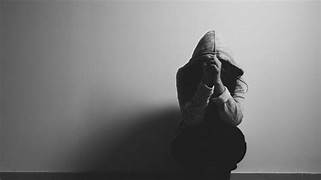
Why Did Depression Lead to a School Break? A Haidian Mother and Her Child’s Journey Through the Psychiatric System
A report once released by CCTV revealed a staggering fact: among Chinese students aged 6 to 16, 17.5% suffer from mental disorders. And that’s only the diagnosed cases — the true number of children struggling silently with psychological and emotional distress is far higher.
Online discussions like “What should I do if my child refuses to go to school?” or “How can I persuade my child to try again?” are increasingly common. Yet perhaps the more important question is: why are so many children in such deep pain that they end up seeking psychiatric help?
Professor Liang Hong of Renmin University, also known for her acclaimed Liang Village Trilogy, turned her attention to these students who paused their education due to emotional disorders. Over three years, she immersed herself in their worlds — interviewing children, parents, teachers, doctors, and counselors — to capture a raw psychological portrait of Chinese youth today. What she discovered was far more complex than mere reluctance to attend school.
Below are excerpts from her book Let There Be Light, focusing on a “Haidian mother,” Chen Qinghua, and her son, Wu Yong, who battles depression. The story intertwines a mother’s helpless guilt and a child’s painful clarity as they both confront the invisible wounds of an overburdened education system.
“Have I Failed as a Mother?”
There were days when Chen Qinghua couldn’t stop crying at work. She would sit at her desk, tears silently streaming down, forcing herself to stay composed. She couldn’t let her colleagues see — they must not know. She would run to the restroom, splash water on her face, and stare into the mirror, trembling, trying to hide her sorrow.
She often scrolled through her contacts, desperate for someone to talk to, yet couldn’t find a single name. Admitting her child’s depression felt like exposing herself to judgment — as if her pain, her family’s cracks, and her child’s illness would all be laid bare.
She feared the consequences: that once people knew, her son would be treated differently — stigmatized, isolated, perhaps even denied future opportunities. But suppressing everything was crushing her.
At home, her husband, Wu Yangping, had no patience for her tears. Whenever she brought up their son’s situation, he would hang up with a curt, “Why bother?” Chen Qinghua felt utterly alone.
A Psychiatric Ward Filled with School Uniforms
When Chen first brought Wu Yong to a psychiatric hospital, she was stunned. The waiting hall was overflowing with children — many still in their school uniforms. Parents clutched registration slips, whispering anxiously. Some kids, clearly rushing between classes, carried backpacks filled with textbooks.
When they finally saw the doctor, a young resident with a baby face greeted them. Chen felt uneasy — he looked barely older than a student himself. Yet over time, she realized he was one of the most compassionate. Unlike others, he took time to listen, gently explaining the basics of treatment. Still, he could not answer her deepest question — why did this happen?
“He’s a psychiatrist,” she later reflected. “He diagnoses, he prescribes. But the reason — the pain behind the illness — that’s not his department.”
What she couldn’t accept was how mechanical the process felt. Pills replaced understanding. Appointments replaced conversation. Behind every prescription was a queue too long for empathy.
When the doctor’s note read “severe depression and anxiety,” Chen felt both relief and despair. There was finally a name for their suffering — but no roadmap to healing.
“I Can’t Take It Anymore”
A month later, Wu’s side effects worsened. The medication left him nauseous, trembling, unable to concentrate. Yet he still pushed himself to attend his weekend competition classes. There, surrounded by other students aiming for Beijing’s top universities, he forced himself to stay composed.
But each test chipped away at him. He obsessed over grades, chasing impossible perfection. When he began skipping classes, Chen felt dread creeping in.
She consulted a therapist, who told her gently: “Before you try to fix your child, you need to heal yourself.”
She nodded — yet how could she, when her world was collapsing?
The Questions No One Wants to Ask
Over two years of treatment, one question haunted Chen: Who decides when a child crosses the line between sadness and illness?
Was her son truly mentally ill — or just a teenager buckling under impossible expectations?
The doctors dismissed her doubts as irrelevant. The system didn’t encourage reflection; it demanded compliance. “Take the pills. Follow up.” That was all.
She couldn’t help but wonder: if children are so easily placed under psychiatric labels, who will ever question what drives them there?
A Child’s Voice: “Our Home Was Just Another Classroom”
One winter night in 2024, Wu Yong finally spoke. He and his mother sat up talking until dawn — a conversation that broke years of silence.
“I don’t feel warmth at home,” he told her calmly. “You say our family is cozy, but I never felt that. I’d come home from school and see your worried face — always about homework. Home was just an extension of school.”
He continued, voice unwavering. “You exposed me to the trauma of education without realizing what it does. You thought enrolling me in the best school was a blessing — it was the beginning of the end. You called me lucky, but I was suffering. My only comfort was learning itself, not schooling. But you never saw that difference.”
He paused before saying the words that struck her deepest: “I can sit here and talk to you calmly now because I’ve stopped hoping for a real connection. I don’t expect you to understand anymore. My pain isn’t just a Haidian student’s pain — it’s the pain of our entire civilization.”
A Mother’s Awakening
In that moment, Chen finally saw her son — not as a patient, but as a person trying to make sense of a wounded world.
“I’m heartbroken that you say there’s no warmth between us,” she whispered, “but maybe you’re right. I must face it, not avoid it. Only then can we move forward.”
Her son nodded quietly, his expression softening for the first time in years.
That night, amidst exhaustion and tears, something fragile yet real emerged — a connection built not on control, but on understanding.
Chen realized that healing wouldn’t come from medication alone, nor from pretending everything was fine. It would come from confronting the invisible damage — the silent injuries caused by love mixed with fear, ambition tangled with expectation.
Her son had turned his trauma into thought, and his pain into purpose. And for the first time, Chen felt not only sorrow — but hope.
“Maybe,” she thought, “if we stop running from the wound and finally look at it, that’s when the healing truly begins.”