As a global powerhouse in Bluetooth innovation, China has long stood at the forefront of Bluetooth technology adoption and ecosystem development—setting trends and showcasing unique applications that influence the global market.
Against this backdrop, the Bluetooth Special Interest Group (Bluetooth SIG) recently announced the establishment of its first-ever China Interest Group, a historic move designed to ensure that China’s unique market needs and development opportunities are effectively represented and addressed within the global Bluetooth ecosystem.
The inaugural meeting of the China Interest Group drew an impressive lineup of participants, including representatives from Huawei, Xiaomi, OPPO, vivo, Honor, Lenovo, Qualcomm, Infineon, Nordic, Unisoc, Goodix, Telink, Actions Technology, Silicon Labs, and Bestechnic, among others.
According to a Bluetooth SIG report released in May, global Bluetooth device shipments are expected to reach 5.4 billion units by 2025, and surge to 7.7 billion units by 2029, with a five-year compound annual growth rate (CAGR) of 9%. The report also highlights the explosive growth of Bluetooth Low Energy (BLE) devices, which are expanding at an annual rate of 22%. By 2028, shipments of single-mode BLE devices are projected to rival those of traditional dual-mode devices.
In China, Bluetooth audio products—especially wireless earphones—have gone through a rollercoaster of changes in recent years. Data from IDC shows that after a sharp 18% drop in 2022, the market rebounded with a 7.5% growth in 2023 and an impressive 19% surge in 2024. Even in the first half of 2025, shipments continued to climb another 7.5% compared to last year’s already strong base.
Among product categories, open-ear earphones have emerged as the biggest winners, overtaking traditional in-ear models. Once a niche segment grouped under “Others,” open-ear designs—especially ear-hanging and ear-clip types—have exploded in popularity. The Huawei FreeClip has become a category-defining product, propelling ear-clip styles to surpass ear-hanging models in both volume and growth.
Such rapid evolution across product segments—from general Bluetooth earphones to specialized open-ear and ear-clip designs—demands equally fast updates in upstream Bluetooth standards, certification frameworks, and applied technologies. This is precisely why the Bluetooth SIG established its China Interest Group: to stay closely aligned with domestic manufacturers and their fast-changing innovation needs.
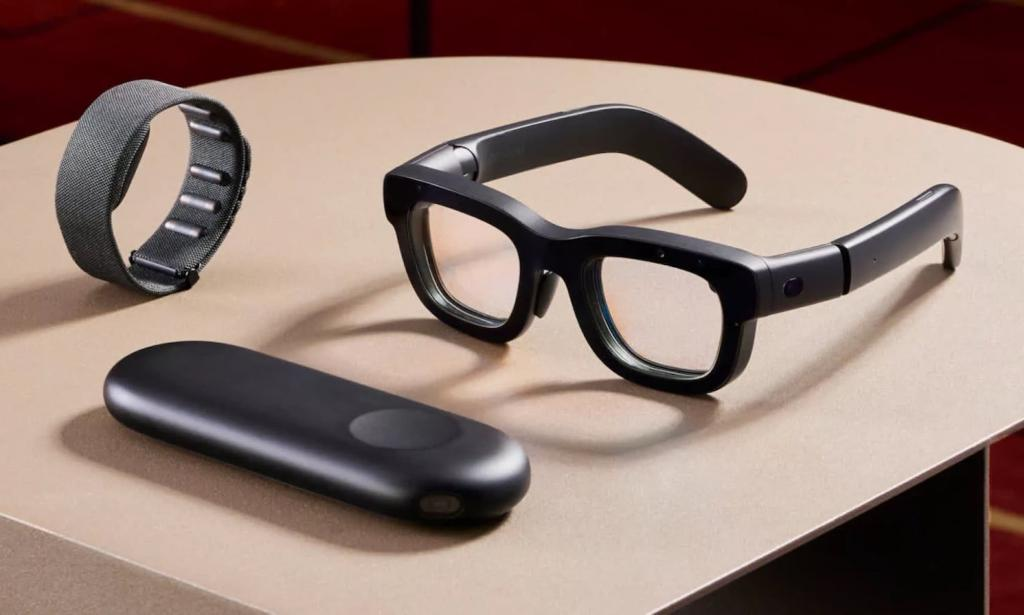
Beyond audio, Bluetooth technology is thriving in emerging wearable sectors such as smart glasses and mixed-reality headsets. A prime example is Rokid Glasses, which promote “seamless interaction” powered by BLE connectivity. Designed for ultra-low power consumption—often less than one-tenth that of traditional Bluetooth—BLE is enabling longer battery life, smarter AI-assisted interactions, and new real-time response capabilities.
For instance, vivo’s Watch GT 2 boasts up to 33 days of battery life on a single charge, leveraging BLE efficiency. When combined with AI chips and gesture-recognition algorithms, this technology allows devices like smart glasses to perform instantaneous voice, gesture, and eye-tracking operations, and even synchronize with multiple connected devices through BLE Mesh networking.
Meanwhile, Huawei’s FreeClip 2 earphones demonstrate how Bluetooth can evolve beyond audio playback into an intelligent interaction platform. Its innovative “C-Bridge” design, support for L2HC high-definition audio codec, and a third-generation self-developed chip with 10× computing power enable head-based gesture control and smarter connectivity.
The evolution of Bluetooth standards continues to accelerate. Bluetooth Core Specifications 6.0 and 6.1, released over the past year, enhance precision ranging, data transmission efficiency, and privacy protection. The new Channel Sounding feature, for example, enables accurate distance measurement between devices—already being used in collaborative projects by OPPO, BYD, and MediaTek to develop next-generation high-precision car key systems.
Even as Bluetooth matures after three decades, it’s experiencing a vibrant renaissance—driven largely by the rapid rise of domestic wireless communication standards, particularly Huawei’s NearLink (星闪) technology.
The latest Huawei FreeClip 2 not only supports NearLink’s “Precise Find” feature but will soon upgrade to a full NearLink audio experience. In Huawei’s HarmonyOS 6, NearLink and Bluetooth are now unified under one combined interface, marking a new era of coexistence between the two technologies.
NearLink, developed by Chinese firms including Huawei, operates with remarkable efficiency—30× lower latency, 6× faster data rates, 10× more simultaneous connections, 60% lower power consumption, and centimeter-level positioning accuracy compared to traditional Bluetooth. The NearLink Alliance, established in 2020 with over 80 founding members, recently announced that more than 100 million NearLink-enabled devices have already been shipped, with NearLink Mesh networking slated for release later this year.
At the same time, major domestic manufacturers such as OPPO, vivo, and Xiaomi are developing their own proprietary communication protocols. OPPO’s MeshTalk technology, for instance, enables off-grid voice and text communication within a 3-kilometer range—without Wi-Fi, cellular, or even Bluetooth connectivity—showcasing China’s growing confidence in wireless innovation.
Taken together, the rapid iteration of Bluetooth standards and the creation of the Bluetooth SIG China Interest Group reflect a strategic response to the momentum of China’s homegrown technologies. For Bluetooth to maintain its strong foothold in China, it must embrace faster feedback loops, more open participation mechanisms, and tighter collaboration with domestic innovators. Anything less risks being left behind in the race for the next era of short-range wireless connectivity.