In Dream of the Red Chamber, few scenes rival the grandeur of Yuanchun’s royal homecoming — “silken canopies and cloud-like brocades, jewels lining the thoroughfare.”
Throughout the novel, fabrics speak louder than gemstones. Cao Xueqin doesn’t rely on piling up jewels to depict luxury, but instead uses woven textiles to convey order, refinement, and dignity. With that in mind, the concept of Yunjin naturally carries an aesthetic discipline rooted in both cultural expression and structural harmony.
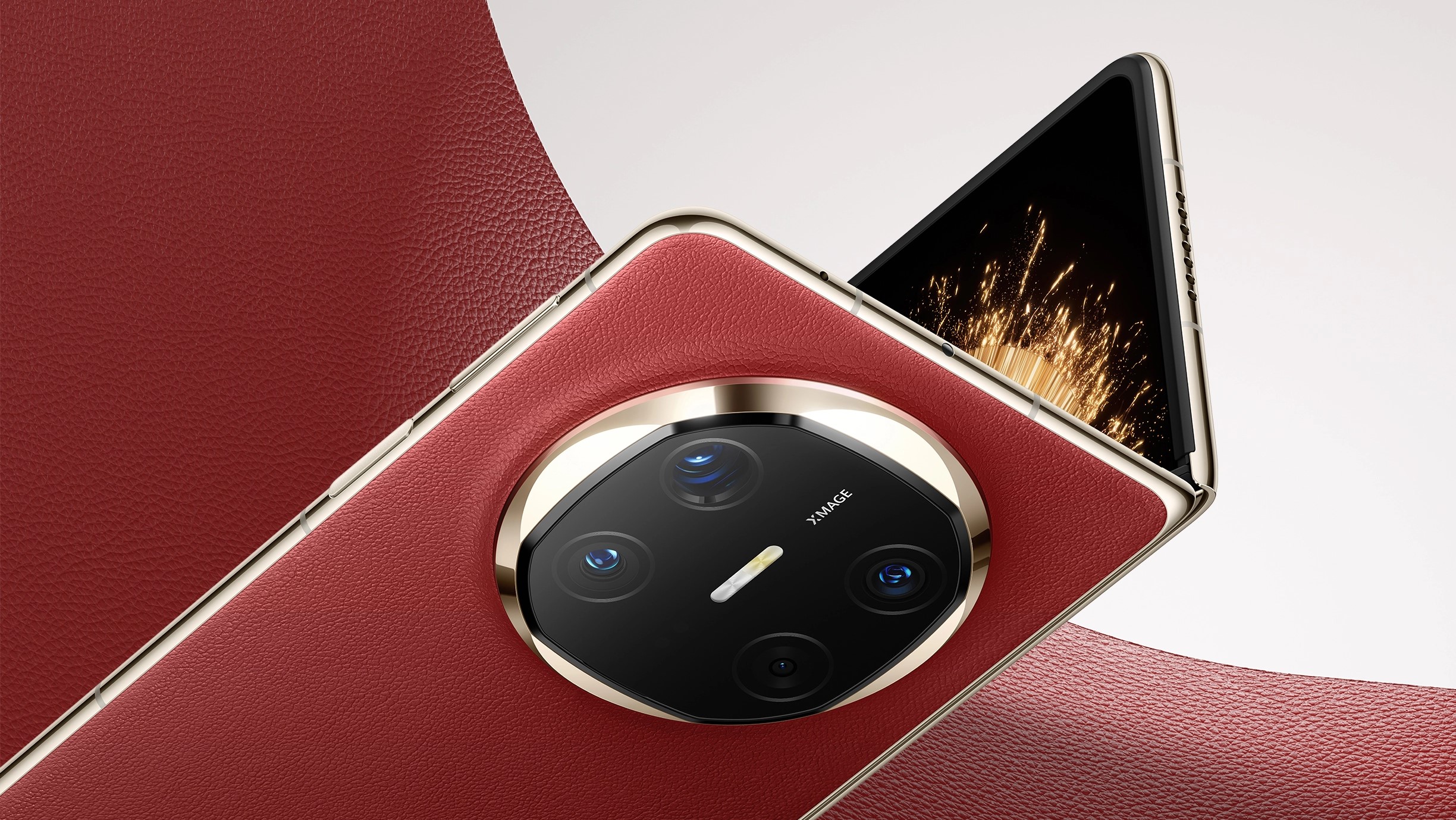
Today, the Huawei Mate X7 brings this ancient weaving philosophy into the modern era through its “Light-Woven Yunjin” rear panel — a bold translation of heritage craftsmanship into contemporary material science.
Here, Yunjin isn’t merely referenced — it is reborn in a device meant for everyday touch and interaction.
Woven from the Past, Formed for the Present
As early as 417 AD, the Eastern Jin dynasty established the official “Brocade Bureau” in Jiankang (modern-day Nanjing), where Yunjin became inseparable from imperial ceremony.
Through the Yuan, Ming, and Qing dynasties, Yunjin was reserved exclusively for royalty—dragon robes, ceremonial attire, imperial garments—marking it as the most lavish symbol of governance and ritual culture.
Its value lies not only in intricate patterns, but in the delicacy of tools and the mastery of technique.
The grand “multi-level wooden loom” for Yunjin stands four meters tall: one artisan works above to pull the warp threads, another below throws the shuttle. One day of work yields only five or six centimeters of woven fabric.
Yunjin is named for its cloud-like radiance — its finest expression lies in the Zhuanghua technique of multi-material color-layered weaving: silk, gold thread, silver thread, and even peacock feathers, transitioning color by region within the same fabric.
Viewed at different angles, the patterns shift with light, as if the textile itself is breathing.
During the Jiaqing period, Nanjing’s Yunjin weaving flourished with over 30,000 looms and 200,000 people in the trade. Yet by the late Qing era, the craft declined, and by 1949 only four working looms remained.
It wasn’t until 1980 that the Nanjing Yunjin Research Institute began reconstructing textile patterns for historic dragon robes, recovering lost techniques thread by thread.
In 2009, Yunjin weaving was inscribed into UNESCO’s Representative List of the Intangible Cultural Heritage of Humanity, firmly reestablishing its lineage and ensuring its preservation.
Re-Weaving Heritage into Modern Materials
To meaningfully apply Yunjin philosophy to a modern smartphone, the translation must occur at the level of material logic — not simply surface decoration.
The Huawei Mate X7’s “Light-Woven Yunjin” rear panel is not a printed pattern — it is constructed according to the structural logic of the original textile.
Traditional Yunjin uses countless warp and weft threads — the vertical warp forming the structural skeleton, the horizontal weft filling the visual expression. Different materials and densities create distinct optical effects.
Following this logic, the Mate X7 reconstructs warp and weft through nano-fiber engineering.
With approximately 900 warp threads × 1700 weft threads, the device produces a cloud-like pattern with directional fiber density, creating subtle interplay between structure and light.
Inspired by peacock feather coloration, layers of nano-thin reflective films are interwoven to achieve organic iridescent effects.
From one angle, it’s soft matte silkiness; from another, it gleams with cool metallic highlights; from yet another, a faint peacock-blue shimmer emerges.
Seen from afar, the panel reflects layered metallic waves; up close, ultra-fine fiber lines resemble filaments of “golden thread” tracing constellations across the surface.
Huawei offers this effect in two elegant colorways — Yunjin White and Yunjin Blue — merging lightness, durability, and impact resistance without sacrificing tactile feel.
The “Gateway of Time and Space”
A door defines separation—inside vs. outside, familiar vs. unknown.
A folding phone functions similarly: every open-and-close action marks a shift between states — glance vs. immersion, one-hand operation vs. expanded creative canvas.
Huawei captures this symbolism in its unified camera module, named the “Gate of Time and Space.”
This design continues the Mate foldable lineage — from cosmic portal motifs to interstellar geometry — now materialized as an asymmetric multi-layered visual frame.
The Gate acts as the phone’s visual anchor — crisp, geometric, engineered — balancing the flowing softness of the Yunjin panel.
Beneath the aesthetics lies serious imaging hardware.
The Mate X7 features a Second-Gen Maple Primary Camera System with major advances:
- 25% improvement in spectral color separation
- 96% improvement in light intake
- 43% improvement in color accuracy
A groundbreaking quartet lens construction combined with an ultra-thin 0.4 mm glass element boosts optical performance while reducing module bulk.
The Collector’s Edition even houses a massive 1/1.28-inch RYYB sensor with 50 MP resolution and a 10-stop variable aperture (F1.49–F4.0), ensuring superior performance in all lighting conditions.
The periscope telephoto lens uses multi-axis stabilization and compact optical mechanics to deliver flagship-level zoom in minimal space.
Defining the Luxury of a Modern Flagship
After six years of evolution, foldables have moved from novelty to reliable daily tools. Huawei now holds the leadership position in this segment, setting the standard for premium folding phones.
With the Mate X7, Huawei integrates visible design, tactile texture, durable construction, advanced imaging, and intelligent software experience into one seamless continuum.
It pairs resilience — reinforced Xuanwu architecture, hardened Kunlun glass, and IP58/IP59 protection — with intelligence — HarmonyOS 6 large-screen AI, flexible app layouts, and cross-device collaboration.
But beyond performance, a deeper question emerges:
What defines true high-end experience in a smartphone today?
The answer is no longer limited to specs and benchmarks.
It lies in identity.
In cultural embodiment.
In tactility.
In using materials as storytelling mediums.
Huawei’s approach is not to imitate heritage ornamentation, but to internalize heritage principles into structure and matter.
Rather than sticking a pattern on the phone’s back, Huawei weaves it into the substance of the device.
When you place the Mate X7 beside your pillow at night, faint light dances across the nano-woven surface. You may not consciously recognize the lineage of looms and artisans behind it — but you feel its difference.
Centuries ago, Yunjin was exclusive to palace robes and imperial rites.
Today, it becomes the surface of a handheld companion — held in the palm, opened to create, closed to reflect — carrying the threads of culture from the imperial courts into modern daily life.