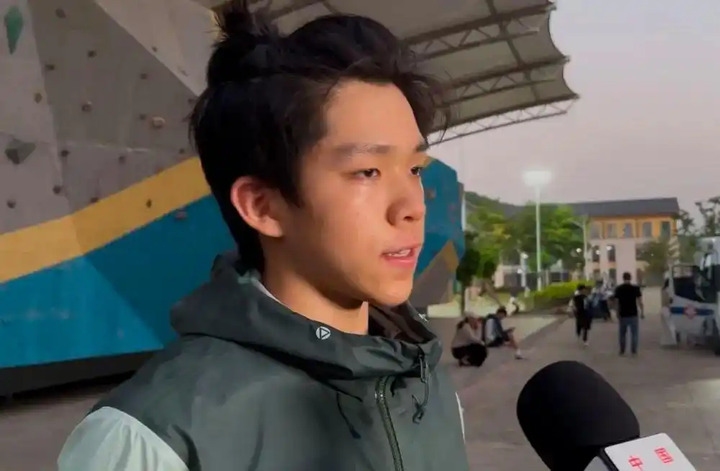
On December 8 (Beijing time), 12-year-old Chinese football prodigy Cheng Yuan, who is currently playing in Japan, released a video sharing his firsthand experiences of Japan’s youth training system and offering deep insight into the real reasons behind the growing gap between Chinese and Japanese football.
Cheng Yuan previously received his early training at the Putuo Football School in Shanghai. This year, he decided to pursue his dream abroad by joining a Japanese club. Notably, the Putuo Football School placed no obstacles in his way and fully supported his move. In October, it took Cheng just 21 days to terminate his training agreement through mutual consent—without any financial disputes—and complete his international transfer free of charge.
In his video, Cheng detailed his life and training in Japan:
“I’ve been in Japan for more than three months now. My weekly routine is club training on Tuesdays and Wednesdays, school team training on Thursdays and Fridays, and matches on the weekend. At the end of November, our team was promoted from the Kawasaki City League to the Kanagawa U13 League, which is a higher-level competition. At first, I was nervous and worried I wouldn’t keep up with the Japanese kids’ pace. But once I started playing, I realized I wasn’t at a disadvantage at all. The head coach even let me play every position except goalkeeper—something many local kids can’t do.”
Cheng then raised a sharp and thought-provoking question:
“Why do Chinese kids often look very strong before the age of 12, but get overtaken by Japan after that—and the gap keeps growing?”
Based on his own experience, he offered a clear answer: the true turning point lies between ages 13 and 15, during the middle school years. “If you fall behind in those three years, it’s almost impossible to catch up in high school. And the root causes come from three major deadlocks in China’s youth training system: early elimination, isolation-based training, and rigid transfer barriers.”
He explained each issue in detail.
“First is early elimination. In China, selection often means filtering out the majority. There’s a major selection at age 11, and if you’re not chosen, you’re quickly labeled as ‘having no future’ and abandoned. Japan is very different. Their system is like picking apples—those that are ready are selected, and those that aren’t continue to be nurtured. Even if a 12-year-old hasn’t blossomed yet, he’s never written off early.”
“Second is isolation-based training. Many domestic systems lock kids into fixed environments and rigid styles of play. They are kept away from their parents and often have to sacrifice their education. Chasing a tiny one percent success rate makes players increasingly afraid of making mistakes, and the more they fear mistakes, the less confident they become.
In Japan, however, every training session pushes you to grow. Goalkeepers are encouraged to advance to the edge of the penalty area, center backs step up to the middle circle, and the entire team presses deep into the opponent’s half. The first time I played like that, I was terrified. The Japanese coach only said one thing: ‘It’s okay—just be brave and play.’ At that moment, I truly understood that football should make you feel more free and confident the more you play, not more nervous.”
“Third is rigid transfer restrictions. In China, when a young player wants to change teams or environments, they often face layers of barriers—even massive compensation demands. In Japan, it’s the exact opposite. The procedures are transparent, and no one blocks a child’s future.”
In conclusion, Cheng Yuan shared a powerful reflection:
“I now truly understand that the gap between Chinese and Japanese kids doesn’t start with talent—it starts with whether they’re given the opportunity to keep growing. Japanese players enter a rapid development phase between ages 13 and 14, while many Chinese players are trapped by these three deadlocks at exactly the same stage. It’s not that Chinese kids aren’t capable. It’s that too many are abandoned while they are still growing.”
“After coming to Japan, I’ve seen with my own eyes that if a child is allowed to make mistakes, try different positions, and keep playing freely, their improvement can be so fast it even surprises themselves. I hope my experience can reach more adults who truly care about China’s youth football. Chinese kids are no worse than anyone else in the world—if only we are willing to unlock these three deadlocks.”
Cheng’s third point also inevitably brings to mind the well-known controversy involving Sun Jihai’s Haiqiu Academy, where a young player was once asked to pay 2.66 million yuan in compensation for contract termination. Through his personal journey, this 12-year-old footballer has delivered a striking reminder: the gap between Chinese and Japanese football continues to widen, and the road to reform and progress remains long and challenging.