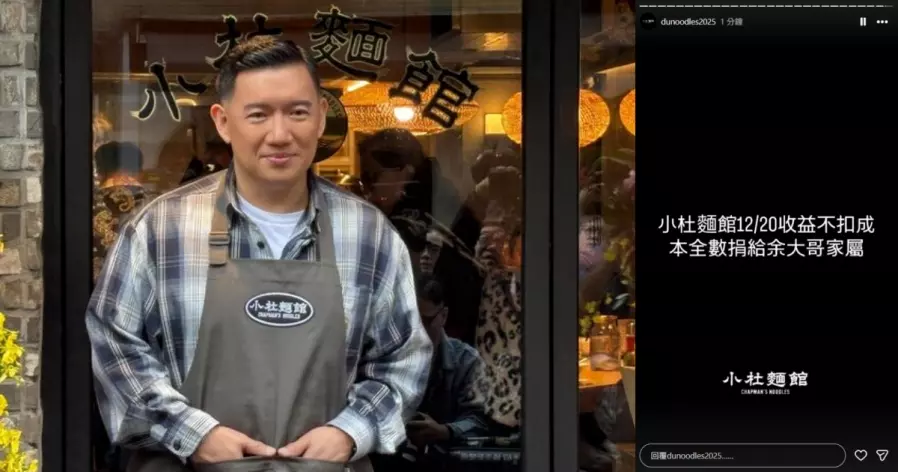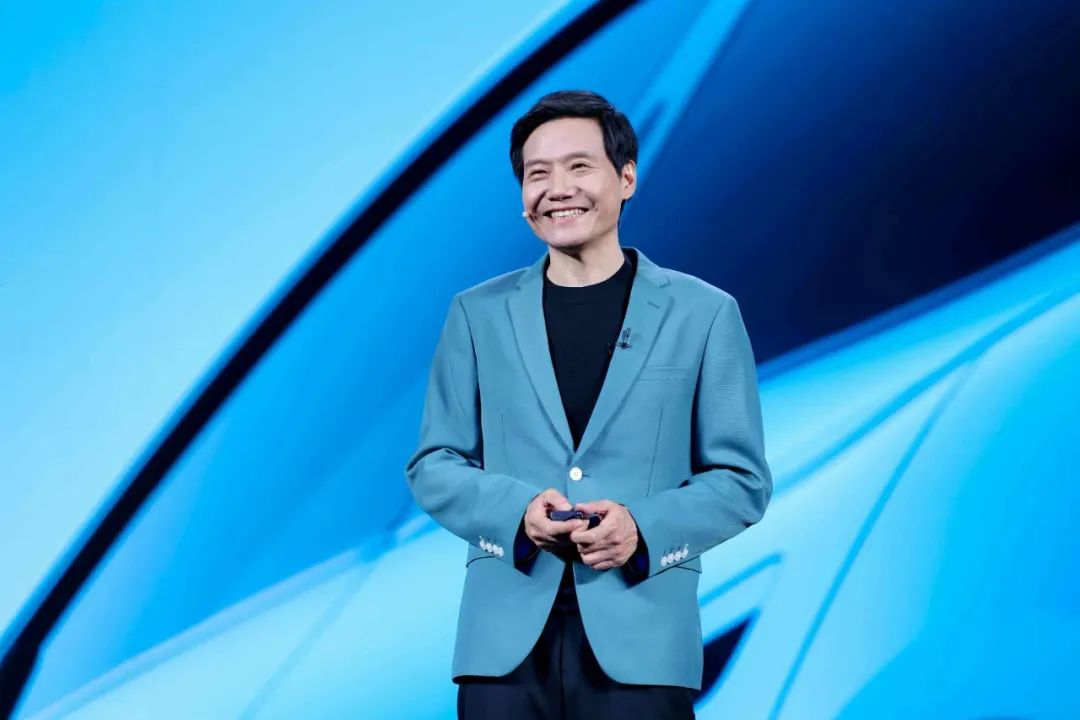
“Don’t compete with Lei Jun on marketing—anyone who can sell Xiaomi phones into the hundreds of billions is no ordinary player.” Liu Qiangdong’s remark from years ago was both admiration and a warning. He recognized Lei Jun’s ability to convert personal influence into real sales, while also drawing a quiet boundary: marketing can amplify value, but it can’t replace it.
Yet business has a way of pulling even the clearest observers into the arena.
When Liu Qiangdong partnered with automakers and battery suppliers to launch a so-called “people’s car,” entering with a Lei Jun–style mix of high profile messaging and friendly, mass-market labeling, he ran straight into the same minefield he once pointed out.
Mismatch between advertised features and delivered specs, battery-rental plans with hard-to-spot conditions, cross-region invoice limits that blocked buyers from claiming subsidies… The “people’s car” met a wave of cancellations as soon as deliveries began, and a cross-industry debut quickly turned into a delivery crisis.
A similar script had already begun unfolding on Lei Jun’s own home turf.
Through tightly crafted persona-building and emotion-driven mobilization, Lei Jun once produced astonishing sales curves. But now, the very logic that powered the rise is pushing back against his credibility.
Xiaomi’s SU7 Ultra drew criticism after claims around a “carbon-fiber dual-duct front hood” were challenged by owners. A string of safety incidents—some tied to driver factors—still intensified public anxiety about vehicle safety. The near-flawless public image that once seemed unshakable started to show visible cracks.
And the most symbolic scene is this: even as a benchmark figure loses shine, a growing crowd of entrepreneurs is still racing to imitate his formula.
Part 1
When a “Perfect Persona” Starts to Crack
Lei Jun is no longer the safe answer
For a long time, Lei Jun looked like the gold standard of China’s founder-brand playbook.
The “small-town top student,” the practical builder, the tireless executive—multiple labels stacked together into a real-life hero narrative. With frequent everyday sharing and self-deprecating interaction, he broke the distant “elite entrepreneur” stereotype and won deep emotional identification from Xiaomi fans, which translated into real commercial momentum.
The upside was obvious.
Lei Jun became Xiaomi’s most direct traffic entrance. Every appearance and every keynote could move the conversation. Even the nickname “Lei Bus” evolved from a joke into a compliment—one that reliably lifted attention and sales.
But a halo built on traffic eventually meets the hard wall of reality.
A series of SU7 accidents became the first major stress test of that “perfect persona.” On the night of March 29, in Tongling, Anhui, a Xiaomi SU7 reportedly crashed at high speed and caught fire, resulting in a tragedy that drew national focus. As public attention locked onto vehicle safety, Lei Jun posted on April 1 saying Xiaomi would not evade responsibility and would continue cooperating with the police investigation, while doing its best to respond to concerns from families and the public.
What followed, however, was more than a month of silence on his personal account.
When Lei Jun posted again on May 10, he said the past month had been the most difficult period since founding Xiaomi. But the public had been waiting for direct answers about vehicle safety. The long-awaited return to the spotlight avoided the core questions—naturally inviting a wave of criticism.
Before the controversy cooled, another hit landed.
Xiaomi faced accusations of “delivered product not matching promotion,” with some owners pursuing legal action. In May, certain buyers said the SU7 Ultra’s 42,000 RMB optional carbon-fiber vented hood did not deliver the promoted “dual-duct heat dissipation” effect. They pointed to earlier messaging that suggested airflow would be guided to the wheels to aid cooling—messaging that was later edited.
Then came another widely discussed incident on October 13, when a SU7 in Chengdu rear-ended a taxi, crossed a median, and caught fire. Police later attributed the cause to drunk driving, but online debate still erupted around whether the doors could be opened if electronic systems failed—fueling further anxiety.
At an industry conference three days later, Lei Jun did not address the specific issues. Instead, he called for resisting “online water armies” and “black PR,” which many interpreted as deflection. Negative comments flooded livestream chats, and his social accounts reportedly saw significant follower loss over a short period.
This reveals the true nature of founder-IP branding: it’s an emotional lever with extremely high leverage.
In good times, it multiplies influence. In bad times, the backlash multiplies as well. Once hard problems like safety and truth-in-advertising emerge, discussion easily escalates from product critique to moral judgment of the founder himself.
More importantly, the trust shock can spill over.
When Xiaomi’s phone line reportedly skipped the number “16” and moved to “17,” outsiders didn’t read it as pure technical iteration. Many saw it as hurried trend-following and marketing alignment—an impression that suggested Xiaomi’s strategic steadiness in consumer electronics might be feeling pressure from the high-stakes auto business.
At the same time, some aggressive fan behavior—defending the brand against any criticism—further intensified public resistance. What could have stayed a product-level debate became an emotional confrontation, accelerating the erosion of Lei Jun’s personal goodwill.
At the root is not just a PR problem, but a deeper mismatch in business logic.
Consumer electronics rewards fast iteration and marketing-driven growth. Automotive manufacturing is far less forgiving, demanding deep technical accumulation, rigorous safety redundancy, and disciplined delivery. Simply transplanting an internet-era playbook into a safety-critical industry is not a seamless upgrade—it’s a collision with physics, regulation, and risk.
And ironically, this “lesson from the car ahead” hasn’t discouraged imitators.
Liu Qiangdong at JD.com, and Yu Hao at Dreame, stand out as typical cross-industry entrants who continue to “walk the river by feeling for Lei Jun’s stones.” Even with obvious risks of backlash, the short-term power of gathering attention still looks like a shortcut too tempting to ignore.
Part 2
“Lei Jun-ification” Isn’t Stopping
The tension between traffic shortcuts and industrial deep water
The collective imitation of the “Lei Jun path” isn’t blind worship. It follows a logic that has been proven to work—at least in the attention economy.
When attention is scarce, founder IP becomes the most efficient gateway to traffic and the fastest converter of trust.
Xiaomi Auto’s explosive early delivery numbers and monthly sales milestones created a highly attractive template: with a strong persona narrative, you can compress the long cycle of traditional brand-building and accelerate commercialization.
Liu Qiangdong’s shift is the most representative.
The man who once said “don’t compete with Lei Jun on marketing” entered the automotive story with a distinctly “Lei Jun-ified” style: wearing delivery uniforms to experience frontline work, walking around in co-branded T-shirts with QR codes, and using dramatic pricing theater like “starting at 1 RMB” auctions to stir social attention.
At JD.com’s Double 11 open day, the announcement of a “people’s car”—built together with major partners—pushed expectations even higher. A rumored starting price of 49,900 RMB cemented the mass-market positioning.
Just eight days later, JD.com reportedly put an as-yet-unreleased “special edition” model onto an auction platform with a 1 RMB starting bid, and it was bid up to an astonishing 78.19 million RMB—more than many top supercars.
Critics questioned how “real” this spectacle was, noting that if a seller cancels an auction, the penalty can be tiny compared to the attention gained. But from a traffic perspective, the move achieved its goal.
JD.com then extended the momentum with giveaways—car packages for auction participants, and incentives tied to bidding behavior—stretching the topic lifecycle and keeping the spotlight hot.
This is a repeatable formula: founder-as-symbol + theatrical price contrast = forced attention entry in an overloaded information environment.
It works, but it’s also a dangerous balance.
The louder the voice, the higher the expectations. The lower the price, the deeper the skepticism. When you enter with extreme value promises, consumers’ tolerance threshold drops invisibly. Any small gap in product reality, or any dispute over terms, can trigger an outsized backlash—because the “promise” was amplified so aggressively at the start.
There’s an even sharper structural issue.
In many of these collaborations, JD.com functions primarily as the traffic engine and sales integrator, while manufacturing responsibilities sit with partners. This asset-light approach reduces upfront burden, but it also creates a delicate accountability problem: you want the traffic upside, yet you can’t fully control quality and delivery across the chain.
When things go wrong, the traffic enabler often becomes the loudest target—because public perception has already anchored the product to the brand that performed the highest-intensity marketing.
Dreame’s story adds another layer.
As a former Xiaomi ecosystem partner, Dreame didn’t just learn product definition and supply chain execution—it watched up close how Lei Jun injected soul into a brand through personal narrative. After the two companies separated, Yu Hao’s independent branding accelerated, pushing him further to the front as the company’s defining symbol.
In automotive ambition, Yu Hao’s “chasing Xiaomi” reportedly escalated from learning into direct benchmarking.
Lei Jun publicly spoke about benchmarking Tesla and used design language that drew comparisons to premium sports brands—raising Xiaomi Auto’s status positioning. Yu Hao went even bigger in rhetoric: a first car benchmarked against Bugatti Veyron–level ultra-luxury performance, followed by an SUV benchmarked against Rolls-Royce Cullinan–class flagships, with both models said to target a 2027 timeline.
Reports also describe plans for multiple configurations from a single body platform, plus naming conventions that echo Xiaomi’s suffix strategy—explicitly “learning from Xiaomi” at the branding level.
The ambition is bold: recreate Xiaomi-style hype, iteration rhythm, and value promises on a far more complex hardware platform.
But cars are not cleaning robots. Not even close.
Automotive is a system industry: safety standards, redundancy, certification, long-cycle supply chain management, and large-scale mass production are not optional. They are the barrier to entry.
And as Xiaomi’s own experience suggests, what worked in standardized, fast-moving consumer electronics does not automatically translate when the stakes involve safety, regulation, and real-world edge cases.
Part 3
Less “Deification,” More Execution
A rational return to business fundamentals
Xiaomi’s early success was, at its core, a precise supply-side innovation.
It broke existing pricing structures with genuine value—strong specs at aggressive price points—delivering a clear product truth. In that phase, Lei Jun’s charisma and “enthusiast founder” image were not a substitute for product strength; they were the natural word-of-mouth bonus that followed real execution. The product came first, and the persona gained credibility because results proved it.
Over time, the order began to flip.
When marketing shifts from communicating value to manufacturing expectation, and founder IP upgrades from product footnote to market engine, the business logic inverts. The persona becomes the promise—and the product is forced to chase it.
Lei Jun and his followers now face the same structural trap: relying on personality-driven narratives to carry industrial-grade commitments. Expectations soar faster than engineering, operations, and delivery can realistically keep up.
The cancellation wave around the “people’s car” is a concentrated expression of that contradiction.
Consumers said they were attracted by key selling points like a sunroof, only to find delivery units without it and no option to add it. A “399 RMB/month” battery rental plan was criticized for mileage caps and extra fees. Cross-city buyers reportedly faced invoice restrictions that blocked subsidies. These aren’t minor copy mistakes—they reveal a deeper break between aggressive traffic logic and the operational rigor demanded by complex industrial delivery.
Yu Hao’s car storyline shows a similar pattern.
Concept images, claims of “first-of-its-kind patents,” and aggressive benchmark comparisons created headlines—but also triggered immediate skepticism: “AI renderings,” “PPT car-making,” and brand nicknames that mocked luxury comparisons. For now, much of it remains at the concept and narrative stage.
Yu Hao has argued that in the AI era, the overlap between a cleaning robot and a car is bigger than it looks. There is truth in the trend of software-defined vehicles and integrated AI systems. But the statement also risks glossing over the hardest gap: automotive-grade standards, safety redundancy, certification, and the unforgiving realities of mass production.
Confidence from consumer electronics iteration can become a dangerous cognitive mismatch when directly mapped onto automotive manufacturing.
These cases point to a deeper shift: consumers are returning to rationality faster.
In cars—and in any real manufacturing business—if you haven’t invested enough time, capital, and respect into R&D, supply chains, quality control, safety, and after-sales, no amount of founder aura, emotional storytelling, or marketing theater can escape the final exam: long-term stability, safety, and value.
Entrepreneurial personality matters. But it must sit on top of engineering reality and industrial discipline.
Otherwise, even the most compelling narrative becomes a way to paper over weaknesses and spend down trust in advance.
Every time an accident becomes a public talking point, the internet may debate driver skill, driver condition, road environment, and countless variables. But what people ultimately want is simple: confidence in product quality and safety.
Consumers need more builders who stay grounded—and fewer performers who chase deification.
Because whether it’s a “people’s car” slogan or a “we can beat the best” headline, the only way to cash it is with a product that holds up under scrutiny.
Perhaps that is the real “Lei Jun effect” worth learning—not as a marketing template to copy, but as a warning label.