In the public imagination, the funeral and burial business used to be the ultimate “recession-proof” goldmine. No matter how the economy performed, everyone eventually faced the same ending—and even when the property market cooled, a final resting place still felt like a non-negotiable “rigid demand.”
From 2022 onward, China’s annual deaths began to exceed births, and the country has been moving through one of the largest aging waves in human history. By that logic, the deathcare industry should have been booming—steady demand, reliable profits, and strong pricing power.
But reality has turned out very differently. High-priced cemetery plots are drawing fewer inquiries, several listed deathcare companies have reported shrinking revenue, and even the industry leader once nicknamed the “Moutai of funerals” has started slipping into losses. So why is this business suddenly so much harder to run?
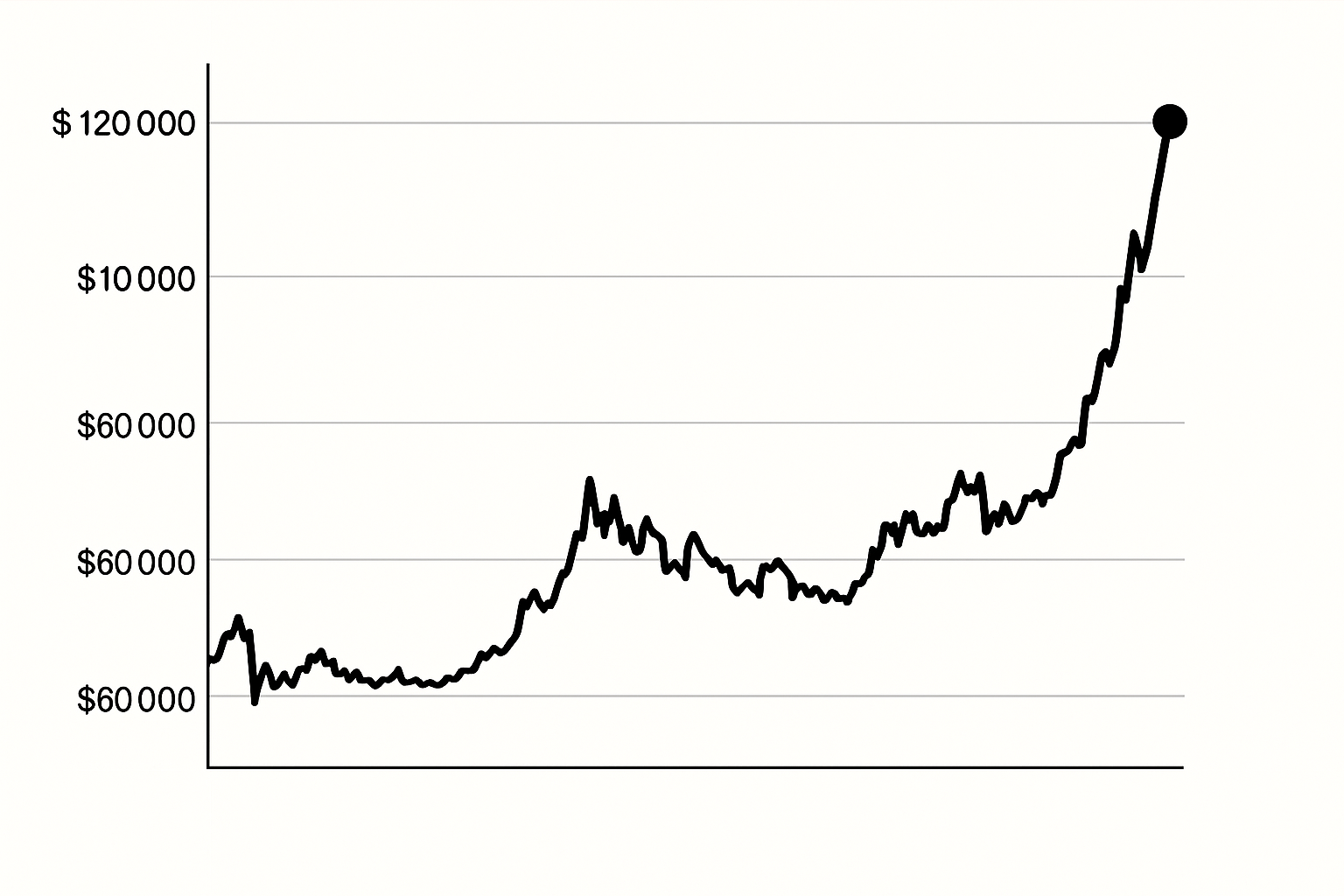
China’s first listed deathcare stock is slipping into the red
To understand the shift, it helps to clarify what “deathcare” actually includes. In China’s official classification of funeral services, the industry broadly splits into two parts: “funeral” and “burial.”
“Funeral” refers to the final journey of farewell—body transport, viewing and memorial ceremonies, and related services. These are usually handled by funeral homes or public institutions, and pricing tends to be relatively transparent.
“Burial,” on the other hand, covers the final placement of remains or ashes: cemetery plots, columbarium niches, ash storage, and related arrangements. The cost here ranges wildly—from almost nothing to essentially unlimited, depending on location and choices.
That’s why “burial” has historically offered the biggest commercial upside. Most listed companies in China’s deathcare sector built their business around one core product: selling graves.
Take Fushouyuan, China’s largest listed deathcare company. Its main engine has long been mid-to-high-end cemetery plots. In the first half of 2025, revenue from for-profit cemetery plots (as opposed to public welfare plots) contributed more than 60% of total revenue, with operations spanning 19 provinces, municipalities, and autonomous regions.
At its peak, Fushouyuan’s profit model looked astonishing. Gross margins stayed above 80% for years—higher than many luxury brands.
Its most talked-about moment came in 2023, when a new section at its Shanghai Songhe Garden went on sale. A three-urn plot measuring just 0.6 square meters—about the size of an office desk—was priced at RMB 457,800, translating to roughly RMB 760,000 per square meter. Next to that, even Shanghai luxury residences started to look “affordable.”
Financially, the company’s ascent was dramatic. Since listing in 2013, revenue surged from RMB 612 million to a peak of RMB 2.628 billion in 2023, more than quadrupling. Net profit that year approached RMB 1 billion.
Then the turn came. After 2023, performance reversed sharply: revenue fell in 2024, and in the first half of 2025 revenue dropped again—down roughly 44.5% year-on-year—while the company posted a net loss of RMB 261 million, its first loss since listing.
And it wasn’t alone. Other listed firms whose core business is also “selling graves” have been pushed into the same cold season. Losses are increasingly becoming an industry-wide headache.
When graves cost more than homes, people stop buying
A business once seen as “guaranteed profit” has run into a reality similar to the property market: demand resistance and policy tightening.
For a long time, Chinese families were willing to spend heavily on funerals and burials. When elders passed away, keeping things modest could feel incompatible with ideas of filial piety and social expectations.
International comparisons reflected just how heavy the burden could be. A 2020 survey by UK life insurance firm SunLife, covering 35 countries, found China among the places where funeral costs weigh most heavily on households—averaging around RMB 35,140, close to half a typical person’s annual wages.
But cultural expectations aren’t the only reason costs were high. The underlying structure also mattered: cemetery resources were scarce.
According to Ministry of Civil Affairs data, by the end of 2021 China had only 1,443 for-profit cemeteries nationwide—less than one per county on average. More than 70% of counties reportedly lacked an urban public welfare cemetery.
Scarcity reshaped the business into something that looked a lot like real estate: whoever controlled “prime land” effectively held pricing power.
Fushouyuan’s pricing history illustrates this. From 2017 to 2024, its average selling price for for-profit plots rose from RMB 102,400 per plot to RMB 121,200. Converted to a per-square-meter figure, its 2024 average reached RMB 242,000—higher than many high-end residences in central Shenzhen.
But like housing, cemetery pricing eventually meets a moment of “value correction.” The logic is blunt: the dignity of the departed is ultimately financed by the living. When households start planning expenses more cautiously, the budget for end-of-life spending tightens too. And premium cemetery plots—like luxury handbags—are not truly necessities.
The market’s response has been visible. In places like Chongqing, reports suggest high-end plots have become notably harder to sell as purchasing power weakens. Some families are choosing to store ashes first and postpone burial indefinitely.
Even market leaders have had to adjust. In its latest reports, Fushouyuan acknowledged it reduced the supply of high-priced products and increased mid-priced offerings. The result: the average selling price of its for-profit plots fell from RMB 121,200 per plot last year to RMB 63,400 this year—nearly a 50% drop.
A quiet shift in how China thinks about deathcare
Demand isn’t the only force at work. Policy direction has been reshaping the industry too.
In recent years, many regions have moved to regulate funeral and burial practices—reducing the financial burden on families, discouraging extravagance and status competition, expanding public welfare burial options, and promoting land-saving ecological burials that occupy little or no land.
By late 2024, the sector entered a broader wave of rectification. In 2025, the Ministry of Civil Affairs released a draft revision of the Funeral and Interment Management Regulations for public consultation. The draft pushes toward a basic public service system and brings multiple core services—such as body transport and preservation—under government pricing or guided pricing, compressing the space for arbitrary markups.
The draft also sets clearer “red lines” on land use, such as limiting single ash-grave plots to no more than 0.5 square meters, while encouraging sea burials, tree burials, and other ecological options.
Shanghai offers a concrete example. A newly issued service list further tightened price ceilings for services like burial arrangements, body transport, and storage. Certain fees that once ran higher—such as body makeup services—have been capped at much lower levels.
As policy increasingly frames deathcare as a public-welfare-oriented service, companies that relied on extraordinary margins naturally feel the squeeze. For Fushouyuan, Shanghai has long been its largest market—and in the first half of this year, revenue from its Shanghai cemetery and funeral services reportedly fell by 54.2%, highlighting how pricing controls can impact traditional profit pools.
At the same time, consumers are doing the math. Premium graves aren’t just expensive upfront; they often come with management fees, sometimes due every 20 years. People worry that after they themselves are gone, no one may be left to “renew” those payments for their parents’ graves.
By comparison, ecological options are cheaper—and in some places, local governments even offer subsidies or rewards. If decades from now a grave may be hard to maintain or even hard to locate, a simpler, more practical choice starts to make emotional and financial sense.
That’s how “de-mystification” happens: slowly, but steadily.
More families are choosing land-saving burials—ashes placed in columbarium walls, or ecological practices like sea burials and tree burials, where ashes return to nature through biodegradable containers or scattering in approved ways.
Beijing provides an early indicator: in 2016, the city’s land-saving ecological burial rate reportedly reached 55.97%, surpassing half for the first time. Guangdong has also accelerated, with the province’s ecological burial rate said to exceed 63% by 2025.
Instead of pouring money into a palm-sized patch of concrete with a 20-year “use period,” more people may choose a farewell that is lighter on land, lighter on wallets, and—perhaps—more aligned with the idea of returning to the wider world.