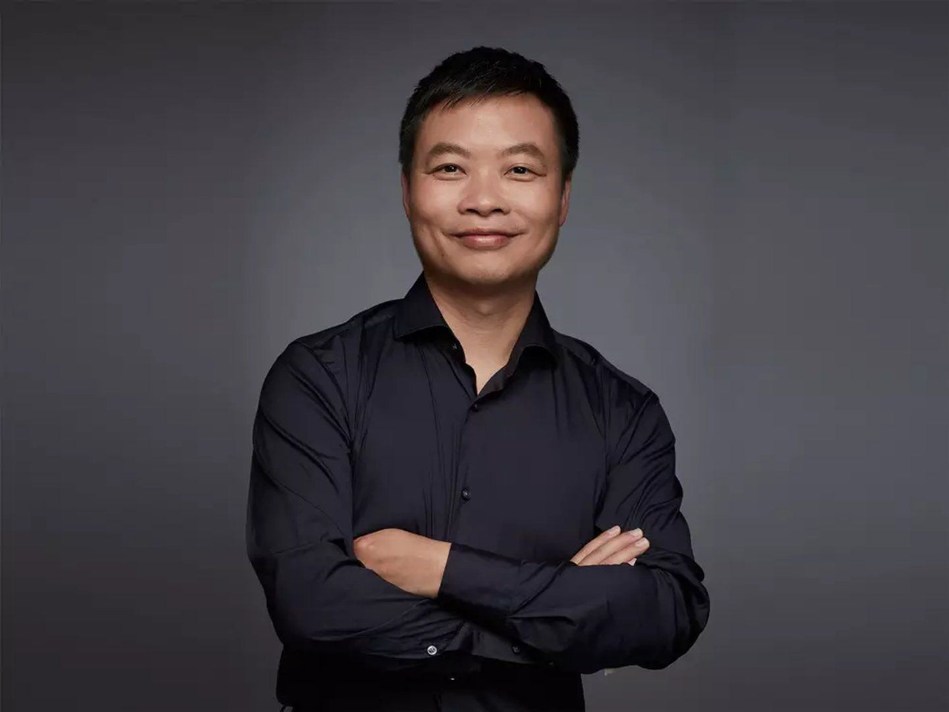
IT Home reported on December 30 that XPeng Chairman He Xiaopeng shared a new post on Weibo, revealing he recently spent four hours test-driving Tesla’s FSD v14.2 in the United States. His takeaway was clear: while FSD in 2024 still felt like a “solid L2 driver-assistance system,” the latest version has convinced him that L4-level driverless capability is now within reach.
What impressed him most, he said, was Tesla’s ability to run both mass-produced consumer vehicles and Robotaxi services currently in trial operations using the same autonomous-driving software stack. He noted that this aligns closely with the direction XPeng saw when it transitioned to its VLA 2.0 approach.
He added that he believes 2026 will mark the arrival of a true next-generation full autonomous driving era—both in the U.S. and in China—where the industry effectively jumps straight from L2 to L4, with L3 being bypassed. In his view, XPeng’s Ultra version will deliver this next-generation autonomous-driving capability, and will also rely on a single model to power Robotaxi applications.
He went on to argue that city NOA will soon become as commonplace as today’s automated parking—essentially a baseline feature for smart vehicles—while full autonomous driving will differentiate higher-end configurations. Over the next three years, he believes the market will see more clearly that cars with full autonomous capability will define the next generation of intelligent vehicles, much like how the iPhone reshaped the smartphone industry and made earlier “smartphones” feel like feature phones by comparison.
He also explained what he sees as the core difference between L2 driver assistance and full autonomous driving, highlighting four key dimensions: capability, scenario coverage, peace of mind, and efficiency. “Capability” refers to takeover frequency and smoothness across complex, generalized situations. “Scenario coverage” means being able to handle environments such as residential communities, parking structures, off-road areas, and even roads under different regulations worldwide. “Peace of mind” represents a higher level of safety beyond conventional standards, while “efficiency” is about reaching—and surpassing—the average human driver’s performance.
IT Home also noted that He attached a full video record of his U.S. test drive. In the footage, he attempted to use Tesla FSD v14 to navigate a McDonald’s drive-thru for ordering and pickup. The attempt did not fully succeed: the vehicle’s stopping timing was not accurate enough, and some situations still required manual intervention.