Beneath the nickname “Arc’teryx’s affordable alternative,” Pelliot (伯希和) has taken a decisive step toward the public markets, officially filing its prospectus with the Hong Kong Stock Exchange. The numbers are eye-catching: over the past three years, the company delivered nearly 5x revenue growth, posted a 59.6% gross margin, and even surpassed the margin level of Amer Sports, Arc’teryx’s parent.
Yet behind that headline growth sits a less comfortable set of expenses. Pelliot’s selling and distribution costs surged 91.61% year-on-year, reaching 41.5% of revenue—now higher than the cost of making the products themselves. That imbalance may help explain why its listing process has not moved forward smoothly so far.
At the same time, R&D investment has remained modest. According to the prospectus, R&D spend as a share of revenue fell from 3.6% in 2022 to 1.8% in 2024, raising questions about how much of the brand’s “tech outdoor” positioning is being reinforced by long-term capability building.
Pelliot’s customer base also stands out. By signing top actor Cheng Yi, the brand attracted a large cohort of female fans—so much so that a single “same-style” jacket reportedly generated RMB 100 million in sales. The rise of the “she-economy” has become one of the company’s most discussed business highlights.
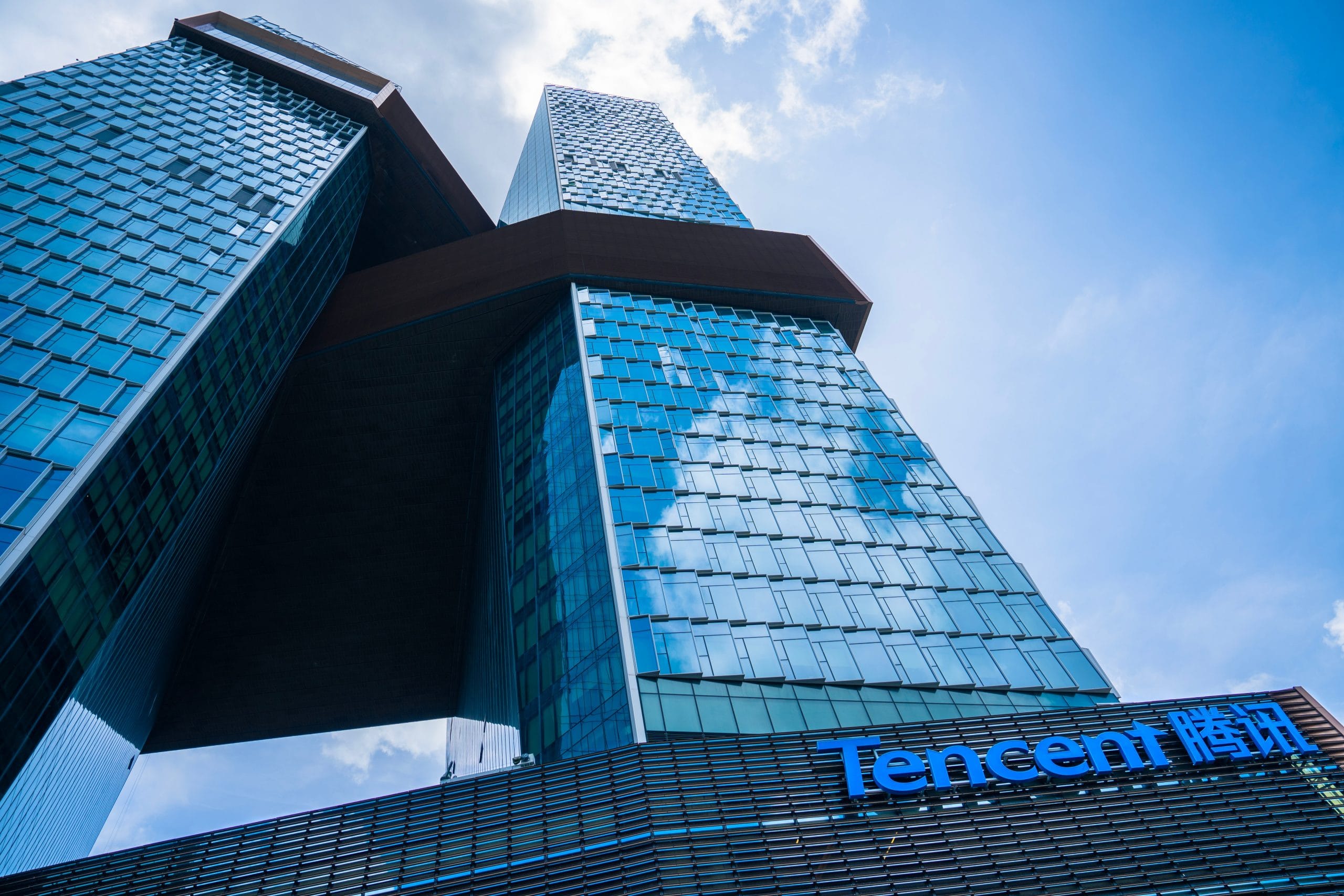
Just before Pelliot submitted its IPO application, Tencent invested RMB 300 million for a 10.7% stake, instantly drawing widespread attention. For many observers, it looked like a high-profile vote of confidence—not only in Pelliot, but also in the broader momentum of China’s outdoor apparel market.
Investment
In May, the Hong Kong Stock Exchange introduced a “Technology Enterprises Channel” designed to streamline listings for tech-oriented companies. Around the same time, the new HKEX Tech 100 Index set clear thresholds for eligibility—such as R&D intensity above 3% over the past two years or revenue growth above 5%—all intended to pull more tech-driven issuers into Hong Kong.
Pelliot’s early brand story leaned heavily into a “tech outdoor” identity. In its second year, it built the PT-China platform—positioned not as a single technology, but as a broader system combining in-house development, external collaboration, and industry–academia partnerships.
The platform produced proprietary concepts such as STORM BREATH and STORM SHIELD, aimed at balancing waterproofing with breathability and strengthening wind protection—core performance promises in shell jackets.
But compared with deep, original material innovation, Pelliot appears to place greater emphasis on integrating premium global fabrics and optimizing construction craftsmanship. Its higher-end products extensively use materials from internationally known suppliers such as Toray, Polartec, eVent, Pertex, PrimaLoft, and others—materials that are also widely used across the outdoor industry.
In today’s market, real technical accumulation is often the lever that enables outdoor “tech brands” to command stronger pricing power. The PT-China platform looks more like process optimization than a breakthrough in core fabric technology.
This is where expectations may diverge. Pelliot’s R&D ratio fell from 3.6% (2022) to 1.8% (2024), and as of the end of June 2025, its design and R&D team reportedly totaled 49 people.
Scale matters here. Major players like Anta and Li Ning typically keep R&D expense ratios around 2.8%–3.5%, above Pelliot’s roughly 1.78%. Notably, even Toread, with a smaller revenue base, reported R&D spending of RMB 80.748 million, more than twice Pelliot’s level.
Pelliot highlights 45 patents in its prospectus, but only 4 are invention patents; the rest are design or utility-model patents. By contrast, industry leader Anta has filed more than 4,400 patents and holds more than 2,500 valid patents.
As a rising brand, Pelliot clearly has room to increase and upgrade investment in the R&D layer.
Narrative
Pelliot’s technology gap reflects a broader challenge shared by similar brands. Brands like Beneunder (蕉下)—which previously struggled in its capital market push—and Camel (骆驼)—currently popular in lower-tier markets—have faced variations of the same problem.
The logic is straightforward: when R&D is thin, products become easier to copy. When products become more homogeneous, competition intensifies. When competition intensifies, margins get squeezed.
“Arc’teryx’s affordable alternative” is one of Pelliot’s strongest talking points, but it is not exclusive—especially in a market where OEM/ODM-style supply chains are also used by peers like Camel and Beneunder.
With supply chains and product features increasingly converging, Pelliot has differentiated itself more effectively through a female-outdoor + fandom economy storyline.
According to the China Outdoor Market Report, women account for 72% of “light outdoor” consumers in tier-one cities—an attention-grabbing figure in a category often assumed to be male-led.
Early on, Pelliot signed actresses such as Bai Baihe and Tong Liya to connect directly with female consumers. In 2024, the brand signed Cheng Yi, whose fandom influence further deepened the brand’s reach into the same target demographic.
Fandom has become a powerful growth engine. Within Cheng Yi’s fan community, a unique “recognition culture” even formed—wearing Pelliot becomes a shared signal of being part of the same fan circle, with supporters calling themselves “Yi-family” and using the brand as a kind of identity code.
This “female narrative + fandom economy” combination has turned into a practical growth key. Traffic converts into sales, and the brand’s visibility rises sharply—an outcome that is relatively rare in apparel.
In 2024, Cheng Yi-related campaigns reportedly reached billion-level views and generated 200 million interactions in a short period. In the first half of this year, a Cheng Yi “same-style” jacket contributed RMB 75 million to RMB 100 million in sales.
Peers are leaning into the same direction. Amer Sports’ Q4 2024 results suggested Arc’teryx’s women’s line grew faster than menswear and above the brand average. Salomon has also indicated that women once accounted for as much as 70% of its China user base.
Still, women’s outdoor is a crowded battlefield. Nike’s partnership with Kim Kardashian, lululemon’s push into women’s outdoor lines, and Salomon’s women-specific trail running shoes all show how aggressively the category is being contested.
Pelliot’s heavy reliance on traffic marketing and online channels also carries risks.
From 2022 to 2024, total marketing spend reached RMB 745 million, and in 2024 it jumped 104% year-on-year. Over the same three years, total net profit was RMB 459 million—highlighting how marketing intensity is consuming earnings.
Selling and distribution expenses rose from 31.8% of revenue (2022) to 41.5% (H1 2025), suggesting that acquiring online traffic is becoming increasingly expensive.
Offline expansion has been slower. By the end of 2024, Pelliot had 146 retail stores in mainland China, but only 14 were directly operated—still some distance from the brand’s “500+ stores” ambition.
What stands out is the imbalance: marketing stays high, while R&D remains light. This model can quickly produce products that match current trends, but it is less helpful for building premiumization and durable brand pricing power.
Pelliot launched its premium “Summit Series” in 2025, pushing prices into five-figure territory, and pairing it with its “Professional Performance” line as a high-end matrix. Even so, the combined revenue share of these premium lines is still under 7%, meaning premiumization is only just beginning.
On the positive side, repeat purchase rate increased from 18% (2022) to 26% (2024), showing improving stickiness. But stronger competition, rising traffic costs, and mounting returns and inventory pressure are all hitting at once.
Inventory climbed from RMB 154 million (2022) to RMB 595 million (2024)—a 150% increase. Finished goods inventory rose 180% year-on-year in 2024, far faster than business growth, while inventory turnover days increased from 189 (2023) to 213 (2024).
Returns are a persistent pain point in women’s apparel, and Pelliot is not exempt. Return rate rose from 27.1% (2022) to 39.9% (H1 2025). Refund liabilities also grew from RMB 12.67 million (2022) to RMB 44.26 million last year.
“Morandi color palettes” and “Xiaohongshu viral styles” can help the category break through, but marketing alone cannot sustain long-term premium upgrading.
The Bigger Calculation
If it’s not core technology, not channels, not supply chain, and not yet an established premium brand moat—what is Pelliot’s core asset?
In 2025, Tencent’s RMB 300 million investment for 10.7% effectively stamped Pelliot with a “Tencent ecosystem” halo. Coming shortly before the IPO filing, the timing amplified the effect, and the company’s valuation reportedly reached RMB 2.8 billion.
Even if its “tech” label is not fully supported by R&D depth, the growth story remains compelling. From 2022 to 2024, revenue jumped from RMB 378 million to RMB 1.766 billion—a 4.7x surge—while gross margin rose from 54.3% to 59.6%.
Tencent has been eyeing the outdoor space for years. Back in the 2019 Amer Sports acquisition, its capital already found its way into premium outdoor brands. Investing in Pelliot extends that footprint, creating broader coverage across both the high-end and mass segments of the sports-outdoor market.
For Pelliot, Tencent provides strong capital endorsement. For Tencent, Pelliot adds another important piece to its outdoor strategy.
There is also a deeper match: Pelliot’s traffic-driven DNA aligns with Tencent’s strengths. Behind fast-growing DTC sales sits a rich pool of user, scenario, and industry data—exactly the kind of raw material Tencent can use to refine advertising systems, expand WeChat commerce scenarios, and reinforce payment stickiness.
The viral phenomenon around Arc’teryx’s Lunar New Year limited ALPHA SV jacket—spreading rapidly from WeChat Mini Programs to Moments—offered a preview of how outdoor products can become social-commerce events inside Tencent’s ecosystem.
After upgrading its official Mini Program, Arc’teryx embedded membership, after-sales, and benefits deeply into WeChat—covering everything from purchase (including AR try-on) to services (repair and cleaning) to community experiences (booking outdoor classes).
This kind of “digital accelerator” is both a conversion tool for brands and a strategic weapon for Tencent’s new retail ambitions. Premium outdoor apparel—with high price points and high margins—is also well suited to supporting the cost of more advanced digital innovation.
By the end of 2024, Pelliot’s online DTC sales reached RMB 1.351 billion, accounting for 76.5% of total revenue. Tencent’s ecosystem support could further strengthen that online advantage.
Tencent entered while Pelliot is still in its growth burst. If it remains a purely financial investment, Tencent likely has a smooth path to exit later. But strategically, Tencent’s expectations for Pelliot are unlikely to stop at simple investment returns.