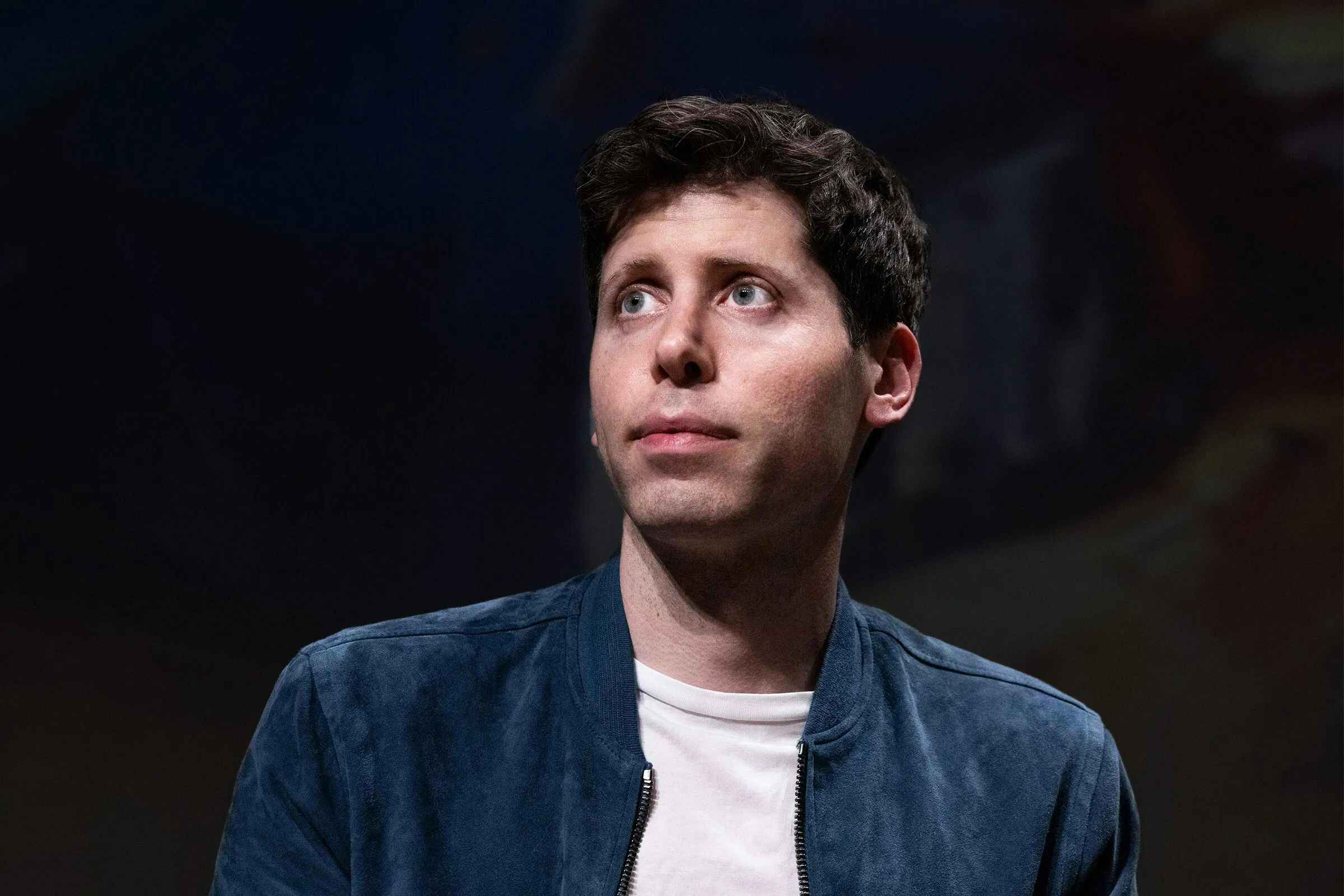
At the beginning of 2024, OpenAI CEO Sam Altman offered a bold prediction in an interview:
“In the AI era, it’s possible for one person to build a billion-dollar unicorn.”
By May 2025, at Sequoia Capital’s AI Summit, that idea returned to center stage—this time with an even sharper framing:
We may soon see the first true “one-person unicorn.”
Over the past two years, emerging signals have begun to validate this outlook.
Carta’s 2025 data points to a historic inflection: more than one-third of new companies are now founded by solo founders.
The share rose from 23.7% in 2019 to 36.3% in the first half of 2025—an increase of 53% in just six years.
Terms like “super individual,” “indie developer,” Solopreneur, One-Person Company (OPC), and solo founder are showing up everywhere, more frequently than ever.
The rules of entrepreneurship are being rewritten.
What exactly is a “one-person company”?
In the traditional playbook, starting a company usually means building a team, finding a co-founder, and setting up an organization from day one.
Silicon Valley’s most famous origin stories reinforce that idea: two brilliant people in a garage changing the world—Jobs and Wozniak, Page and Brin, Bill Gates and Paul Allen. These narratives shaped how society imagines entrepreneurship.
Investors have historically favored co-founding teams too, because on paper they offer clear advantages: shared risk, complementary skills, and built-in checks and balances.
But the rise of one-person companies in the AI era is challenging that default script.
In practice, a one-person company doesn’t literally mean the business will always have only one human involved.
A more accurate definition is this: a startup led by a single decision-maker, using AI and external resources to dramatically expand the founder’s personal capability.
In other words, the founder doesn’t need to do everything alone—they need the ability to orchestrate tools, talent, and partners across the value chain.
That’s the real value of the model: you don’t have to “lock in” a mediocre co-founder at the very beginning. You can validate the business first, then build a team gradually as the company earns the right to scale.
With AI tools now mature, this “start moving first” approach has become genuinely viable.
A solo founder in AI music illustrates the point well. She runs without full-time employees, but uses AI tools and a global collaboration network to coordinate creation, production, and delivery end-to-end. When urgent projects arise, she can mobilize AI and external specialists instantly—often responding faster than traditional music companies.
That’s the core logic of the one-person company:
One person can operate like an entire team.
Why is this happening now?
One-person companies didn’t suddenly appear—but in the last two years, they’ve exploded into the mainstream. A few forces are converging at once.
First, AI has dramatically expanded what one person can do.
As models become cheaper and more accessible—accelerated further by cost reductions across the ecosystem—AI adoption has surged in both daily life and work.
Several recent reports capture this shift:
A Tencent Research Institute report from September found that 96% of people have used AIGC products, and nearly 70% use them every day.
A September report from Soul found that 99.2% of college students have tried AIGC products, and 66% instinctively ask AI first—meaning for many young people, AI has become their default “first reaction” when they face a problem.
More importantly, AI’s capability boundary is expanding.
2025 is widely seen as “Year One of Agents.”
AI is moving beyond being a passive tool and evolving into something closer to an autonomous “virtual partner.” Work that used to demand team collaboration—coding, design, writing, operations—can increasingly be executed by a founder who orchestrates a set of AI agents.
Second, the cost of starting a company keeps falling.
According to the 2024 Global One-Person Company Industry and Investment Ecosystem Report, 90% of solo founders started with less than $500.
Cloud computing, SaaS tooling, and open-source models have reduced the need to build infrastructure from scratch.
AI subscriptions now behave like mobile plans: a base monthly fee plus usage-based add-ons. That flexible cost structure makes it possible to launch with nearly zero fixed overhead.
In the past, you raised money, assembled a team, and rented an office before proving anything.
Today, one person with a laptop can test a real business idea immediately.
Policy is also beginning to catch up. In 2025, Shanghai Lingang introduced a “Super Individual 288 Action Plan,” offering zero-rent startup space for OPCs. Other areas, including Shanghai Zhangjiang’s AI Town and Beijing Zhongguancun, have rolled out targeted support as well.
The message is clear: the one-person company is becoming an increasingly recognized model—not just a niche lifestyle choice.
Third, success stories are creating a powerful demonstration effect.
Vercel’s Guillermo Rauch and Pieter Levels (founder of Nomad List and RemoteOK) both started solo, validated product direction, and only then gradually built teams.
As more independent founders successfully raise funding and achieve exits, the market is forced to acknowledge a new reality: this path works.
Investors are rethinking the long-held assumption that “a startup must have co-founders,” and founders are asking a sharper question:
Do I really need a co-founder on Day 1?
The other side of co-founding
The classic startup logic celebrates co-founders for good reasons—at least in theory:
shared risk, complementary skills, balanced decision-making, and emotional support.
But theory isn’t reality.
In practice, co-founder misalignment—conflicting visions, equity disputes, and decision deadlocks—is one of the most common reasons startups fail.
Research cited by Noam Wasserman in The Founder’s Dilemmas suggests that 65% of startup failures stem from internal conflict within founding teams. When founders fundamentally disagree about direction, resource allocation, or fundraising strategy, the company can spiral into internal warfare—or split apart entirely.
And in the early stage, that risk is often fatal.
Even more subtle is the “settling” problem.
Many founders rush into a co-founder relationship because “investors prefer teams,” “it’s lonely,” or “I need someone to share the pressure.” But if that person isn’t truly aligned or genuinely complementary, they can become a liability rather than an advantage.
One founder, Douglas, described it this way:
“Finding a co-founder is like finding a spouse—rush into it, and you often end up in a painful breakup.”
Of course, one-person companies have challenges too.
The most common is loneliness: no one to debate decisions at midnight, no one to share anxiety with, no one to absorb pressure—everything rests on one set of shoulders.
But that challenge has real solutions.
Founder communities, mentor networks, and peer circles can provide emotional support without sacrificing decision independence. In Shanghai, for example, the SoloNest community has hosted 100 offline events and connected more than 4,000 one-person founders—sharing lessons, trading tactics, and keeping each other going.
The key idea is simple: don’t find a co-founder just to have one.
If the right partner hasn’t appeared, starting solo may be the better move. Once the business reaches a certain stage, you can bring in core talent through equity incentives—and that path is equally viable.
Data from solofounders suggests that the median equity granted to the first five employees at solo-founder companies is very close to that of co-founded companies.
Starting with 100% equity gives solo founders a powerful advantage: they can offer highly competitive upside to attract exceptional partners later—on better terms, at the right time.
Do we still need “companies” as we know them?
The rise of the one-person company raises a deeper question:
In the AI era, is the traditional company structure still the best way to organize work?
Modern corporate organization was born in the industrial age. Its logic was straightforward: one person can’t do everything, so you hire people. Once you hire, you need division of labor. Once you divide, you need coordination—so you build departments, hierarchies, and processes.
AI is now challenging that foundation.
When one person can use AI to complete work that used to require multiple specialists, the need for “organization” weakens.
When AI can provide cross-domain expertise, the boundaries of specialization blur.
When AI agents can automate coordination, management layers begin to look outdated.
Manus—one of the fastest-growing general AI agents internationally in 2025—reportedly reached over $100 million in ARR within eight months of launch. Its strength lies in autonomy: it doesn’t just execute single tasks, it can plan, call tools, and complete complex multi-step workflows.
If this continues to evolve, then one person working alongside a fleet of AI agents may genuinely achieve outcomes that once required a full company.
A typical solo-founder stack today might look like this:
Claude for code, Gemini for front-end, GPT for content, Notion AI for project management, and n8n for automation.
One person, a few subscriptions, and under $500 per month can sometimes deliver what used to demand a small team.
This doesn’t mean companies will disappear.
Chip fabrication, manufacturing, and capital-intensive businesses still require large-scale coordination and real-world infrastructure.
But the shape of organizations will change.
McKinsey’s September 2025 report, The Agentic Organization, suggests future organizations will shift away from rigid hierarchies and toward outcome-driven networks—dynamic systems made of mixed human-and-AI micro-teams.
A “typical” team might have only 2–5 core humans, while managing 50–100 AI agents that execute everything from customer onboarding to product launches to financial reconciliation.
The downsides of the one-person path
One-person companies aren’t a magic solution—sometimes they aren’t even the optimal solution.
The right model depends on your strengths, your interests, and whether what you’re building truly creates value.
One independent SaaS developer shared that he once worked 14 hours a day for three straight months—because “everything is my responsibility.”
Eventually he realized the key isn’t “one person does all the work.”
The key is “one person decides what should be done—and what should not.”
According to Karen, the organizer of the SoloNest community, among 2,000+ offline samples she has interacted with, only about 20% are consistently making stable income.
AI can raise your odds—but building a business is still hard.
If you’re considering the one-person company route, ask yourself three questions:
Can I handle months of major decisions without having someone to consult?
Am I willing to learn—and continuously iterate—an AI toolchain?
Do I clearly understand the boundaries of my own core strengths?
If your answer is “yes” to all three, you may be more suited to this path than you think.
From “super individuals” to one-person companies
In recent years, the idea of the “super individual” has been widely discussed.
AI is now pushing that concept into a new phase: it’s not just that one person can do more work—
it’s that one person can operate like a company.
That means more people can create commercial value independently, without relying on traditional organizations.
Still, one-person companies won’t fit everyone—or every industry.
They favor founders with strong self-drive, a learning mindset, and the ability to make independent decisions. They also fit best in knowledge-intensive, creativity-driven, and highly digital fields.
And for those who have ideas and skills but have been waiting for “the perfect co-founder,” this may be the moment to challenge that assumption.
Instead of waiting for timing, resources, and people to align, you can use AI to ship a first version and start learning from reality.
If you want to try the one-person company approach, start with a weekend project:
Use AI to build a minimum viable product, publish it on Product Hunt (or share it on Xiaohongshu), and see if anyone is willing to pay.
Thinking creates questions.
Shipping creates answers.