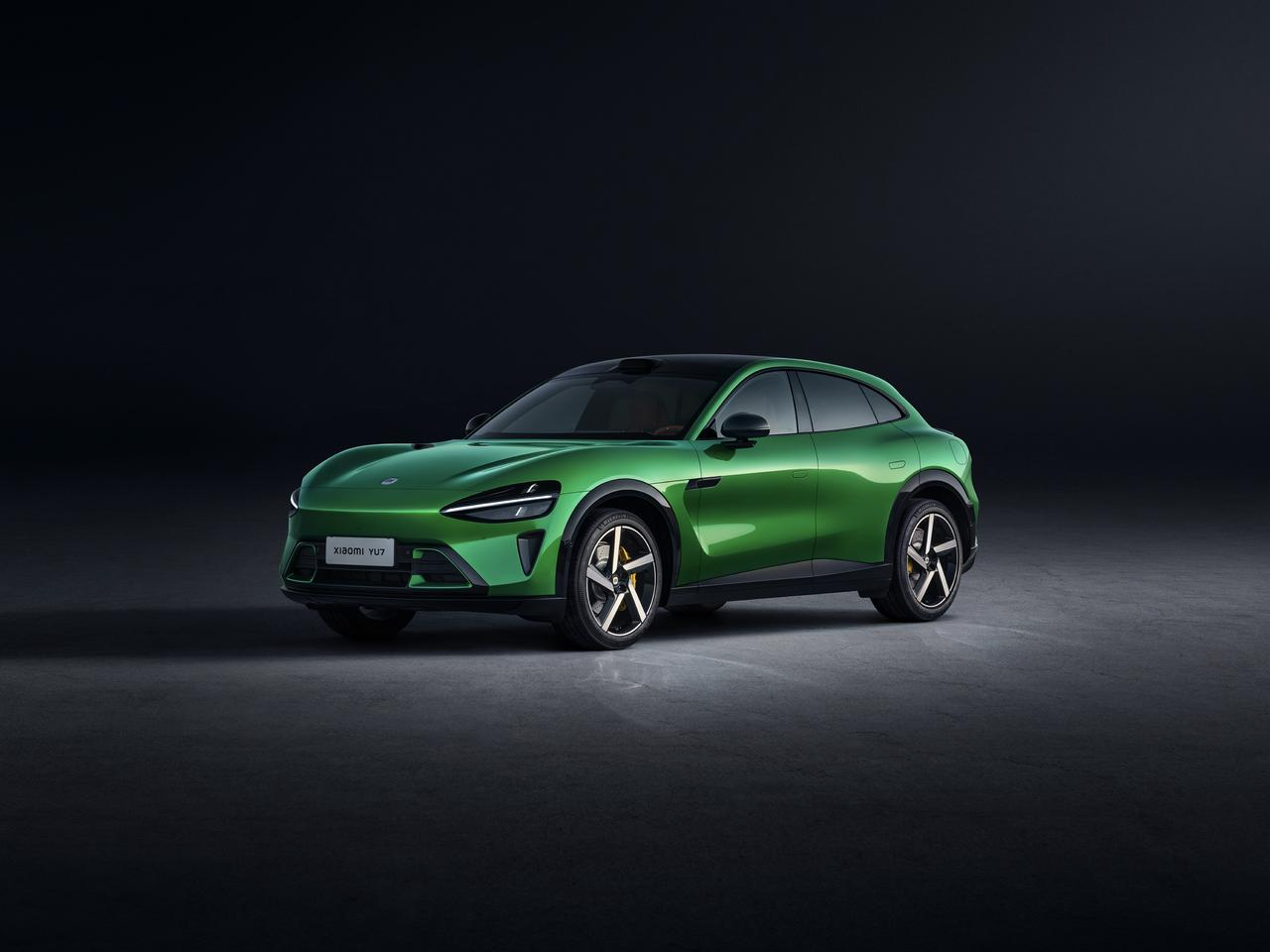
As the new year begins, automakers’ 2025 sales results are arriving one after another—and the leaderboard has been reshuffled. Leapmotor surged to the top with 596,600 vehicles sold, followed closely by HarmonyOS Intelligent Mobility at 589,100. Xiaomi Auto, with an estimated 410,000 deliveries, landed in fourth.
Meanwhile, the former “model student” Li Auto slipped to fifth, selling roughly 100,000 fewer vehicles than in 2024. NIO held steady in sixth place, but still managed a 46.9% year-on-year increase. XPeng, however, delivered the biggest jump among the trio: from 190,100 units in 2024 to 429,400 in 2025—climbing to third place on the new-entrant delivery ranking.
The new-energy battlefield has clearly entered a new phase. Even for XPeng, which looks like the early winner, for William Li, still wrestling with profitability, and for Li Xiang, navigating a painful transition, nobody has the luxury of relaxing.
Today’s EV market isn’t just about “new forces” anymore. BYD and Tesla remain far ahead, while Leapmotor, Huawei, Xiaomi and others are charging hard. Traditional joint-venture brands are also pushing back. The “new-entrant” label is fading, replaced by a brutal, close-quarters elimination match.
In this survival race, the longer NIO, XPeng, and Li Auto run, the heavier their steps become. When the old narratives stop inspiring, they need something sturdier—products, execution, and real results—to carry them through the next stretch.
01 NIO: Learning Pragmatism on the Edge
For NIO, 2025 brought it dangerously close to a breaking point. In the first quarter, the company posted its worst single-quarter loss since going public. Chairman William Li admitted bluntly: “Q1 2025 was the lowest point for NIO in the past three years.”
Losses have followed NIO for most of its journey. In earlier years, abundant market liquidity meant it could keep securing fresh capital. But as competition intensified, profitability stopped being a long-term aspiration and became a hard survival line.
To NIO’s credit, its pivot came in time. Starting last March, the company pushed a major organizational overhaul—splitting operations into multiple non-overlapping “basic operating units,” each with clear ROI targets and performance-based rewards and penalties.
William Li didn’t sugarcoat the urgency: “We must change—if we don’t, we won’t survive.” According to 36Kr, he went deep into the restructuring himself, including direct involvement in core component price negotiations and even demanding cost optimization down to four decimal places.
Observers described it as “waking up someone pretending to sleep.”
For years, NIO differentiated itself through a premium positioning—owner services, battery swapping infrastructure, and brand-driven marketing that built strong loyalty and visibility. Yet that same persistence also drew criticism. Many admired Li’s long-termism, but it became increasingly clear that without unlimited capital and time, trade-offs between vision and reality are inevitable.
Now, Li has not only learned to “do the math,” but also loosened his fixation on luxury purity—choosing instead to bend closer to real market demand.
As he put it in a media briefing: “Internal reflection is a process with no finish line. The hardest part of running a company is knowing what to坚持 and what must change.”
Then came the long-awaited spark of momentum.
The Onvo L90 delivered 10,575 units in its first month—becoming the fastest NIO-linked model to surpass 10,000 deliveries. The new ES8 also set a record, becoming the quickest EV priced above RMB 400,000 to exceed 30,000 deliveries. Since the Onvo L90 launched last August, NIO has recorded five consecutive months of delivery growth—painting a very different picture of what “NIO” can look like.
One reason is sharper focus on user pain points. Both models lean into solving real space challenges in large three-row SUVs. The Onvo L90 targets mainstream six-seat family users, making third-row comfort a central objective. The ES8 stays anchored in high-end family and business buyers, with William Li claiming its front-and-rear cargo space exceeds that of two key competitors combined.
Another reason is pricing that finally feels compelling. The new ES8 dropped by over RMB 100,000 versus the previous generation—delivering a “lower price, richer spec” proposition. The battery-leasing option also pulls the entry price into a more accessible range.
Still, NIO’s comeback doesn’t equal victory. In his 2026 New Year letter, William Li emphasized: “We don’t have the privilege of relaxing for even a moment.” In his view, competition has entered the finals—and pressure will only rise.
Most importantly, profitability remains unresolved. Even if NIO turns the corner financially, that’s only step one. The true test is whether NIO can turn “long-termism” into a series of pragmatic, disciplined steps that consistently work.
02 XPeng: New Anxiety After Taking the Lead
Compared with NIO, XPeng’s 2025 looked much smoother on the surface. Yet XPeng knows what the edge feels like, too. In 2022, it also landed in an “ICU moment,” and only climbed out through structural reform and by bringing in former Great Wall Motors president Wang Fengying.
In 2024, XPeng adjusted its product strategy on two fronts.
First, it launched sharply priced models like the MONA M03 and P7+. Second, it kept building its technology moat in advanced driving—positioning itself as the first automaker to actively pivot toward becoming an AI company.
XPeng leaned hard into a “smart-driving value” narrative: pushing intelligent driving downmarket while using aggressively priced models to drive volume—effectively delivering a “dimensionality reduction strike” against rivals in the same segment.
Chairman He Xiaopeng called it a “life-or-death choice”: “If we don’t change, we die. If we change poorly, we die faster. We had to find the right rhythm.”
In 2025, XPeng delivered 429,400 vehicles—up 126% year on year. The bet paid off, and XPeng entered a favorable cycle.
Beyond vehicle sales, its partnership with Volkswagen also brought in service revenue that helped narrow losses. In December, He Xiaopeng even stated the probability of achieving Q4 profitability was 99.999%.
But just as XPeng escaped the valley, new problems surfaced.
The XPeng G7 and the new P7—both launched in 2025—failed to replicate the MONA M03’s breakout performance. The mid-to-large SUV G7 recorded 5,529 and 6,811 units in July and August after launch, but fell sharply to around 3,000 per month from September onward. The refreshed P7 briefly exceeded 8,000 monthly units, yet dropped below 3,000 by November.
In contrast, the 100,000–150,000 RMB MONA M03 kept selling strongly, often hitting around 15,000 units per month and contributing roughly 40% of XPeng’s total volume.
That “low-end hot, high-end cold” split is not what XPeng wants. While the company’s value-for-money direction brought in scale, its average selling price slid from above RMB 200,000 in 2024 to around RMB 150,000 by Q3 2025. Even though overall gross margin improved, a major contributor was the tech R&D service business—and automotive gross margin actually declined quarter over quarter in Q3.
On the surface, XPeng’s “move upmarket” struggle looks like a positioning issue. The G7 and P7 were seen as less price-competitive than peers; the G7 overlapped with the G6 in both pricing and positioning; and the P7 was criticized as being too “tech-forward” to satisfy broader mainstream taste.
Look deeper, and the issue is sharper: XPeng succeeded in using extreme pricing to attract users, but the products themselves didn’t feel “extreme” enough in differentiated value—especially in SUVs, which ended up performing worse than its sedans.
In a market where every model must have a clear value anchor, XPeng can’t rely forever on the story of “high-level smart driving for 100,000 RMB.” It needs a true “technology layering” system—distinct capabilities and identity across different product tiers—so it can win the real core demands of consumers and rebuild a credible premium image.
03 Li Auto: Searching for a New Story
Compared with NIO and XPeng, Li Auto had long been the most stable of the trio. It locked in early success with a family-focused positioning and an extended-range route, leading both volume and profitability ahead of its peers.
But in 2025, that “top student” hit its hardest transition pain to date.
Full-year sales fell to 406,000 units, down about 19% year on year. Its annual target completion rate was just 63.48%. And its pure EV strategy—meant to be the next growth engine—started far below expectations.
Last year, Li Auto launched two pure EV models in succession: the i6 and i8. Neither became a true blockbuster.
The i8 faced criticism for being overpriced and overcomplicated in configuration, forcing Li Xiang to revise the lineup overnight—simplifying three variants into one. The i6 achieved a strong initial launch, and within a month the company disclosed that its capacity for the year had already been sold out. Yet the i6 and i8 overlapped in positioning, raising concerns that i6 demand may have come at the expense of the i8—and even the extended-range L series.
More seriously, the extended-range dividend is fading. Rivals like Huawei and Leapmotor are increasingly competing for the same market share. Li Auto’s once-dominant L series began to show fatigue.
In Q3 2025, Li Auto recorded its first quarterly loss since listing. This wasn’t just a temporary stumble—it reflected deeper, systemic underperformance across strategy direction and organizational rhythm.
Li Xiang recognized that reality, and initiated a meaningful “self-denial” review. In a closed-door meeting last October, the company dissected issues across sales decline, R&D, and product execution.
Li Xiang reportedly said: “When we play one card, our competitors often play two. Our product rhythm and organizational rhythm can’t match today’s competitive intensity.”
He also rejected Li Auto’s attempt over the past three years to shift toward a “professional manager” governance structure—arguing that it didn’t fit the current volatile environment or Li Auto’s actual conditions.
As a result, Li Auto entered a “second entrepreneurship” mode—explicitly focusing on improving organizational efficiency, re-centering products around user value, and accelerating AI-driven innovation.
According to LatePost, the adjustment logic is to widen differentiation across positioning, product strength, and pricing—minimizing internal competition between pure EVs and extended-range models in similar price bands.
Insiders also said the company wants to move away from “matryoshka doll” product patterns—where differentiation relies mostly on configurations—toward design-led differentiation. Li Auto president Ma Donghui indicated the L series would return to a simplified SKU approach, fully removing the pain point of “entry trims with compromised experience.”
If Li Auto originally broke out of the trio through precise insight into segmented family needs, it is now trying to reclaim that edge—building products that genuinely impress, rather than products that merely “get by.”
At the same time, with major changes across the product line, the market is watching whether Li Xiang will step back into a more hands-on, founder-led role. That decision could shape Li Auto’s next product direction—and may determine whether it can create another true hit.
Compared with NIO and XPeng, Li Auto still holds a sizable cash reserve, which makes it look calmer on paper. But the transformation pressure it faces may be even heavier.
For the capital market, a company without a credible “future” can drift into slow decline. Li Auto is searching hard for a “new story,” but narrative alone won’t be enough. The only way to restore confidence is still the same place it started: the product.
04 Closing Thoughts
A decade ago, NIO, XPeng, and Li Auto entered the scene as a disruptive force in China’s auto industry. Ten years later, after very different journeys, the former “three musketeers” have once again found themselves standing together at the doorstep of the final round.
On the surface, their challenges look different: NIO is chasing profitability, XPeng is pushing intelligent driving, and Li Auto is wrestling with transformation. But beneath it all, the demands converge into the same hard truth: build blockbusters.
This is no longer the forgiving era of generous capital and wide market tolerance. Today’s auto arena is fiercely saturated. Telling a good story is no longer enough. The only real way to survive is to build products that are strong, sellable, and profitable.
One blockbuster keeps you at the table.
Two blockbusters help you live better.
A steady stream of blockbusters is what ultimately gets you across the finish line.