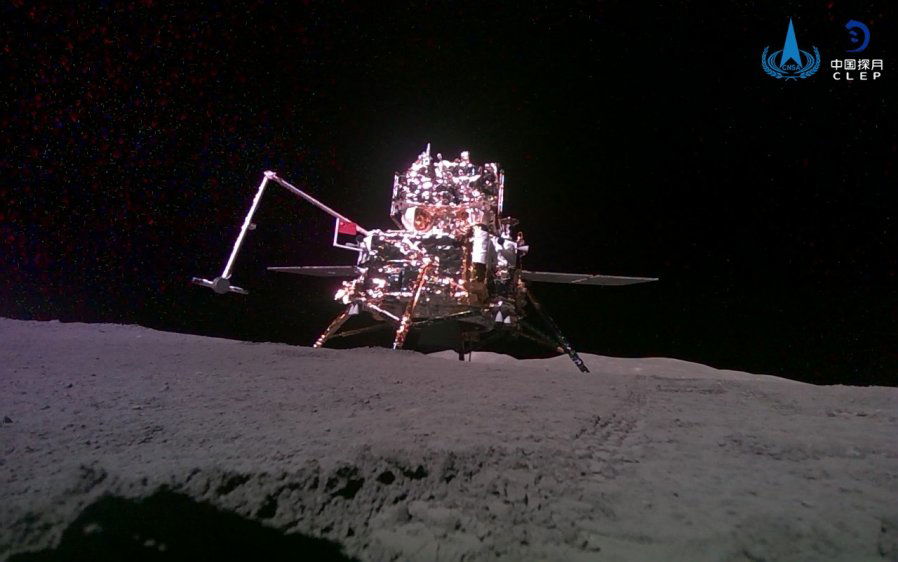
(Beijing, Jan 20) A research team from Jilin University in China has achieved a major scientific breakthrough by systematically analyzing lunar soil samples returned by the Chang’e-6 mission. For the first time worldwide, the team has confirmed the natural formation of single-walled carbon nanotubes and graphitic carbon on the Moon.
According to Xinhua News Agency, the researchers applied a combination of advanced microscopic and spectroscopic techniques to characterize samples collected from the Moon’s far side. Their work not only enabled the first definitive identification of graphitic carbon in lunar soil, but also traced its possible formation and evolutionary pathways. Notably, this study represents the first global confirmation that single-walled carbon nanotubes can form naturally without any human intervention.
The findings suggest that the formation of these carbon nanotubes is closely linked to iron-catalyzed processes driven by multiple factors in the Moon’s history, including micrometeorite impacts, volcanic activity, and prolonged exposure to solar wind radiation. This demonstrates nature’s ability to synthesize advanced nanomaterials under extreme extraterrestrial conditions.
By comparing far-side samples from Chang’e-6 with near-side samples collected by the Chang’e-5 mission, the team found that carbon structures in the far-side samples exhibit significantly more defects. This is likely associated with a more intense micrometeorite bombardment history on the Moon’s far side, revealing new asymmetries between the near and far sides in terms of material composition and geological evolution.
This discovery follows the team’s earlier identification of few-layer graphene in Chang’e-5 samples and marks another major milestone in lunar carbon material research. The study has been published in the international scientific journal Nano Letters.