Fast Technology reported on January 24 that a recent passenger measurement has sparked lively online discussion about air quality aboard high-speed rail. According to the post, a rider tested carbon dioxide (CO₂) levels inside a train car at 2,207 ppm and claimed this exceeded a “standard limit” of 1,000 ppm.
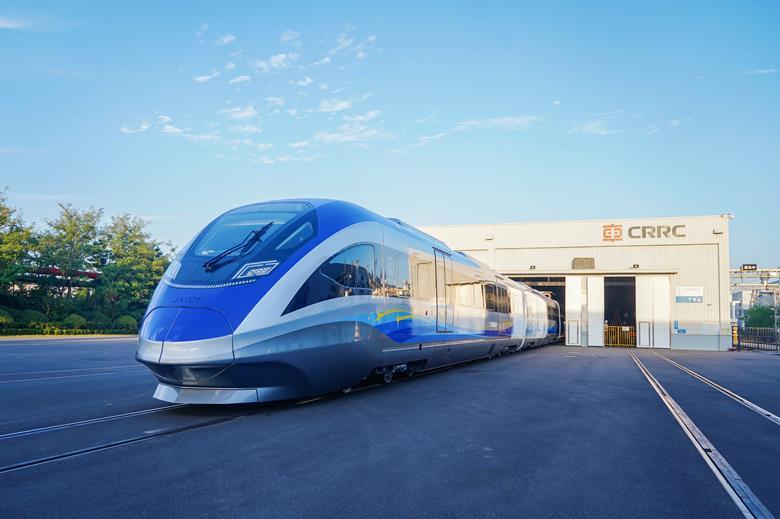
In response, Tao Guidong, a CRRC Qingdao Sifang EMU (high-speed train) expert, clarified that passenger trains in China follow a dedicated standard for indoor CO₂ concentration—and that readings within the specified limit do not pose health risks to travelers.
Tao explained that CO₂ control for passenger rail cars is based on the applicable rail-industry standard, which sets the normal operating limit at no more than 2,500 ppm. For context, Europe’s corresponding guideline allows up to 5,000 ppm under EN13129-2016, meaning China’s threshold is substantially more stringent. Even so, the widely shared 2,207 ppm reading remains within China’s rail standard and does not constitute an exceedance.
He also noted that the “1,000 ppm” figure cited online comes from GB 50736-2012, a specification designed for ventilation and air-conditioning in civilian buildings. That benchmark is not intended for passenger train environments, so using it as the reference point for high-speed rail cars is not appropriate.
According to Tao, CO₂ limits for passenger trains around the world are set using a broader comfort framework tailored to moving transport equipment, taking into account factors such as cabin pressure fluctuations alongside CO₂ concentration.
High-speed EMUs use fully sealed (airtight) car bodies, and fresh-air exchange is delivered entirely through the HVAC ventilation system. Tao said the system provides more than 15 cubic meters of fresh air per person per hour, with an air-change rate of roughly 6 to 12 times per hour, and includes pressure-protection mechanisms.
When operating in open sections (outside tunnels), trains can maintain continuous ventilation, and CO₂ levels typically stay below 1,500 ppm. However, when passing through consecutive tunnel groups, the train may activate pressure-protection measures—temporarily closing off outside air pathways—to reduce pressure swings that can cause passenger ear discomfort. During these periods, CO₂ may rise for a short time, but it remains within the applicable standard limit.