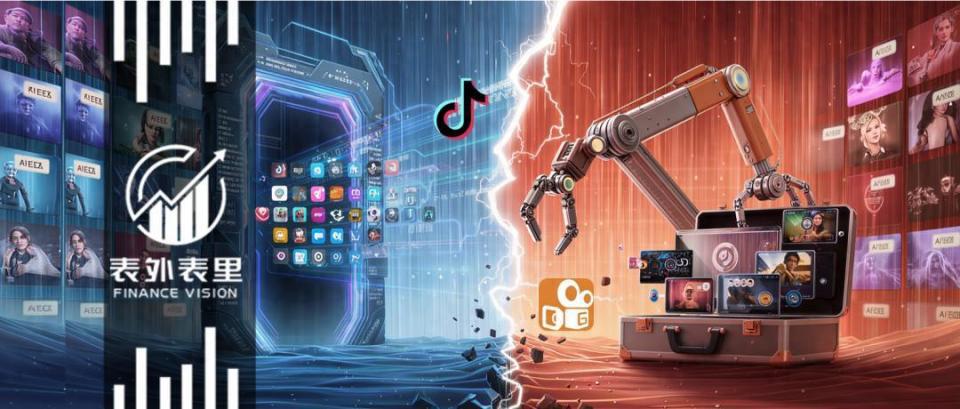
AI video technology is evolving at lightning speed, iterating in weeks and transforming the content creation landscape.
Just two weeks ago, PixVerse launched a project where users input prompts and AI generates continuous video output in real time. Last week, Runway unveiled Gen 4.5, capable of switching near, medium, and far shots in three seconds, with camera movements and framing rivaling professional directors and lifelike facial textures.
Chinese companies are racing just as fast. ByteDance’s JIMU AI has undergone nine key iterations in two years, while Kuaishou’s Keling AI has seen over 30 upgrades since its launch. Competitors chase each other relentlessly; a model leading at the start of the month may be overtaken by the end. The stakes are high: step back, and it’s a traffic crisis; push forward, and it’s a trillion-dollar blue ocean.
AI video is infiltrating short videos, web series, games, and even films. Beyond being a time-killer, it promises immersive experiences. The evolution of AI video represents a “triple revolution”: technological progress, personalized experiences, and content production efficiency. For ByteDance and Kuaishou, it’s a game they cannot skip—but each plays a very different hand.
JIMU’s Ambition vs Keling’s Practicality
Under the same prompt, JIMU 3.5Pro and Keling 2.6 produce strikingly different results. Keling’s output is detailed and cinematic but requires a 30-minute queue; JIMU generates a video in under a minute, with two free uses daily.
This difference stems from their technical approaches. JIMU optimizes the multimodal Seedance model for shared parameters and efficient inference. Kuaishou focuses on refining its video generation engine, improving control and product features like first-and-last frame continuity and subject libraries.
Simply put, JIMU pushes “technical boundaries,” while Keling follows a practical, product-driven path. Just as in the short video era, ByteDance bets on the future while Kuaishou plays the present.
Long-term Growth vs Immediate Revenue
AI video monetization remains challenging. Most content isn’t directly usable, and creative thresholds are high. JIMU attracts mass users with low-cost, user-friendly experiences, reaching 20.37 million MAU last year. Keling focuses on professional creators and B2B clients, growing from 6 million to 45 million users and achieving stable revenue growth.
As production costs fall and creative barriers lower, AI video could democratize content creation entirely, sparking a new wave of content explosion.
Conclusion
The AI video war is a long and grueling marathon. Whether ByteDance’s audacious bet on the future or Kuaishou’s practical focus on the present, both are testing the limits of technology, products, and business models. The tech express is accelerating—our job is to buckle up and embrace every disruption and opportunity ahead.