On the streets of Sanlitun in Beijing, and beneath the plane trees along Anfu Road in Shanghai, you can still spot young women with polished makeup and carefully curated outfits smiling into the camera. Yet that refinement no longer carries the same power to convert attention into income. The aura of effortless monetization that once surrounded beauty has quietly faded.
There was a time when a face enhanced with fillers and a persona backed by luxury brands could easily translate into million-yuan livestream tips, lavish spending in nightlife venues, or endless queues outside cosmetic clinics. Beauty functioned like a universal savings account—generating traffic and wealth almost automatically.
As 2026 begins, that myth is unraveling at speed. Industries that once thrived purely on appearance are shutting down or shrinking, one after another. Many women who invested heavily in “beauty as capital” are suddenly discovering that their proudest advantage has become an unsellable asset. The collapse of the female beauty economy is not an accident, but an inevitable result of economic and social transition. It is reshaping how women earn a living—and offering men a sobering lesson as well.
01 The Loss of Beauty as a Livelihood
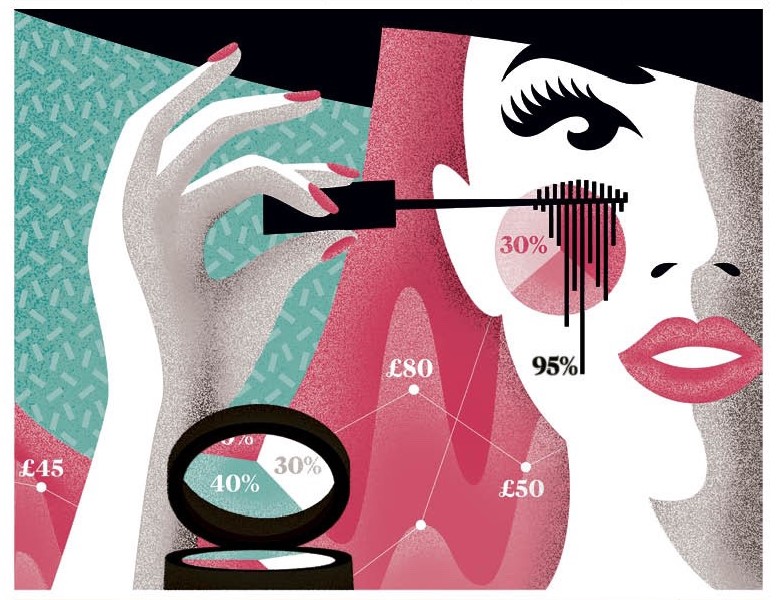
The downturn of the beauty economy is visible in countless real-world scenes and reflected in stark data. This is not a mild contraction, but a near systemic breakdown. From online platforms to offline consumption, every link in the chain is experiencing a deep chill.
The most visible collapse has occurred online. Not long ago, a pretty face alone was enough to secure a foothold in livestreaming—bringing tips, brand deals, and overnight fame. Yet according to Douyin’s 2025 Livestream Governance White Paper, the platform permanently removed 370,000 non-compliant livestream accounts in a single year, including tens of thousands with over 100,000 followers. More than 3.52 million accounts were penalized for “borderline sexual content,” 23,000 lost livestreaming rights entirely, and 320,000 group livestream rooms were shut down.
As “streamer health scores” expanded and AI moderation became more efficient, those relying on suggestive content and looks alone were pushed out. Exposure of violations dropped by 37%, but so did earnings. Sessions that once generated hundreds of thousands now struggle to reach five figures, prompting many creators to stop streaming altogether and switch careers.
Offline entertainment venues have suffered an even sharper collapse. Once the “secondary market” for monetizing beauty, nightlife scenes are now largely deserted. In 2025, nightclub foot traffic fell 77% year on year, bars dropped 60%, and over 35% of high-end venues closed. Bottle-opening rates were cut in half. Premium spirits like Louis XIII and Rémy Martin gave way to mass-market beer, while hostesses and event staff dependent on looks were forced into pay cuts or complete career changes. The myth of “easy high income” vanished.
The cooling of medical aesthetics and luxury consumption further punctured the bubble. Industry reports show that nearly 40% of small and mid-sized cosmetic clinics closed in 2025, largely due to the collapse of beauty loans. In the past, many young women financed cosmetic procedures through credit, expecting future beauty-driven income to repay the debt. As bad loans surged, lenders withdrew entirely, leaving many unable to afford even basic treatments.
At the same time, female consumer loan delinquency soared. In 2025, overdue rates for women’s online loans jumped twentyfold year on year. Around 80% of this debt flowed into non-essential spending such as beauty treatments, luxury goods, and travel. Women aged 23–25 carried an average debt of 89,000 yuan, while credit card delinquency rose 37%.
Declining luxury and romance-related spending revealed another reality: men’s willingness to pay has dropped sharply. Since the beauty economy relied heavily on male consumption, its contraction was inevitable. During the 2025 “520” period, online flower sales fell 41%, red rose prices dropped from 80 yuan to 30 yuan, and Meituan flower delivery orders declined 62%. High-end dining saw similarly bleak figures, with premium couple packages filling less than 30% of seats. Traffic at upscale restaurants in areas like Beijing SKP fell 25%, while high-end dining orders dropped 40%.
Meanwhile, resale platforms reported a 250% surge in unopened luxury gift boxes. Valentine’s Day items such as SK-II skincare and Tiffany jewelry dominated listings, with male-purchased gifts accounting for 44%. The resale price of a Chanel hobo bag fell 40% compared to two years ago. For women who once relied on luxury displays to sustain an image, both monetization potential and asset value are eroding.
Perhaps the most ironic scene is unfolding in women’s fashion e-commerce. During the 2025 Singles’ Day festival, return rates on a major women’s apparel platform reached 80%. Many buyers ordered clothes solely for photos to maintain a “refined persona” online, returning them immediately afterward. Merchants were crushed by shipping costs and inventory pressure, factories closed, and consumers depleted both their credit scores and the last remaining momentum of the beauty economy.
02 The Logic Behind the Collapse
This collapse is not accidental. Policy tightening, economic slowdown, market saturation, and rising female self-awareness converged to burst the bubble.
At its core, the “beauty premium” is returning to rational levels. A livelihood built solely on appearance was never sustainable. When the tide recedes, those relying only on looks are the first to be exposed.
Stricter regulation delivered the first decisive blow. Authorities have intensified crackdowns on explicit and borderline content, cutting off gray monetization channels across platforms. Livestream rules tightened, gift revenue was frozen, and violators lost access to funds entirely. At the same time, medical aesthetics underwent regulatory cleanup, curbing false advertising and predatory lending practices. Clinics that thrived on misleading young women lost their footing, shrinking the industry chain further.
Economic pressure is the deeper cause. The beauty economy is fundamentally rooted in emotional and pleasure-driven consumption. When budgets tighten, non-essential spending is the first to go. High-earning middle-aged men in real estate and finance once spent freely on beauty; today, tighter cash flows force restraint. Younger men facing high unemployment and growing disengagement are even less inclined to pay for appearances. As both supply and demand contract, monetization shrinks rapidly.
Homogenization and aesthetic fatigue accelerated the collapse. In recent years, countless influencers entered the beauty track with near-identical looks, styles, and monetization models. Audiences grew tired of mass-produced beauty, and pure appearance lost its ability to drive traffic or spending. As content platforms shifted toward skill- and value-driven models, expertise and personality replaced looks as core competitiveness.
Equally important is the awakening of women’s self-awareness. Consumerism once sold the illusion that beauty was scarce, monetizable capital. Many women went into debt for surgery, luxury goods, and curated personas, treating themselves as “high-priced commodities.” Today, higher education levels and stronger self-identity are changing that mindset.
A 2025 SoFi survey of over 1,000 female entrepreneurs in the United States found that 68% relied on personal savings to start businesses, 62% self-learned financial management, and 44% felt motivated to prove their value in male-dominated industries. Similar shifts are happening domestically, as more women exit the beauty rat race in favor of sustainable career paths—undermining the very foundation of the beauty economy.
03 Women’s Way Forward: Moving Beyond Looks
The collapse of the beauty economy does not mean beauty has lost value; it means that monetization based solely on appearance has been淘汰. For women, this is not a dead end but a chance to recalibrate.
When beauty is paired with expertise, its value endures. Some former appearance-driven influencers have successfully transformed. A six-million-follower creator paused streaming to prepare for exams and was admitted to an Fudan MBA program, evolving from a “beauty icon” into an academic content creator. Others combined their following with professional skills in cosmetics analysis or fashion design. Data from 2025 shows that vertical beauty creators with expertise monetize at more than three times the efficiency of pure appearance streamers.
For most women, cultivating hard skills is the safer route. Design, editing, programming, accounting, and other practical skills offer resilience. Employment data shows that skill-based female workers enjoy 47% higher employment rates and 60% greater income stability than those relying on appearance alone.
Physical entrepreneurship also holds promise. Consumption may downgrade, but rational demand persists. Niche skincare studios, wellness services, luxury authentication and resale businesses, community retail, childcare services, and home organization all align with practical needs. The second-hand luxury market alone is projected to reach 38.4 billion yuan in 2025, growing faster than the primary market, with female users up 70%.
For those staying in corporate careers, steady advancement through competence remains the most reliable path. Reports show that 58% of post-90s women achieved promotions through professional capability rather than looks or connections, with income growth 23% higher among continuous learners.
Above all, escaping the consumerist trap is essential. Investing in knowledge and skills yields assets that never depreciate.
04 Lessons for Men
The collapse of the beauty economy is not just a women’s issue—it reflects a broader social recalibration and offers men important lessons.
First, stop treating appearance as the primary metric. Professional ability, independence, and character far outweigh looks. Respecting women’s diverse values is a sign of social progress.
Second, consume rationally. Much of the beauty economy was fueled by emotional spending—luxury gifts, livestream tips, and status purchases. As resale data shows, men are increasingly rejecting such emotional premiums in favor of financial prudence.
Third, avoid reliance on a single advantage. Just as beauty alone failed as a monetization strategy, men cannot depend solely on connections, physical strength, or superficial image. Continuous skill development is the true safeguard.
Finally, abandon the “lying flat” mentality. The collapse of the beauty economy demonstrates that the era rewards responsibility and self-improvement, not avoidance. In both careers and relationships, accountability and ambition are far more attractive than appearance or wealth alone.
05 Strength Is the Only Lasting Rule
The collapse of the female beauty economy in 2026 is not merely an industry reshuffle—it is a profound return to value. It dismantles the illusion that beauty is a universal currency and redefines survival logic for both genders.
For women, moving beyond appearance and building real competence offers stability and dignity. For men, shedding appearance obsessions, consuming rationally, and strengthening themselves is the path forward.
This collapse is not an end, but a beginning. In an era that increasingly rewards substance over surface, only those who rely on real ability can move forward with confidence—and become their own source of light.