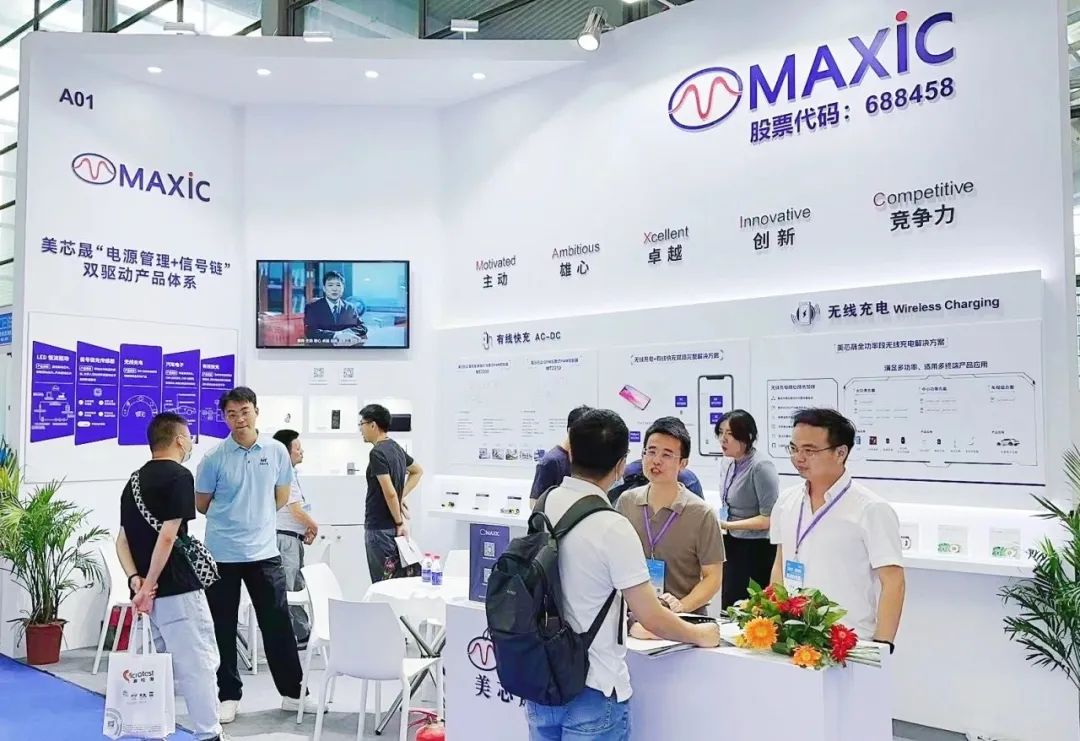
The wave of chip price increases has finally reached domestic manufacturers. Market sources report that several Chinese chipmakers, including Injoinic (688209.SH) and Maxic Technology (688458.SH), have recently issued price adjustment notices to their customers. Even earlier, companies such as Microchip Semiconductor (688380.SH) and Goke Microelectronics (300672.SZ) had already announced similar moves. This round of price hikes is broad in scope, signaling a widespread shift across the domestic semiconductor industry.
Reporters from China Business Journal have also observed that a number of chip companies have released upbeat earnings forecasts in recent weeks. Many manufacturers are delivering better-than-expected results, positioning themselves as clear beneficiaries of the current “super cycle” in the storage sector.
In an effort to better understand the drivers behind the price increases, reporters contacted the companies mentioned above. As of the time of publication, however, no official responses had been received.
Tian Lihui, Director of the Institute of Financial Development at Nankai University, noted in an interview that this round of price hikes sends a clear signal of a cyclical reversal in the semiconductor industry. It marks a transition from the destocking phase into a new cycle characterized by proactive restocking and price recovery across the supply chain.
The End of the Destocking Cycle
Maxic Technology recently stated on an investor interaction platform that it takes into account market demand, raw material costs, existing orders, and inventory levels when formulating and adjusting pricing strategies. In response to current market dynamics, the company has already initiated price adjustments, with selected product prices seeing moderate increases.
Domestic power management chipmaker Injoinic has also joined the price adjustment trend. According to a widely circulated pricing notice, the company announced price increases for certain chip models, citing sustained cost pressure from upstream segments of the semiconductor supply chain.
Earlier still, Goke Microelectronics—one of China’s leading providers of memory chips and solutions—and Microchip Semiconductor, which focuses on microcontroller (MCU) design, had both issued pricing adjustment notices to customers.
On the evening of January 27, Microchip Semiconductor released a formal price increase letter on its official website. In light of tight supply-demand conditions and mounting cost pressures, the company announced immediate price adjustments for products including MCUs and NorFlash memory, with increases ranging from 15% to 50%.
Zhang Guobin, founder of EETOP (Electronic Innovation Network), pointed out that the most critical signal from this round of price increases is the confirmed end of the “destocking cycle” in the storage industry. The willingness of domestic manufacturers to continue raising prices in the second half of 2025 implies three key developments: channel inventories have returned to healthy levels, downstream customers are increasingly accepting higher prices, and chipmakers now have clearer visibility into demand over the next two to three quarters.
Analyzing the drivers behind the price hikes, Tian Lihui explained that domestic chipmakers are facing a convergence of three pressures. On the cost side, wafer fabrication and packaging/testing expenses continue to rise. On the capacity side, advanced process nodes are being increasingly occupied by AI chips, leading to structural tightness in mature process capacity. On the demand side, strong momentum from AI servers and smart devices is fueling higher order volumes.
Taking Microchip Semiconductor’s 15%–50% price increases and Goke Microelectronics’ reported increases of up to 80% as examples, Tian emphasized that these adjustments go beyond simply covering higher costs. They also help repair profit margins that had previously been squeezed by prolonged low-price competition. As such, the increases fall well within a rational, cyclical recovery rather than representing speculative or irrational behavior.
Distinct Features of This Pricing Wave
Zhang Siyuan, a research fellow at Sushang Bank, observed that the collective price increases among domestic chipmakers reflect both structural supply-demand tightness and accelerating domestic substitution. From the manufacturers’ perspective, this shift signals a rise in bargaining power and an end to the long-standing “low-price-for-market-share” model. Pricing is now beginning to reflect true costs and underlying technological value.
Tian Lihui further summarized three defining characteristics of the current round of price increases. First, the trend has expanded beyond storage into multiple segments such as analog chips, MCUs, and power management, with companies like Goke Microelectronics, Microchip Semiconductor, Injoinic, and Maxic Technology moving in tandem, creating a broad-based design-side resonance. Second, the drivers combine both cost-push and demand-pull forces: rising upstream costs and tight capacity form rigid constraints, while the surge in AI computing demand provides strong pricing support. Third, most companies are adopting a “measured price increase with active customer communication” strategy, emphasizing shared challenges and cooperation, reflecting a rebuilding of bargaining power across the industry chain.
Multiple Chipmakers Deliver Positive Earnings Outlooks
What impact will this wave of price increases have? Tian Lihui noted that higher prices among domestic chipmakers will generate cascading effects along the supply chain. For upstream wafer fabs, stronger pricing intent from chip designers enhances demand visibility and could drive higher utilization rates. For downstream module makers and end-product manufacturers, rising costs may accelerate industry consolidation, with smaller players being squeezed out while leading firms strengthen their positions through scale and long-term contracts.
For domestic chip designers, price recovery provides much-needed financial resources for R&D investment, creating a positive cycle of price increases, improved profitability, and iterative technological advancement. However, Tian cautioned that companies must remain mindful of the limits of downstream price acceptance.
Data shows that many chipmakers have already begun to benefit. According to Wind, among 84 listed chip-related companies that disclosed 2025 annual earnings forecasts, 55 reported a positive lower bound for year-on-year net profit growth, while 57 reported a positive upper bound.
Microchip Semiconductor, for example, expects 2025 revenue of RMB 1.122 billion, up 23.07% year-on-year, and net profit attributable to shareholders of RMB 284 million—more than double the RMB 137 million recorded the previous year, representing growth of approximately 107.55%. Both revenue and profit are set to achieve strong gains.
Tian Lihui explained that improved earnings and rising prices are two sides of the same “super cycle” coin, closely linked by cause and effect. The core driver of the current storage super cycle is AI, which has created a fundamentally new demand paradigm distinct from traditional consumer electronics cycles. In this context, price increases are the most direct catalyst for earnings growth, with many companies explicitly citing “stabilizing and rebounding storage prices” as a key driver of profit improvement.
Therefore, earnings growth should not be viewed merely as a parallel benefit. Financial performance is the outcome, while price recovery is the critical market variable driving that outcome. Even companies that remain loss-making in the short term are using price increases to reverse margin erosion and lay the groundwork for future profitability.
Zhang Guobin added that while price increases and positive earnings are related, the primary driver is the cyclical reversal itself. The sequence is clear: global storage enters an upward cycle, supply-demand conditions improve, prices recover, domestic manufacturers release margin and profit elasticity, and earnings forecasts improve. In this sense, price increases are a result rather than the starting point. He also noted that domestic manufacturers often exhibit greater earnings elasticity than their overseas counterparts.
Zhang Siyuan echoed this view, stating that the storage super cycle underpins earnings growth, with price increases representing one expression of cyclical dividends. Even without proactive pricing actions, improving industry conditions would support earnings through higher volumes. Price increases, however, significantly amplify profit elasticity, especially for companies with strong technological barriers, where pricing power and product mix upgrades reinforce each other.
Experts Urge Risk Awareness
Amid the influence of the storage super cycle, semiconductor, chip, and storage indices have all posted strong gains. Wind data shows that from July 1 to December 31, 2025, the Wind Semiconductor Index rose 37.56%, the Wind Chip Index climbed 33.58%, and the Wind Storage Index surged 57.12%.
More recently, however, these indices have pulled back. From February 1 to February 4, the Wind Semiconductor Index fell 3.4%, the Wind Chip Index declined 4.17%, and the Wind Storage Index dropped 8.39%.
Tian Lihui explained that this pullback reflects a combination of cyclical rhythms and shifting market sentiment. External events have increased uncertainty and prompted some capital outflows, while U.S. storage stocks—after significant gains over the past year—have experienced sharp corrections. At the same time, stricter scrutiny of stockpiling behavior by major players has triggered sell-offs by previous hoarders, leading to temporary price weakness or slower price increases in certain storage products.
Seasonal liquidity preferences ahead of the Lunar New Year have also encouraged some investors to lock in profits or rebalance portfolios. According to Tian, the convergence of stretched valuations, external sentiment spillovers, short-term fundamental disruptions, and capital rotation has placed pressure on semiconductor indices, reflecting cautious risk-off behavior.
Looking ahead, Tian believes that downturns in stock price cycles often precede industrial renewal. Signs of storage prices bottoming are emerging, domestic substitution is accelerating, and technological breakthroughs, along with new rounds of industry investment, are turning pressure into opportunities for structural optimization. History shows that deep corrections frequently give rise to technological leaps and industry reshaping. Investors, he advised, should look beyond short-term volatility and focus on companies with strong technological foundations and sticky customer relationships.
From a valuation perspective, Dong Peng, a senior management expert and consultant, warned that current semiconductor valuations have partially priced in future growth and remain above historical midpoints. Investors should guard against three key risks: cyclical downturns where earnings peaks often coincide with valuation inflection points, uncertainties surrounding technological iteration that could reshape competitive dynamics, and geopolitical as well as supply chain restructuring risks that may lead to valuation divergence in a deglobalizing environment.
Tian Lihui added that valuations in the semiconductor sector largely reflect optimistic expectations. In the storage segment, leading companies’ forward price-to-earnings ratios for 2025 generally range between 30 and 50 times, already embedding future growth assumptions. The current pullback should be seen as a short-term adjustment within a long-term uptrend rather than a trend reversal. Core drivers—rising storage prices, domestic substitution, and AI-driven demand—remain intact.
Beyond these factors, Tian also urged investors to remain vigilant about valuation correction pressure and the risk of large-scale share unlocks, as several semiconductor stocks are set to face significant lock-up expirations in 2026, potentially impacting market liquidity. He concluded that while embracing the long-term AI-driven growth narrative, investors should maintain respect for valuation discipline and margin-of-safety principles.