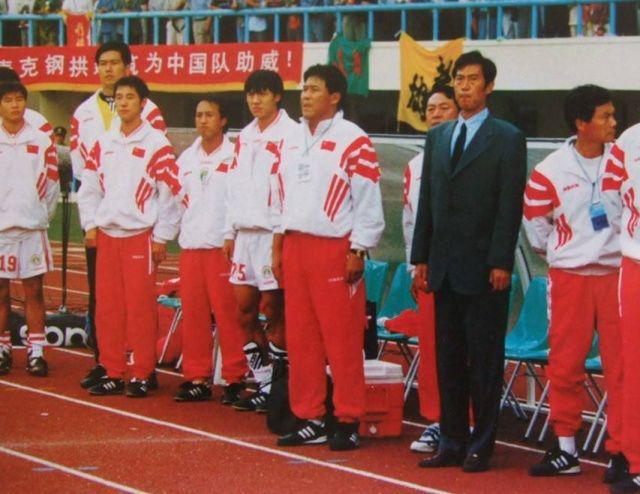
When mentioning Qi Wusheng, many fans—especially those who grew up in the 1990s—tend to recall not his playing days, but his challenging tenure as head coach of the Chinese national team. His career reflects both the ambition and limitations of an earlier era of Chinese football.
Born in 1944 in Weihai, Shandong, Qi showed strong physical ability from a young age and joined youth football systems early. By the 1960s, he had established himself in Liaoning teams and was selected for the national squad under Nian Weisi, quickly becoming a defensive mainstay and rising prospect.
After a turbulent period in Chinese society, football development resumed in the 1970s. Qi became national team captain in 1973 and led the squad in major tournaments, including the 1974 Asian Games and the 1976 Asian Cup, where China secured third place. He also served as flag bearer, symbolizing his leadership role.
Following retirement, Qi transitioned into coaching, including overseas assignments and youth team development. He later assisted Zeng Xuelin and gained club-level success with teams like Guangzhou and Dalian.
In 1994, during the transition after Klaus Schlappner, Qi took charge of the national team. Early results, such as a runner-up finish at the Asian Games, were promising. However, inconsistent performances soon led to criticism.
The defining moment came during the 1997 World Cup qualifiers, where China suffered painful defeats despite strong positions, ultimately missing out on qualification. The outcome heavily impacted his legacy and led to his resignation.
Despite this, Qi continued coaching domestically, contributing to multiple clubs and focusing on rebuilding teams. His career spanned several critical phases of Chinese football development.
In hindsight, placing full blame for that era’s failures on Qi alone would be unfair. Coaches of his generation operated in a system with limited resources and global exposure. They were pioneers navigating uncharted territory.
Qi Wusheng’s legacy is not simply about results—it is about dedication. His story highlights a key lesson: for Chinese football to progress, both players and coaches must engage with global systems and modern football knowledge.