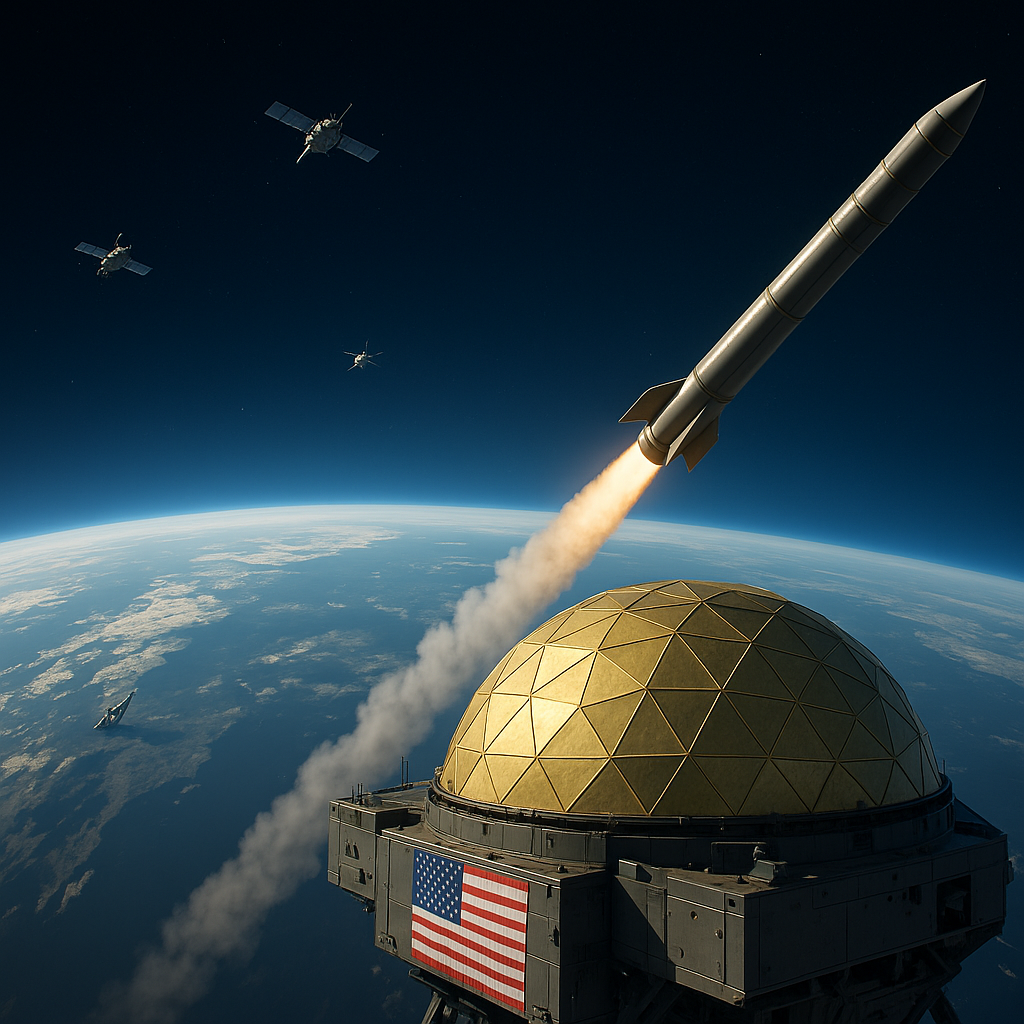
. Seen as a modern upgrade of the 1980s "Star Wars" initiative, the project aims to build a nationwide space-based defense network capable of intercepting hypersonic missiles, with an estimated total investment of at least $175 billion over the coming decades.
Space-Based Missile Defense Debuts
The “Golden Dome” will be led by Lieutenant General Michael Guetlein, Deputy Chief of U.S. Space Operations. If realized, it would mark the first time the U.S. deploys operational missile defense weapons in space. The system will integrate ground and space-based components to intercept missiles at all four phases of their trajectory—boost, ascent, midcourse, and terminal.
A Modern “Star Wars” Concept
The project echoes President Ronald Reagan’s Strategic Defense Initiative from the 1980s. Though Reagan's plan was ultimately shelved due to technological and budgetary challenges, Trump’s vision leverages modern space capabilities and the U.S. Space Force.
Three Versions Considered, “Advanced” Chosen
The Pentagon evaluated three proposals—intermediate, advanced, and ultra-advanced. Trump’s team selected the “advanced” option, which starts with an initial $25 billion investment and an eventual cost of $175 billion. The versions differ in the number of satellites, sensors, and space-based interceptors included.
Budget Hurdles and Congressional Resistance
The Congressional Budget Office estimates the space components of the Golden Dome could cost $542 billion over the next 20 years. Although Trump included $25 billion in his latest tax bill to kickstart the program, it faces significant opposition in Congress, potentially delaying implementation.
An industry insider familiar with the plan said bipartisan disagreement and financial concerns could hamper progress.
Rising Hypersonic Threats from Russia and China
The Pentagon has long warned of hypersonic missile advancements by Russia and China. The Golden Dome’s space-based radars and interceptors are designed to counter such threats in their midcourse or early phases, surpassing the limitations of current defense systems.
The U.S. already maintains ground-based missile defense capabilities like the Patriot system and an existing constellation of missile-detection satellites, some of which will be integrated into the new program.
Still a Concept, Future Uncertain
Despite its ambitious scope and cutting-edge ambitions, the program remains in the conceptual stage. General B. Chance Saltzman of the U.S. Space Force confirmed that funding and a concrete timeline are not yet in place. Whether the plan gains congressional approval will determine if the U.S. truly enters a new era of space defense.