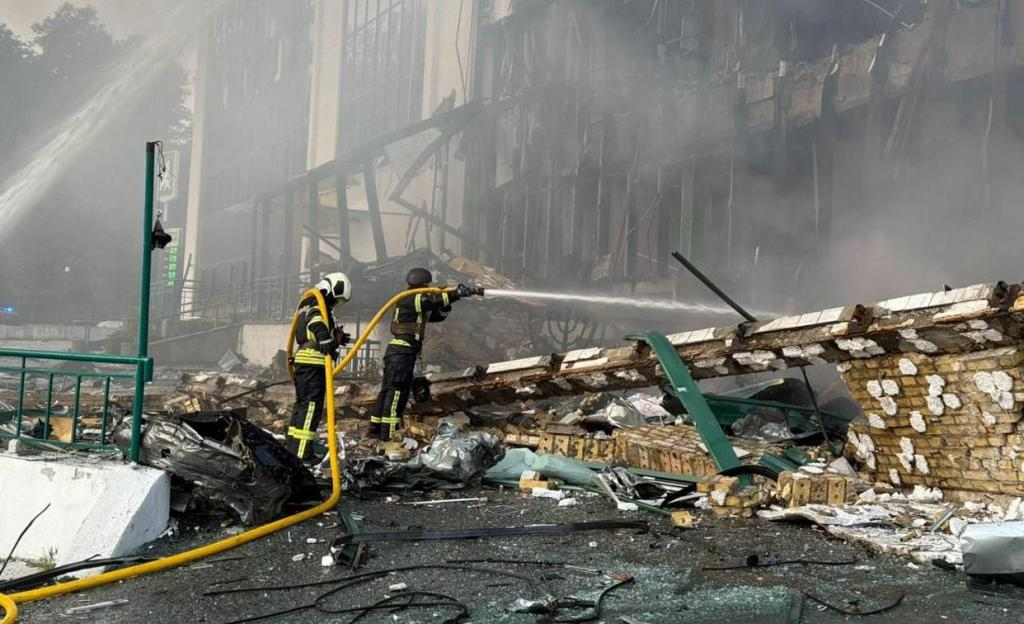
On June 10, Ukrainian President Volodymyr Zelensky issued an official statement declaring that Kyiv had suffered one of the most intense airstrikes since the beginning of the war. According to Zelensky, Russia launched a massive assault involving 315 drones and 7 missiles, affecting multiple regions including Kyiv, Odesa, Dnipropetrovsk, and Chernihiv.
The airstrikes severely damaged civilian homes, infrastructure, transportation, and energy systems. A maternity hospital in Odesa was also reportedly hit. At least 13 people were injured, and several fatalities have been confirmed, though exact numbers are still being verified.
Zelensky condemned the attack as an act of “organized state terrorism” and called on the international community to urgently supply Ukraine with enhanced air defense systems.
Analysis: What Does This Airstrike Reveal?
1. Tactical Escalation – Saturation with Drones
Deploying 315 drones in one operation marks one of Russia's largest drone attacks in recent months. The strategy reflects a low-cost, high-volume method aimed at overwhelming Ukraine’s air defenses. While the missile count was lower, their targets were highly strategic—energy grids and medical facilities—designed to cripple civilian support systems.
2. Political Messaging – Zelensky’s “Most Intense” Label
By declaring this the “most intense strike since the conflict began,” Zelensky is also sending a strong message to Western allies, signaling an urgent need for advanced military aid, especially long-range air defense systems and F-16 jets.
3. Humanitarian Impact – Maternity Hospital Struck
Targeting a maternity hospital is likely to spark global outrage. Similar attacks in the past have drawn sharp condemnation. This event could prompt renewed criticism from the United Nations and human rights organizations.
Conclusion: Ukraine’s Air Defense Under Pressure
This attack underscores the ongoing weaknesses in Ukraine’s air defense network—ranging from equipment shortages to coordination challenges. Meanwhile, Russia’s ability to integrate drone and missile strikes continues to advance.
For the international community, this becomes a test of responsiveness—whether aid arrives before the next attack will directly affect the safety and functionality of Ukraine’s key urban centers.