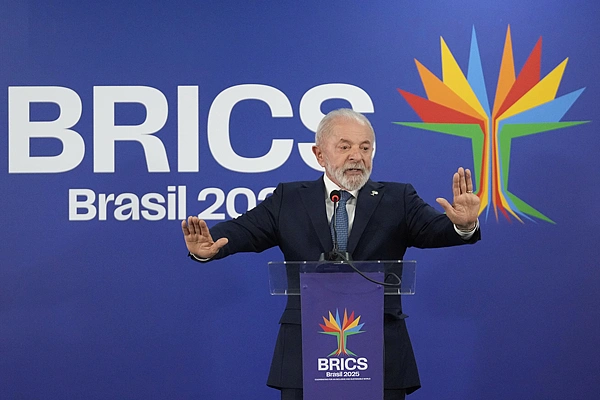
On July 7, 2025, as the BRICS leaders’ summit concluded in Rio de Janeiro, Brazil, U.S. President Donald Trump publicly threatened on social media that any country supporting BRICS’ “anti-American policies” would face an additional 10% tariff. This threat quickly provoked a strong backlash from BRICS nations.
Brazilian President Lula firmly stated in a post-summit interview, “The world has changed, we do not need an emperor.” He emphasized that BRICS is seeking to explore new models of global governance through economic cooperation, which is the root cause of unease for some countries.
Chinese Foreign Ministry spokesperson Mao Ning also stated at a routine press briefing that trade wars and tariff battles have no winners, and protectionism is a dead end. The BRICS mechanism advocates openness, inclusiveness, and mutually beneficial cooperation, and does not target any country.
South African President Ramaphosa and Kremlin spokesperson Peskov also declared that BRICS cooperation aims to promote multilateralism and is not directed against any third country. India has yet to issue an official response to Trump’s remarks.
Trump did not elaborate on what the “anti-American policies” entail in his threat. Last December, he had warned that if BRICS continued plans to create an alternative currency to the dollar, the U.S. would impose a 100% tariff.
Trump also signed an executive order extending the so-called “reciprocal tariffs” suspension until August 1, 2025, and announced that starting August 2025, the U.S. will impose a 25% tariff on imports from Japan and South Korea. He warned that if the two countries retaliate, the U.S. would raise tariffs by an equal amount.
Reuters noted that amid global conflicts and trade tensions, BRICS positions itself as a new hub for multilateral diplomacy, attracting interest from several countries including Saudi Arabia to join and fill the power vacuum left by traditional economic blocs.
On July 6, BRICS issued a joint statement expressing serious concerns over the U.S.’s unilateral tariff increases, stating that such actions violate WTO rules, disrupt global supply chains, and increase uncertainty in global trade.
This dispute highlights new trends and challenges in global economic governance, with the struggle between multilateral cooperation and unilateral sanctions set to continue.