I. Incident Recap
- Victim Profile: The deceased was not a patient but a companion escorting a relative for an MRI.
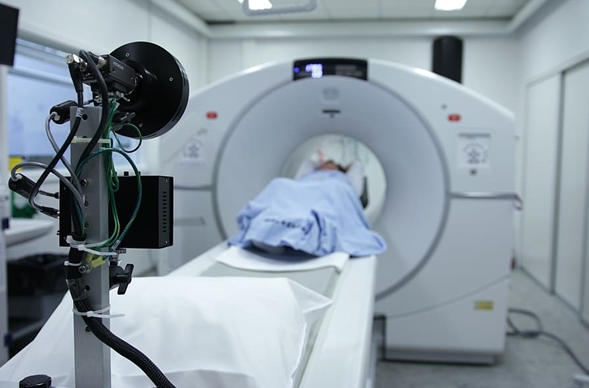
- How It Unfolded: According to witnesses and staff, when his relative felt unwell inside the MRI room and called for help, he rushed in without removing his large metal necklace.
- Fatal Moment: The MRI’s 1.5–3T static magnetic field instantly yanked the necklace—and the man—toward the machine’s bore. Despite immediate emergency response and transport to North Shore University Hospital, he died the next day.
II. Expert Analysis: MRI’s “Invisible Killer”
- Incredible Magnetic Force
Clinical MRI magnets (1.5–3 tesla) are thousands of times stronger than household magnets; any metal object entering the room can be uncontrollably pulled into the scanner. - Danger Scenarios
- Neck Entanglement: As in this case, a necklace can wrap around the neck, causing asphyxiation or severe cervical injury.
- Projectile Hazards: Even small metal items can become high-velocity projectiles, endangering staff and other patients.
- Safety Protocols
- Thorough Screening: All staff, patients, and companions must remove jewelry, phones, keys, credit cards, and other metal objects before entry.
- Metal Detectors & Controlled Access: Install walkthrough metal detectors at MRI suite entrances to prevent prohibited items.
- Immediate Intervention: Staff must firmly stop anyone attempting to enter the scanner room with metal and guide them to safety.
III. Who Should NOT Undergo MRI: 8 Prohibited Groups
- Patients with metal pacemakers or neurostimulators
- Individuals with intracranial aneurysm clips or surgical clips
- Those with mechanical heart valve implants
- Patients with metallic foreign bodies in the eye or body
- Pregnant women in the first trimester
- Critically ill patients relying on life-support systems
- Patients with uncontrolled epilepsy
- Individuals with severe claustrophobia
IV. Investigation & Lessons Learned
- Police Inquiry: Local authorities, including the homicide unit, are investigating the exact cause and liability; the victim’s identity remains withheld.
- Facility Review: The MRI center has suspended scans, retrained all personnel on safety procedures, and is overhauling its pre-scan screening processes.
- Public Warning: This tragic incident underscores that while MRI is a powerful diagnostic tool, its strong magnets pose lethal risks if safety rules are ignored.
Conclusion
MRI combines noninvasive imaging benefits with powerful magnetic hazards. Whenever accompanying someone for an MRI, always follow hospital screening guidelines and never enter the scanner room with metal objects to protect yourself and others from the unseen dangers of strong magnetic fields.