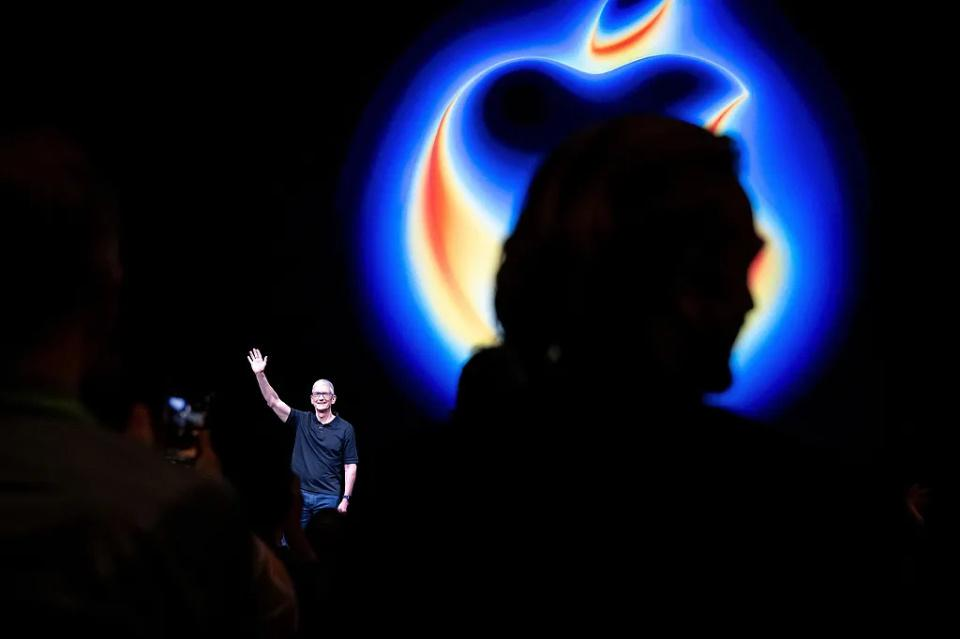
Apple hosted its annual fall product launch at 1 a.m. Beijing time on September 10, branding the event with the theme “Fiery.” Yet after two hours of livestream, many fans described it as “boring” and “underwhelming.” The market reaction was equally blunt: Apple’s stock slid nearly 2% during the iPhone segment.
The lineup included three iPhones, three Apple Watches, and one new headset. The star of the show was the iPhone Air, the thinnest iPhone ever at just 5.6mm — about the thickness of three stacked coins. Apple emphasized that even in such an ultra-slim body, performance matches the Pro series.
But thinness came with trade-offs: only one rear camera, no SIM card slot (eSIM only, and in China supported exclusively by China Unicom), and questionable durability, heat management, and battery life. Analysts say the Air is less about sales and more about laying the groundwork for a foldable iPhone, expected in 2026. This fits Apple’s reported “three-year innovation cycle”: 2025 with iPhone Air, 2026 with foldables, and beyond.
“Fiery” Hype, “Hard” Reality
2025 is shaping up to be a true watershed year for Apple.
1. The Tariff Challenge.
Trump’s administration floated “reciprocal tariffs” that could have cost Apple $33 billion annually — a quarter of its profit. Though exemptions later saved most products, uncertainty forced Apple to accelerate production shifts to India. By 2026, all iPhones sold in the U.S. are planned to be India-assembled. Yet India’s factories still rely heavily on Chinese parts and engineers, with lower yields and weaker efficiency. Meanwhile, Apple has pledged $600 billion in U.S. factory investments, adding enormous short-term cost pressure.
2. The AI Gap.
Apple has stumbled badly in AI. Its much-hyped “Apple Intelligence” still hasn’t launched in China, and promised upgrades to Siri keep being delayed, some until 2026. While Google, Microsoft, and OpenAI surge ahead, Apple looks like it’s falling behind. Tim Cook insists AI is now Apple’s “highest priority,” but confidence is slipping.
Painful but Necessary Foundations
Behind this year’s modest product refresh lies a larger agenda: building foundations. iPhone Air is a stepping stone for foldables. Supply chain shifts aim to reduce overreliance on China. These moves are slow, painful, and costly — but essential for Apple’s long-term survival.
At 64, Cook leads a senior team often compared more to consumer-goods executives than scrappy tech founders. Yet Apple still wants to prove it can reinvent itself and even reshape the world again — starting by disrupting its own legacy.
A fiery launch, but a hard year.
For Apple, 2025 is not just about new products, but about whether it can redefine its strategy and regain leadership in innovation.