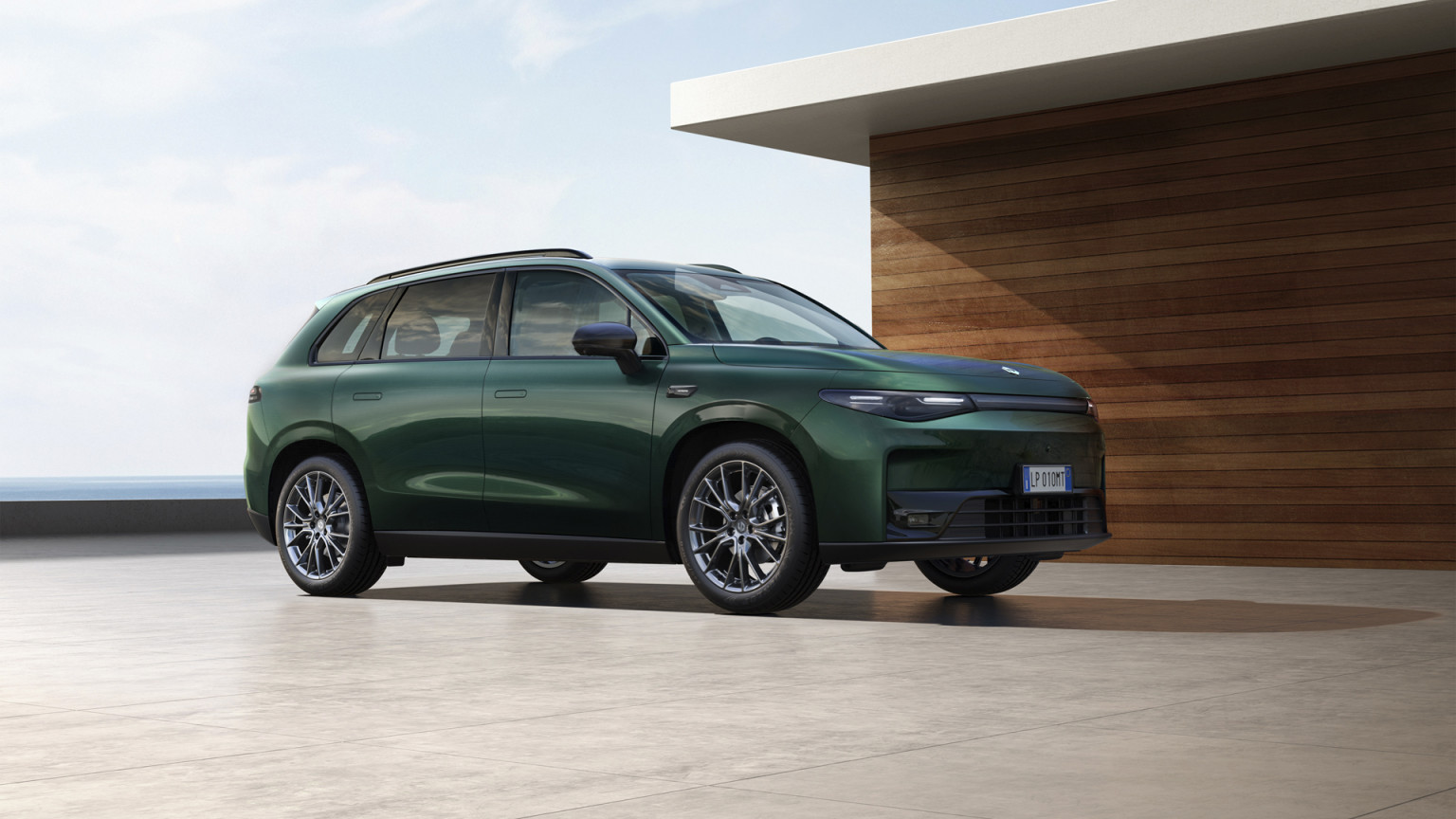
“Selling one million cars a year might no longer be enough for new players to survive—the threshold could be at least four million.” With this bold statement at the Munich Auto Show, Leapmotor’s founder Zhu Jiangming sent shockwaves across the industry. His reasoning was blunt yet powerful: “One million was the benchmark for fuel cars. In the EV era, the bar will be higher, with market concentration greater than ever.” In other words, as competition intensifies and the winners take it all, the survival line for automakers is rising dramatically. Whether or not this prediction proves true, one thing is certain—the number itself screams ambition.
In China’s automotive history, few domestic brands have crossed the one-million annual sales mark. Only BYD has ever surpassed four million. By targeting this level, Leapmotor is clearly setting its sights not just on fellow EV startups but on the scale of traditional global giants. This confidence doesn’t come from thin air—it’s backed by remarkable growth momentum: six consecutive months as the top-selling new energy startup; over 50,000 units sold in August alone, setting a new monthly record; 4,663 daily orders locked in on September 7; 25,000 exports in just the first seven months of the year; and 328,900 global deliveries from January to August, with a strong chance of hitting 500,000 for the full year. At this pace, Leapmotor is on track to reach the once-mythical “one million” milestone as soon as next year. But scaling from 50,000 to 400,000 to 4 million is no simple math—it’s a reinvention.
In media interviews at Munich, Zhu clarified his vision: domestic and overseas sales should each account for at least half, with overseas ultimately surpassing domestic volumes if Leapmotor wants true global influence. That means Leapmotor’s challenge breaks into two key fronts: can its proven “high value-for-money” pyramid strategy sustain growth to 2 million units in China, and can overseas markets open wide enough to rival, or even surpass, domestic sales?
Leapmotor has managed what many automakers struggle with—not just one or two hits, but a balanced product matrix across segments. Take its C-series SUVs: three models with less than 20 cm length difference and price gaps under ¥30,000. On paper they overlap, but clever size and feature distinctions tap into different customer needs. Instead of cannibalizing each other, they march forward together, creating scale synergy. The new B-series has entered smoothly without undercutting the C line. At Munich, Leapmotor added a fresh layer with the Lafa 5, a stylish, sporty coupe aimed at younger buyers. Built on the LEAP 3.5 platform, it expands beyond “practical” B and C series positioning into lifestyle appeal. And the roadmap goes further: B & C series as the stable foundation; Lafa and other lifestyle models as new growth engines; A series as affordable entry models to capture mass markets; and D series as the premium flagship for brand elevation. This multi-layered pyramid ensures Leapmotor isn’t dependent on one star car, but builds sustainable scale.
If domestic growth is the foundation, overseas is Leapmotor’s biggest opportunity. In 1H 2025, overseas sales surged 1,762% year-on-year. By August, deliveries abroad topped 30,000 units. In Germany, Leapmotor’s pure EV sales ranked #1 among Chinese brands in August. Much of this momentum comes from its deepening partnership with Stellantis, which instantly gave Leapmotor access to 700+ overseas sales and service outlets. Combined with 900+ stores in China, Leapmotor now commands a global retail network of 1,500+ locations. This network provides more than sales—it delivers local insights. In Europe, the T03 city car thrives with a €99 monthly lease plan, lowering entry barriers and sidestepping concerns about resale value. In Southern Europe, the B10 range-extended version addresses weak charging infrastructure, outperforming pure EVs. The Lafa 5, designed with European tastes in mind, will hit the continent next year. It’s still early to call when Leapmotor could hit 2 million overseas units, but the trajectory is clear.
Leapmotor has long carried the label of a “price killer.” For example, its B10, priced at just ¥99,800–¥129,800, packs long range batteries, extended-range options, spacious interiors, Nvidia driving chips, and even dual motor AWD—putting pressure on BYD Yuan Plus, Geely Galaxy E5, and others. This aggressive pricing once raised doubts about profitability and quality. Yet time and scale are rewriting the narrative. Gross profit margin jumped to 14% in H1 2025, aligning with industry norms of 15–20%. Net profit is on the cusp of turning positive. On consumer service, Leapmotor shines—100% complaint response rate and 74% resolution rate on Sina’s Black Cat platform, earning it top spots on weekly and monthly brand rankings. Instead of chasing flashy “smart cockpit” or “autonomous driving” hype, Leapmotor has focused on solid products, fair prices, and consistent delivery. Ironically, that grounded approach has built a stronger emotional bond with consumers.
Leapmotor’s playbook may not be the only path for Chinese EV makers, but it is proving effective. From building a resilient product pyramid to embedding itself in global markets through Stellantis, the company is laying down a realistic foundation for its audacious dream. Four million annual sales might sound like a moonshot—but at the current pace, Leapmotor isn’t just dreaming big. It’s putting itself in position to make the impossible, possible.