For many Filipinos, floods are a familiar burden. But this year, the waters have risen alongside something else: unprecedented public fury.
In Apalit, a low-lying town outside Manila, 36-year-old public school teacher Crissa Tolentino has long accepted paddling through flooded streets as part of daily life. Her small boat takes her to work, and to the clinic where she receives cancer treatment. “I only see dry streets for two months each year,” she says.
This time, though, her frustration has reached a breaking point. A brutal monsoon season has brought the nation to its knees, submerging cars, halting commutes, and triggering outbreaks of leptospirosis. But beyond nature’s wrath, Filipinos are pointing fingers at something man-made: corruption.
“I feel betrayed,” Tolentino fumes. “I work hard, I pay my taxes. And now I find out billions of pesos from those taxes are being pocketed by politicians.”
Her anger is not hers alone—it echoes across TikTok, Facebook, and X, where Filipinos vent against lawmakers and construction tycoons accused of pocketing money for flood control projects that either underdeliver or never exist at all.
A Dam That Doesn’t Exist
The outrage intensified when President Ferdinand “Bongbong” Marcos Jr inspected a supposed flood control dam—only to find that it didn’t exist. Days later, his economic planning minister admitted that 70% of flood-control funds had been siphoned off by corruption.
The fallout has already shaken the political establishment. The House Speaker has resigned, while the Senate President was ousted after revelations that a government contractor had illegally donated to his campaign.
Online, furious citizens are producing AI-generated videos of lawmakers as crocodiles—the ultimate symbol of greed. Much of the anger is also trained on so-called “nepo babies”, the children of powerful politicians and contractors, who flaunt luxury lifestyles on social media while millions wade through filthy floodwaters.
Tolentino says one song captures the mood perfectly: Upuan (“Seat”) by rapper Gloc-9, which criticizes leaders disconnected from ordinary lives. “That’s our real situation,” she says. “It explains everything.”
History Repeats?
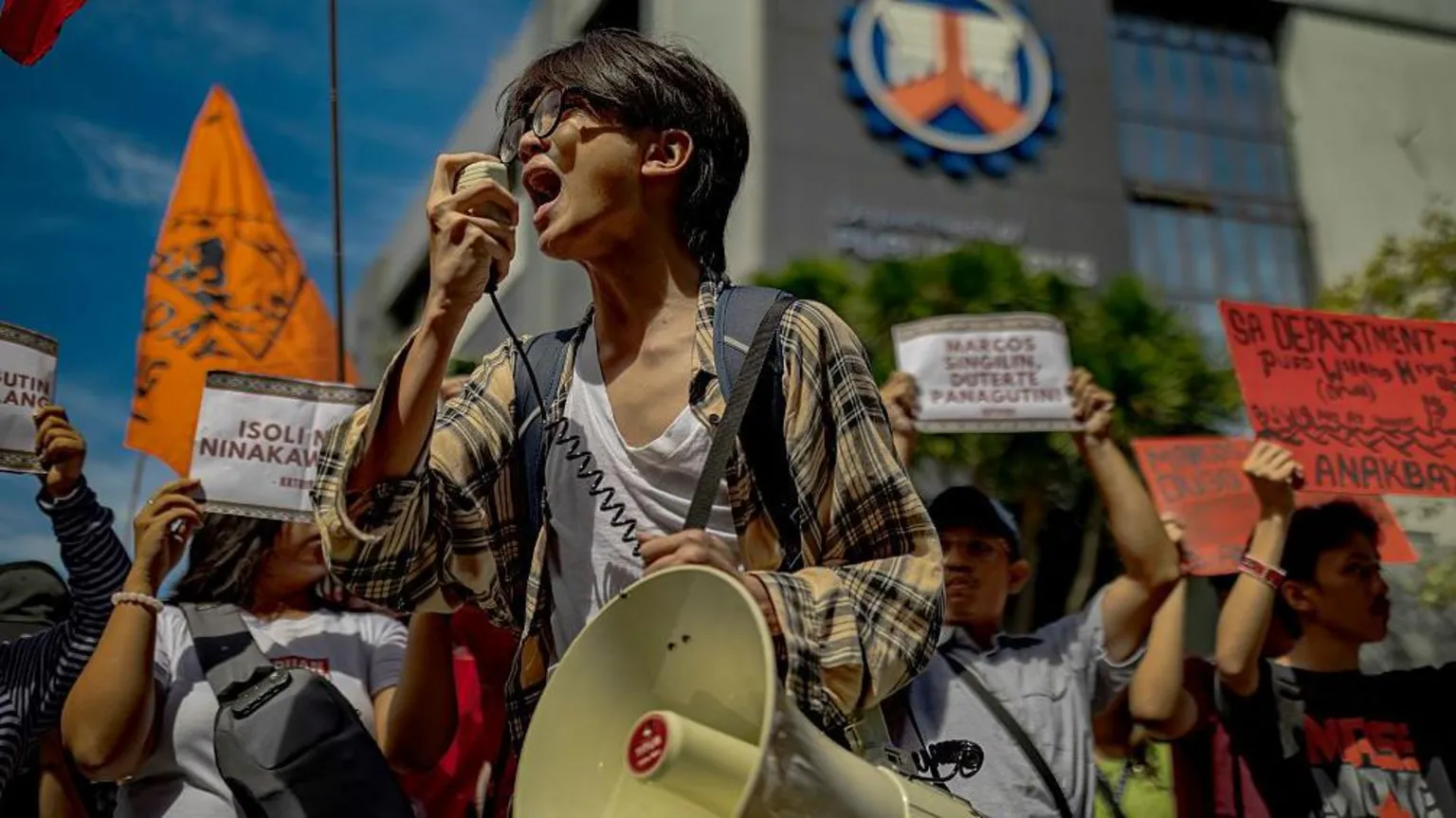
The timing could not be more symbolic. A massive anti-corruption protest is set for 21 September, the anniversary of the day Ferdinand Marcos Sr. declared martial law in 1972.
His son, now president, knows the stakes. After all, it was public outrage over corruption that toppled his father in 1986, ending a decades-long dictatorship that looted billions. Speaking to reporters this week, Marcos Jr struck a careful tone: “If I wasn’t president, I might be out on the streets with them. Demonstrate, shout, let them know—but keep it peaceful.”
He later dropped another bombshell: the public works ministry had given 545 billion pesos ($9 billion) worth of flood control contracts to just 15 firms. All are now under investigation, and the central bank has frozen their assets.
The Discaya Scandal
Much of the spotlight has fallen on Pacifico and Sarah Discaya, a once-poor couple who became wealthy contractors and social media influencers. Once celebrated for their “rags-to-riches” story, they are now vilified for flaunting a fleet of three dozen luxury cars, from a Mercedes-Benz Maybach to a Porsche Cayenne—some in duplicate colors.
The backlash was immediate. Their company has been blacklisted, their office gates smeared with mud and spray-painted with the word “thief.” At a congressional hearing, Mr. Discaya admitted to paying kickbacks to lawmakers: “We couldn’t do anything but play along with them.” Legislators deny it, but the damage is done.
Meanwhile, online critics have targeted the children of political dynasties with the hashtag #NepoBabies, mocking their designer wardrobes and jet-setting lifestyles. One former congressman’s daughter was lambasted for parading a Dior outfit, Fendi accessories, and a Hermes Birkin bag—an ensemble sarcastically credited to “Filipino taxpayers.”
A People on Edge
The outrage has galvanized digital movements like Creators Against Corruption, which vowed: “We will be relentless. We will be loud. We will be a mirror held up to power until justice is served.”
On the streets, tensions are rising too. Public works employees have been told they can ditch their uniforms after reports of being heckled in public. Meanwhile, ordinary Filipinos continue to improvise amid chaos.
In Calumpit, one of the hardest-hit provinces, 28-year-old researcher Rhens Rafael Galang has turned his daily struggle into a viral TikTok business, selling overalls with built-in rain boots. His videos of trudging through waist-deep floods have millions of views. Yet behind the humor lies anger: “Money meant for flood control was stolen. I just hope someday it will finally be used honestly.”
The Bigger Picture
Corruption scandals are nothing new in the Philippines. In 2013, lawmakers were accused of pocketing billions through “ghost projects.” Now, former Justice Secretary Leila de Lima warns the problem has ballooned: “Back then it was tens of billions. Now, it’s hundreds of billions. This is such a mess.”
For Filipinos, the floodwaters may eventually recede. But the storm of public anger—fueled by corruption, inequality, and the flaunting of wealth by the elite—shows no sign of drying up.