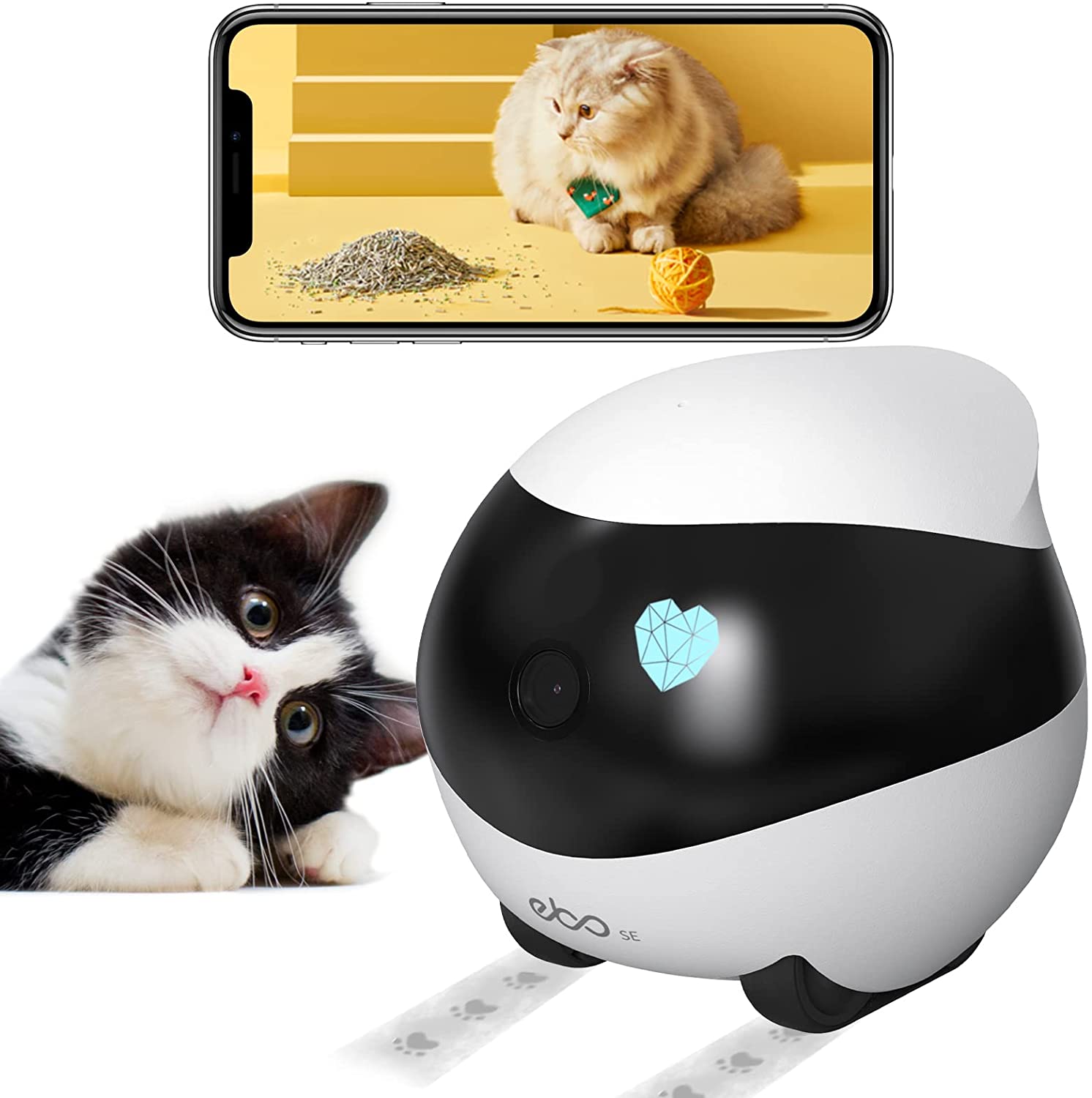
When long holidays arrive, pet owners heading out of town are often torn — can they really leave their “fur babies” at home alone? Before this year’s Labor Day holiday, Wang Yu, who planned to visit her hometown for five days, decided to buy a smart movable pet camera for her cat. “Every time I came home after a long break, my cat would seem low-spirited for days and meow endlessly when she saw me. I just couldn’t stop worrying,” Wang explained. The camera turned out to be a perfect solution — it allows her to remotely control the lens, track her cat’s movements, make two-way video calls, record footage, and even play interactive games through a built-in cat teaser. No matter how far away she is, she can now check in anytime, easing her separation anxiety. For Li Zi, preparation started even earlier. Before she even brought her new pet home, she had already purchased a smart feeder, smart water dispenser, automatic litter box, and drying cabin — spending nearly 10,000 yuan in total. “I’m usually too busy at work, so I thought — why not just automate it all and save the trouble?” she said. To her, these gadgets check all the boxes — from feeding and cleaning to comfort. The smart feeder dispenses precise portions on schedule, the water fountain filters impurities to keep water fresh, and the litter box automatically cleans itself while tracking the cat’s bathroom habits. Today, such products — smart feeders, fountains, dryers, cameras, and litter boxes — have become essentials for many pet owners. According to GrandViewResearch, the global smart pet hardware market has surpassed $7 billion and is expected to reach over $10 billion by 2025. Now, with AI technology reshaping industries worldwide, smart pet devices are evolving too. From feeding precision and health monitoring to recognizing animal behavior and emotions, AI-driven pet care is redefining what it means to “raise pets smartly.” But this raises a new question — are these high-tech tools truly making pet ownership easier? Or are they just another pricey “IQ tax” disguised as innovation? From a few hundred yuan for smart feeders to over 10,000 yuan for an “AI-powered cat toilet,” the price range of pet gadgets now spans from mid to high-end. Yet, reviews are split — some call them life-changing, others call them overhyped and frustrating. Pet owner Li Yue swears by her smart litter box with built-in sensors. “I bought it just to avoid scooping litter every day, but it turned out to be a real health guardian,” she told Tech Planet. One day, the device alerted her that her cat’s bathroom frequency had spiked. She took the cat to the vet — and it was diagnosed with urinary blockage. “Thanks to the alert, I caught it early and avoided something much worse,” said Li. The device, once just a convenience, became a literal lifesaver. However, not everyone is so lucky. Chen Hao, another pet owner, once nearly panicked when his smart feeder malfunctioned during a short business trip. “I had it set to feed my dog morning and night, but the next day I got a fault alert. Turns out the food jammed in the dispenser, and my dog went hungry for a whole day,” he recalled. “It was awful.” Social media is full of similar complaints. Some users say their “fully automatic litter boxes” constantly jam or grow mold in humid weather. Others complain of glitchy feeders, calling them flashy but unreliable. Worse still, some incidents have involved safety hazards. Reports include smart dryers overheating and singeing fur, or cheap automated toilets with sharp edges that injured pets’ paws. For pet owners, these aren’t minor inconveniences — they’re emotional and ethical concerns. People buy these devices hoping for peace of mind and better pet care, but when reliability and safety fail, the anxiety only grows. After all, the foundation of “hands-free pet care” should always be pet safety. Without that, even the smartest gadget is just an expensive risk. Despite mixed feedback, one thing is clear — the smart pet industry is booming. As pet ownership evolves from basic feeding to refined, emotional companionship, more brands are entering the race, competing on technology, design, and user experience. An industry insider told Tech Planet that players fall into two main camps: tech giants crossing over — such as Midea, Panasonic, Haier, and Xiaomi — which use sensors, IoT, and AI algorithms to create pet products; and startups specializing in pet care, such as PETKIT, Catlink, and Homan, which focus on specific niches like health monitoring and lifestyle integration. However, unlike traditional electronics, smart pet products have a low barrier to entry — meaning even giants with strong ecosystems struggle to dominate the market. Their products often fail to meet the nuanced needs of pet care, leading to underwhelming results. Midea is a case in point. The appliance giant once invested heavily in pet tech, launching two brands, “Cat Gravity” and “FluffyFloppy,” in 2021. But just two years later, both brands shut down, and Midea’s pet-tech subsidiary was officially dissolved in 2024. Startups, meanwhile, enjoy agility and early-mover advantages but face homogenization. As one insider put it: “Most smart feeders still just do timed feeding, preservation, and remote monitoring — with little difference in design or innovation.” Search for “smart feeders” on e-commerce sites and you’ll find hundreds of nearly identical models, priced anywhere from ¥50 to ¥1,000, with only minor variations. The result? A crowded market where price wars dominate and innovation lags. In the early days, brands battled mainly through discounts and promotions. But as the price war ceiling hits and consumers demand smarter, more personalized care, the market is shifting. More companies are now building ecosystems that integrate feeding, cleaning, and health management — using AI models and advanced sensors to transform gadgets into true “pet assistants.” Some are developing health management platforms that track pets’ activity patterns and automatically generate periodic health reports. These upgrades signal a turning point — from mechanical automation to intelligent companionship. Still, challenges remain. Technological adaptation for unpredictable animal behavior is complex and costly. Devices must withstand long-term use, adapt to various species and temperaments, and remain affordable — no small feat. And even the most advanced AI means little if users can’t feel the value. As one expert summed up: “If technology doesn’t translate into a better experience — safer, easier, or more reassuring — then all that ‘smartness’ is just marketing.” The smart pet era is here — but its promise comes with caution. For every owner whose cat is healthier or dog happier, there’s another who’s frustrated or heartbroken by a failed gadget. True innovation won’t come from adding more flashy features, but from understanding what both pets and owners really need — reliability, empathy, and peace of mind. Because in the end, smart pet care should be about more than just automation — it should be about connection, care, and trust.
Spending Thousands on a Smart Cat Toilet — Are Pet Gadgets the New "IQ Tax"?
When long holidays arrive, pet owners heading out of town are often torn — can they really leave the...
Source: https://www.myzaker.com/
Keep a little curiosity for the next story.
Back to reading