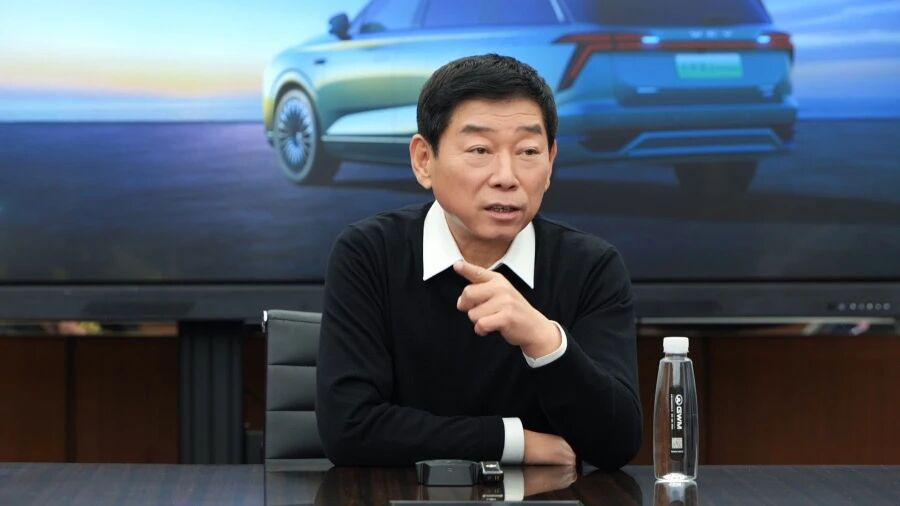
WEY has seen its tenth leadership change in eight years. Great Wall Motors Chairman Wei Jianjun candidly admits that both he and his team have occasionally fallen into the “illusion of overestimating their abilities.”
“Creating a brand is indeed no easy task,” Wei told the media. Since its inception in 2016, WEY has carried Great Wall’s—and China’s—early aspirations for high-end vehicles, continually seeking a long-term path unique to the brand.
The first step in building a brand system is finding the right person to lead it. On December 21, a key personnel adjustment was made: Haval brand General Manager Zhao Yongpo announced via Weibo that he would also serve as WEY CEO. Over eight years, WEY has had ten brand heads, a turnover rate rare in the industry.
“Every company dreams of going high-end, but successfully running an automotive brand requires managing a complex full-chain system,” Wei explained.
WEY was once a pioneer for Great Wall and Chinese brands entering the premium market. Its first product, the VV7, once sold over 10,000 units in a single month in 2017. Yet technical routes, product definitions, and market timing led to long-term challenges. Wei emphasized that WEY’s high-end positioning remains unchanged. To focus on the premium segment, WEY now bets heavily on large six-seater SUVs, launching the new Lanshan and Gaoshan models and expanding direct-sales channels.
The synergy of product strength and channel adjustment has made WEY Great Wall’s fastest-growing brand. In the first 11 months of this year, WEY sold 89,000 units, a 93.34% year-on-year increase, far surpassing Tank and Haval, which grew only 1.18% and 11.13% respectively.
“This year is a promising start,” Wei said. Yet behind this growth lies significant investment: “We have invested at least 2 billion RMB in direct sales.”
Financial reports reflect the pressure: in the first three quarters, sales expenses surged to 7.95 billion RMB, up 55.6% year-on-year; revenue reached 153.582 billion RMB, up 7.96%; net profit attributable to shareholders was 8.635 billion RMB, down 16.97%.
Wei emphasized, “The value of a luxury brand is not self-declared; it must have clear recognition in users’ minds.” WEY’s expansion of direct stores standardizes pricing and service while directly reaching users, but entails massive capital expenditure and management challenges.
Simultaneously, Great Wall is accelerating its intelligent vehicle strategy. On December 22, it unveiled the first VLA large-model production vehicle, the new Lanshan Intelligent Upgrade, equipped with Yuanrong Qixing VLA solutions.
Looking ahead to 2026, WEY will celebrate its tenth anniversary. Zhao Yongpo’s dual role may signal Great Wall’s intention to infuse WEY with the efficiency and user base of its main brand. Wei noted, “Price is a straightforward measure of brand elevation. Currently, Great Wall has the highest average selling price among China’s established automakers.”
He stressed that the high-end journey requires crossing new thresholds. Great Wall is motivating its core team through an employee stock ownership plan, setting 2026 targets of at least 1.8 million vehicles sold and 10 billion RMB net profit.
Wei concluded that building a true premium brand lies in creating value and achieving user recognition. WEY’s intelligent and product upgrades are steadily advancing, and the long-term, healthy, and replicable growth of the brand remains Great Wall’s strategic focus.