Tesla has been grinding away at its 4680 battery ambition for more than five years—and now, it’s quietly signaling a retreat.
The earliest hint came from South Korea’s cathode-material maker L&F. In a public filing, L&F disclosed that its high-nickel cathode supply contract with Tesla shrank from $2.9 billion to just $7,386, a write-down of more than 99%. A cut that severe is effectively the market’s way of saying: the project has largely fallen apart.
Back in February 2023, the two sides had signed a two-year supply agreement. The original order size was roughly four times L&F’s annual revenue—an extraordinary “once-in-a-career” deal. Few expected that windfall to be slashed so dramatically, so quickly.
L&F’s high-nickel cathode material was tailor-made for Tesla’s 4680 program—an essential piece of Tesla’s “low-cost battery → affordable vehicle” strategy. Yet since then, the 4680 effort has lived in a Schrödinger-like state: forever hovering between “paused” and “mass production.”
With a core supplier unexpectedly pulling the curtain back, Tesla’s big, bold plan now looks like it has reached the end of the runway.
Don’t Blame the Cybertruck—But It’s Involved
On the surface, the 4680 battery stumble seems tied to the Cybertruck’s disappointing commercial results.
Tesla’s stated battery strategy has generally looked like this: Model 3 leaning heavily on LFP, Model Y/S/X using nickel-manganese ternary chemistries, and Cybertruck plus Semi relying on high-nickel ternary batteries.
In general, higher nickel content on the cathode supports higher energy density—better range—making it a logical match for heavy, large vehicles like the Cybertruck and Semi.
But during development, Tesla’s first-generation 4680—built around an NCM811-like direction (nickel:cobalt:manganese at roughly 8:1:1)—fell short on energy density and performed poorly on charge/discharge capability. The result: the early Model Y variant that “tasted” the 4680 first quickly became a short-lived, effectively discontinued configuration.
That’s where L&F came in. The company had moved early on commercializing “9-series” high-nickel cathodes, with nickel content reportedly reaching an eye-catching 95%. Tesla’s second-generation 4680 then adopted a higher-nickel approach to boost energy density—only for Cybertruck demand to become the next bottleneck.
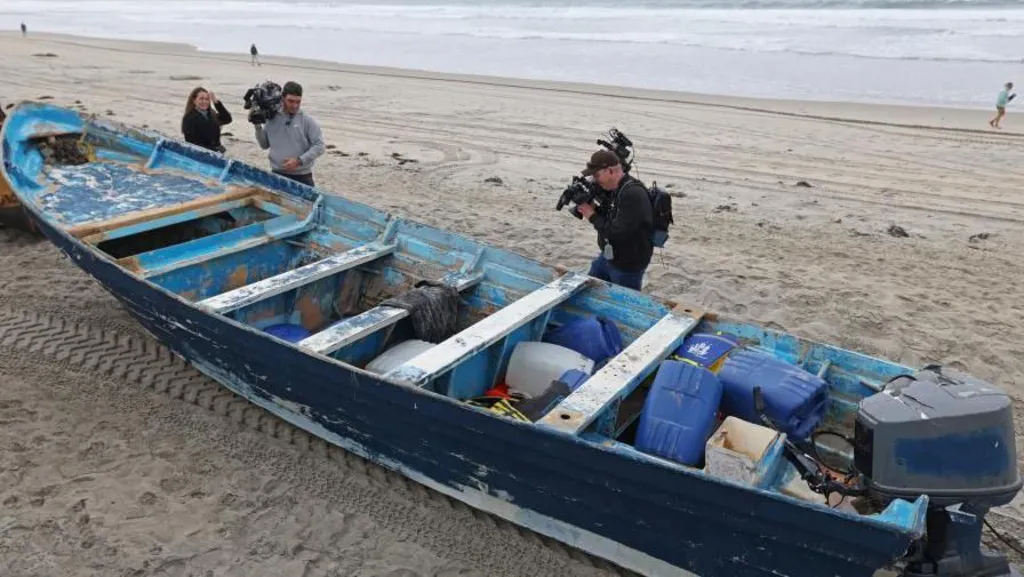
Based on careful tracking by overseas enthusiasts, total Cybertruck deliveries since production began in the second half of 2023 have hovered around the 50,000-unit range.
Even under Tesla’s most aggressive interpretation—counting essentially all “other models” deliveries as Cybertruck—the result is still far from Elon Musk’s earlier target of 250,000 Cybertrucks per year.
The Cybertruck didn’t take over Model Y’s volume role, and it hasn’t become a durable profit engine. It has even leaned on internal, related-party demand—prompting headlines that bluntly framed the situation as SpaceX buying tens of millions of dollars’ worth of “Cybertrucks Tesla couldn’t sell.”
It’s not hard to see why. When Cybertruck was first unveiled in 2019, Musk suggested a price range of roughly $39,000–$69,000, and promised an EPA range figure up to 800 km for the top tri-motor version.
By late 2023, when the product launched, prices rose sharply—top trims moved far beyond the early numbers—while range expectations fell noticeably. That gap between the promise and the production reality set the tone for the market response.
And since “range” and “price” ultimately map back to “energy density” and “manufacturing cost,” the conversation inevitably circles back to the 4680 itself.
The Five Mountains Tesla Needed to Climb
Tesla introduced the 4680 at its 2020 Battery Day with a sweeping target: five times the cell energy, 16% more range, six times the power, and a 56% reduction in cost per kWh.
“4680” refers to a cylindrical cell about 46 mm in diameter and 80 mm tall. Tesla’s 2170 cells are about 21 mm by 70 mm. A larger cell can store more energy, and with fewer cells per pack, you reduce the number of components and connections—at least in theory.
But changing shape alone doesn’t get you to a 56% cost reduction. Tesla’s original cost-down blueprint effectively split the savings across design, manufacturing, materials (anode and cathode), and structural integration of the pack into the vehicle.
To make the numbers work, Tesla wasn’t just scaling a battery. It was trying to land five major innovations at once:
First: the tabless (or “full-tab”) design. Tabs act as the metal conductors that connect electrodes—basically the bridge for charge and discharge. In traditional designs, current flows through relatively narrow pathways. As cells get bigger, electrode paths lengthen, resistance increases, and efficiency suffers.
A tabless approach functions more like a highway, increasing contact area, shortening electron pathways, reducing internal resistance, and improving charging and discharging performance—especially important at larger formats.
Second: a “high-nickel cathode + silicon-blended anode” chemistry direction. Higher nickel on the cathode and more silicon in the anode can raise energy density, improving range.
This also aligned with the industry push to reduce cobalt usage, given cost and supply concerns. Silicon in the anode can boost capacity, at least on paper, and potentially support better economics over time.
Third: dry-electrode manufacturing. The mainstream wet process mixes active materials with solvents, coats them onto foil, then dries them—energy-intensive and not particularly friendly from an environmental or capex perspective.
Dry coating is a very Musk-like question: if you have to wet it just to dry it later, why not skip the wet stage entirely? Compress the mix directly onto the foil, and you can save energy, space, and cost—if you can make it work at scale.
Put simply, Tesla didn’t just bet on “bigger cells.” It bet on “bigger cells + tabless design + high-nickel cathode + silicon anode + dry electrodes,” while also trying to preserve its reputation as the ultimate cost-cutting machine.
That’s why industry commentary often boiled down to: only Tesla would attempt this stack of breakthroughs all at once.
The Leap Was Too Ambitious
In April last year, Musk publicly celebrated the 4680 as Tesla’s “lowest cost per kWh” battery, while taking a not-so-subtle jab at suppliers. Tesla’s battery manufacturing leadership added fuel by saying dry-electrode production would be fully ramped within the year.
Eight months later, L&F’s revised contract figure delivered a brutal reality check: the “full version” of the 4680 remains an oversized problem.
The 4680 has largely achieved the “big cell + tabless” architecture. But silicon-anode progress and dry-electrode scaling have not shown the same clear momentum.
Early 4680 generations reportedly used little to no silicon in the anode. Even with later improvements, the silicon content still appears far below the ambitious ~20% design target often discussed in the market.
Today, many silicon-carbon anodes in real-world applications sit around 5%–10% silicon because higher silicon brings a stubborn challenge: expansion. Silicon swells during charging, which can degrade cycle life and stability. There’s also a more uncomfortable reality for automakers—silicon-carbon anodes can cost significantly more than traditional graphite, pushing battery costs up rather than down.
Dry electrodes could, in theory, offset that extra cost. But mass production difficulty has haunted the 4680 program from day one.
The difference between wet and dry processing is almost like spreading butter versus spreading sand. Uneven mixing and uneven coating quickly translate into performance inconsistency. Add the fact that cathode materials can be brittle and expensive, and you end up with a yield and equipment challenge that is hard to brute-force.
Tesla reportedly built a Cybertruck prototype with dual dry electrodes in July 2024—but after that, the story went quiet. Meanwhile, battery giants in China and South Korea—companies famous for grinding through manufacturing problems—have broadly pointed to 2027–2028 as a more realistic commercialization window for dry electrodes.
Tesla contributed a forward-looking technical roadmap to the industry, but its “leapfrog everything at once” approach appears to have stumbled in execution.
When Cars Aren’t the Center of Gravity
In 2025, Tesla’s global vehicle sales fell 8.6%, extending a multi-year period of stagnation. The Cybertruck’s struggles and the 4680’s wobble point toward a bigger shift: Musk’s attention may no longer be centered on cars.
By contrast, his AI company xAI has reportedly amassed GPU capacity equivalent to around one million H100s, with valuation narratives racing ahead. Tesla’s “Master Plan 4” positions robots and data centers as headline priorities. Neuralink is also talking about scaling its brain-computer interface.
If the auto business is no longer Tesla’s main story, then a difficult, capital-heavy battery moonshot like the 4680 becomes a burden—something that’s hard to justify when the strategic spotlight has moved elsewhere.
Which also helps explain Tesla’s posture in China: as subsidies fade and competitors accelerate new model launches, Tesla’s response has been less “fight with products” and more “stay calm and sell financing”—including offering long-term low-interest purchase plans rather than swinging aggressively with fresh hardware.