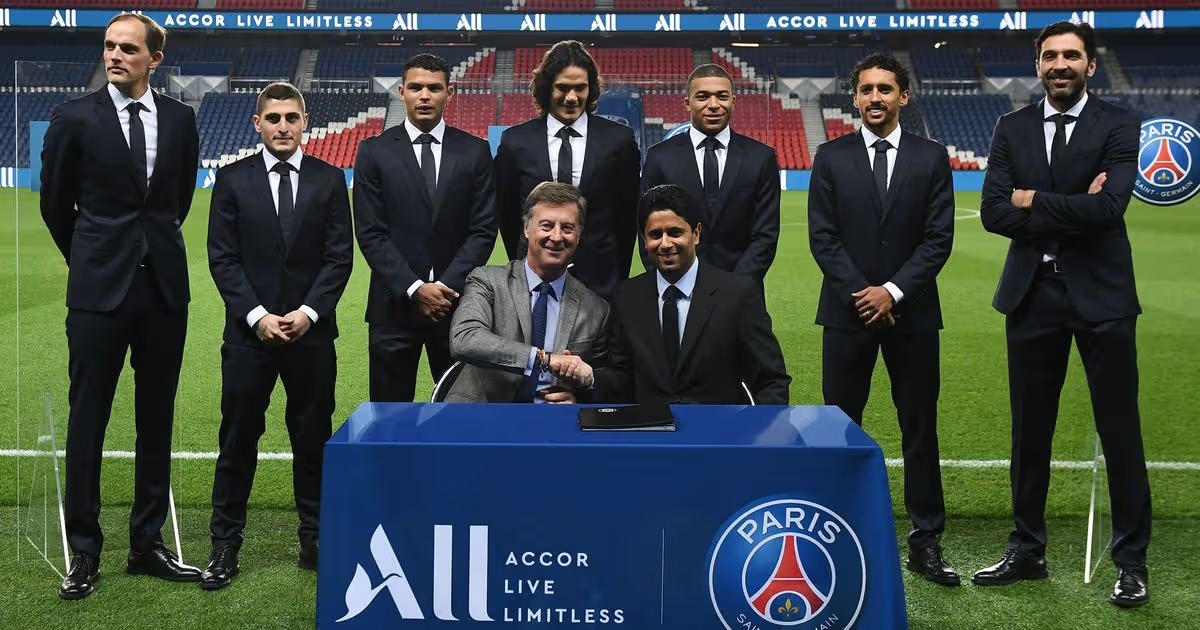
On February 7 (Beijing time), Le Parisien reported that PSG have worked relentlessly to comply with UEFA regulations by cutting their wage expenditure by 55% between 2022 and 2025. The era of eye-watering contracts for stars like Kylian Mbappé, Neymar, and Lionel Messi, the report noted, has now decisively come to an end.
PSG’s transformation began on June 30, 2011, when Qatar Sports Investments acquired 70% of the club for around €50 million. For a team that had won just two Ligue 1 titles in its first four decades, the new ownership marked a dramatic turning point. With vastly increased financial power, PSG quickly became a magnet for elite talent—and by the summer of 2017, the club’s “galáctico” phase fully arrived.
That summer, PSG stunned European football by paying €222 million to bring Neymar from Barcelona. They also secured France’s rising superstar Mbappé on an initial loan deal that carried a mandatory purchase clause worth €180 million. From that moment, PSG’s mega-star era was in full swing—both on the pitch and on the payroll.
Neymar’s salary in Paris reportedly peaked at €50 million per year. Messi, who arrived as a free agent in the summer of 2021, was said to earn a net base salary of €40 million annually. Mbappé’s post-renewal package in the summer of 2022 was even more staggering: a fixed pre-tax salary of €72 million per year, plus loyalty bonuses across three seasons—€70 million, €80 million, and €90 million—and a signing bonus reportedly exceeding €180 million paid upfront. If the contract had been completed as planned, the total payout would have reached at least €630 million, averaging €210 million per year—pushing the upper limit of football compensation to unprecedented heights.
Yet despite these record-breaking wages, PSG still could not secure the Champions League trophy they craved. In the summer of 2022, renowned football executive Luís Campos joined PSG as an adviser to Qatar Sports Investments. From that point, PSG began rolling out a redesigned salary structure that blended fixed pay with performance-based incentives. According to the report, the model proved widely acceptable among players and has delivered significant savings while reshaping the club’s wage discipline.
PSG’s wage spending peaked in the 2021/22 season, when Messi, Neymar, and Mbappé were all in the squad. The report explained that this was largely because Mbappé’s income—salary and bonuses tied to his June 2022 renewal—was accounted for within that season, making the figure look especially inflated. Even so, the club’s cost-cutting agenda continued without compromise.
In the summer of 2023, Messi and Neymar departed, joined by other high earners such as Marco Verratti, Mauro Icardi, and Georginio Wijnaldum. Then, in the summer of 2024, Mbappé—PSG’s highest-paid player—left on a free transfer to join Real Madrid. Although the wage-related disputes between the parties reportedly remain unresolved, there is no question that the departures of these top earners substantially reduced PSG’s overall payroll.
What surprised many PSG fans even more, the report suggested, was that after the three superstars left, the team thrived. Under head coach Luis Enrique, PSG embraced a more cohesive, team-first style and produced an impressive campaign in 2024/25—storming through the season to claim Ligue 1, the Coupe de France, and the Champions League, completing the club’s first-ever European treble. Meanwhile, the ambitious move to Madrid proved bittersweet for Mbappé, who ended the season empty-handed across the major competitions.
The wage reform push extended beyond the forwards. Last summer, PSG reportedly targeted starting goalkeeper Gianluigi Donnarumma as part of the salary restructuring and ultimately sold the treble-winning shot-stopper to Manchester City. Data cited in the report indicated that PSG’s total wage bill in 2021/22 exceeded 111% of the club’s revenue, but has now fallen to below 65%. With revenue continuing to rise steadily, PSG are increasingly presenting a healthier financial profile and a more sustainable business model.
In short, the free-spending image that once defined PSG is fading fast. By moving away from the superstar-wage model and leaning into collective football and emerging talent, PSG are positioning themselves—at least according to the report—as a modern benchmark for how elite European clubs can balance ambition with long-term sustainability.