You’ve probably seen this headline everywhere over the past couple of days.
Meituan is set to spend US$717 million to acquire all issued shares and the entire China business of Dingdong Maicai.
Including the US$280 million in cash that the sellers can withdraw, Dingdong’s shareholders are expected to walk away with around US$997 million in total. The final figure may still shift slightly depending on adjustments to net cash and working capital, but the big picture is already locked in.
What truly surprised the market was the speed.
Meituan completed due diligence and signed the deal in just two weeks—a pace that was both decisive and ruthless.
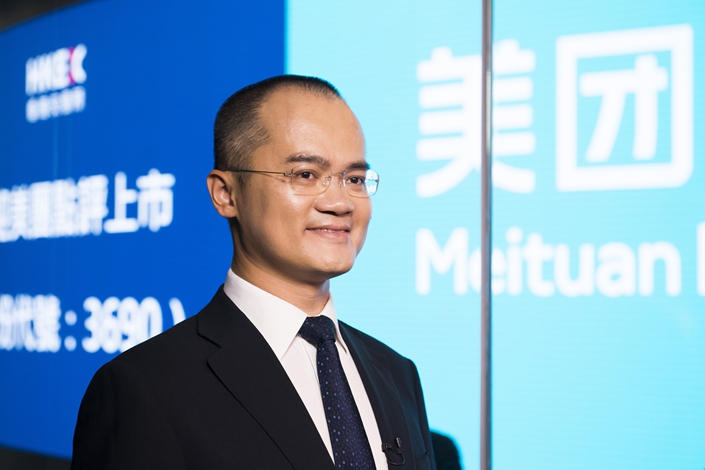
So why was Wang Xing suddenly in such a hurry?
In this industry, standard due diligence usually takes one to three months. Meituan wrapped it up in two weeks, moving about 75% faster than the industry norm. In plain business terms, this wasn’t just efficiency—it was a last-minute interception.
Especially painful for JD.com, which had already begun its own due diligence. JD missed the signing window during the exclusivity period, and that hesitation handed Wang Xing the opening he needed.
Meituan understood the stakes perfectly. If JD had taken control of Dingdong’s infrastructure, the long-term defensive cost for Meituan in instant retail wouldn’t have stopped at a few hundred million dollars—it would have ballooned far beyond that.
So where did Meituan’s real confidence come from?
The answer lies in Dingdong’s strategic stronghold in East China.
Dingdong currently operates 1,000 front warehouses nationwide, most of them concentrated in 12 core East China cities. Shanghai alone accounts for 40% of the total. For Meituan, this was rain after a long drought—exactly what it needed, at exactly the right moment.
A few years ago, Meituan’s management was confident to the point of arrogance. Dingdong and Pupu were seen as having little acquisition value. The thinking was simple: with Wang Xing’s execution discipline and Meituan’s ground-push DNA, catching up was only a matter of time.
Reality delivered a sharp wake-up call.
The numbers tell the story.
In 2023, Meituan’s instant retail growth still reached 30%. In 2024, that figure was cut in half to 15%. By 2025, the sense of stagnation had not eased at all.
The root cause was clear: East China.
This region—where revenue contribution is highest—remained stubbornly resistant to Meituan’s advance. It is the home turf of Hema and Dingdong, where Meituan’s self-operated fresh-food warehouse density and local penetration lagged significantly behind the leaders.
The price Meituan paid to force its way into East China in 2025 was enormous.
The most alarming data point came in Q3 2025: Meituan’s core local commerce segment posted a single-quarter loss of RMB 14.1 billion, the largest quarterly loss since its IPO.
Where did the money go?
Marketing spend exploded—up 90.9% year-on-year to RMB 34.3 billion. Nearly all of it was poured straight into East China price wars and warehouse network catch-up. Once spent, it vanished without a trace.
This kind of “lose three thousand to wound one hundred” strategy was unsustainable—even for Wang Xing.
Now compare that with Dingdong, the so-called local veteran.
Life wasn’t easy, but its foundation was rock-solid.
In Q3 2025, Dingdong posted RMB 6.66 billion in revenue and had already achieved seven consecutive profitable quarters under GAAP standards. Growth had clearly hit its ceiling—GMV rose just 0.1%—but nearly half of its GMV came from Shanghai, precisely where Meituan was weakest.
This was a battle Meituan could not afford to avoid.
By acquiring Dingdong’s China business outright for US$717 million, Meituan will push East China front-warehouse capacity beyond 1,500 sites, with nationwide coverage approaching 2,000 warehouses. At that point, Wang Xing finally holds the critical choke point of instant retail in his own hands.
You might ask: what does this showdown between Meituan and JD have to do with Dingdong itself?
Everything.
If instant retail is a poker table, Meituan is the dealer with the deepest stack and the strongest hand. Dingdong is the seasoned player in the corner, holding just two grocery cards, with chips nearly gone.
Let’s squeeze the water out of Dingdong’s seemingly respectable financials.
In 2024, Dingdong reported RMB 23.066 billion in revenue and RMB 304 million in GAAP net profit. Sounds encouraging, right? As if the front-warehouse model had finally broken through.
Capital markets see it differently.
Roughly 80% of that profit came from government subsidies. Strip out those non-recurring gains, and true operating profit shrinks to around RMB 60 million.
In an industry that routinely burns tens of billions, RMB 60 million barely makes a sound—hardly enough to cover year-end bonuses without careful budgeting.
Growth was even more troubling.
Dingdong’s revenue growth in 2024 was just 8%, far below the industry average of 20%. In 2025, the situation worsened sharply.
Q1 growth was 9.05%, Q2 slipped to 6.73%, and Q3 collapsed to 1.90%—effectively stagnation.
The capital market was brutally honest. By the end of 2025, Dingdong’s price-to-sales ratio fell to around 0.16, a fraction of peers like Pupu and Hema. In plain terms, the market was voting with its feet: Dingdong has lost its imagination.
Why did that imagination disappear?
Because the model stayed too narrowly focused on fresh food, while instant retail evolved toward full-category coverage. Today’s leaders expand warehouse sizes beyond 1,000 square meters, with tens of thousands of SKUs.
User logic is simple: if I’m ordering delivery, I want groceries, toilet paper, shampoo—even a cat toy—in one go.
Dingdong didn’t adapt. It capped SKUs at around 3,000, mostly vegetables. Users bought scallions and left; for paper towels, they went elsewhere.
A business running on one leg can’t outrun all-rounders.
Worse still, while Dingdong guarded its small plot of land, giants arrived with heavy weapons.
In 2025, Pinduoduo went all-in across East China. Its grocery arm added 160+ new warehouses, pushed fulfillment nodes beyond 2,000, and undercut Dingdong’s core products by 15–25%.
Dingdong adjusted prices—Pinduoduo responded in eight minutes. Promotions were copied within two hours. The goal was simple: crush Dingdong’s margins until nothing remained.
Under this pressure, Dingdong’s founder made it clear in early 2025 that survival was the priority. The company exited Southwest and South China, shrinking its footprint.
Organizational tweaks couldn’t reverse the tide. New ventures—outlet formats, overseas front warehouses—continued to bleed cash.
With domestic supply chains hard to replicate nationwide and overseas expansion faltering, selling the China business became the most dignified exit.
It was a seasoned move.
Dingdong sold its heavy, asset-intensive domestic operations to Meituan, retained overseas ambitions, and walked away with cash. Wang Xing, in turn, offered generous terms: keep US$150 million in net cash, retain the core team, and exit cleanly.
As Dingdong—the former lone warrior of front warehouses—bows out gracefully, the direction of instant retail has clearly shifted.
Competition has moved from traffic wars and subsidies to a hard-core infrastructure race.
Why?
Because platforms have finally done the math. Subsidy rates once averaged 20%; today they’re below 8%. Industry data shows that every RMB 1 subsidized brings back just RMB 0.8 in long-term revenue.
Infrastructure is different.
Every RMB 1 invested in warehouses and supply chains generates RMB 1.5 in long-term returns. It’s the difference between painkillers and land deeds—one eases pain briefly, the other secures your future.
Warehouses are now strategic assets. Dense networks and hardened supply chains decide who wins.
Meituan is adjusting accordingly. It’s quietly reshaping its organization, accelerating expansion through community convenience brands and alcohol-delivery networks, while pushing aggressively into lower-tier cities and counties to lock in national fulfillment coverage early.
Alibaba is no less determined.
For Alibaba, instant retail is a three-year life-or-death battle. Taobao Flash integrates Tmall Supermarket and Ele.me into a hybrid model, while third-party merchants now account for around 30% of supply. Hema alone operates nearly 400 nodes across East and South China.
Over the next two years, Alibaba plans further warehouse expansion in North China and the Southwest, directly challenging Meituan and JD on their home turf.
Instant retail is now a long, capital-intensive war of attrition.
It’s no longer about storytelling. It’s about warehouse density, supply depth, financial endurance, and execution discipline.
By 2024, China’s instant retail market reached RMB 1.2 trillion, growing 20% year-on-year. Meituan and Alibaba together controlled 85% of the market.
In 2025, the market surged past RMB 1.45 trillion, growth stayed above 20%, and the duopoly remained firmly in place.
In the end, this battle doesn’t feel very “internet” at all.
It’s heavy assets, thin margins, and a brutal test of patience. The moat may be deep—but the process of digging it is exhausting.
And every time the giants open fire, shareholders can only hold their breath.