Few could have imagined that Zihai Guo, once the undisputed star of China’s self-heating hotpot boom, would find itself on the brink of bankruptcy.
Recently, Hangzhou Jinlingyang Enterprise Management Consulting Co., Ltd.—a company associated with Zihai Guo—was added to a bankruptcy review case. The applicant is an individual surnamed Ma, with the case handled by the Yuhang District People’s Court of Hangzhou. Public records further show that Jinlingyang is linked to multiple enforcement actions, with total enforced amounts exceeding RMB 1.4 billion.
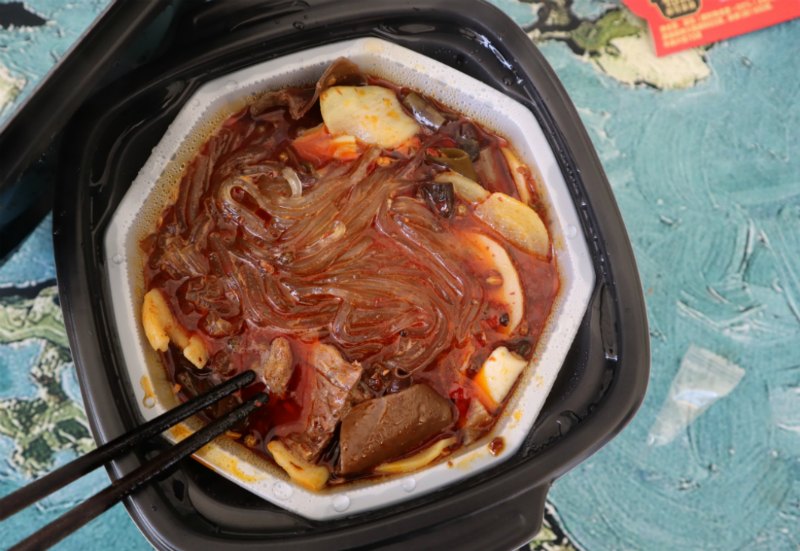
Rewind to the winter of 2021, and Zihai Guo was standing at the very peak of its rise. Across supermarkets nationwide, its bright orange packaging dominated prime shelf space. In elevator screens, celebrity endorsements played on repeat. In livestream rooms, hosts passionately demonstrated the magic of “hotpot in 15 minutes.”
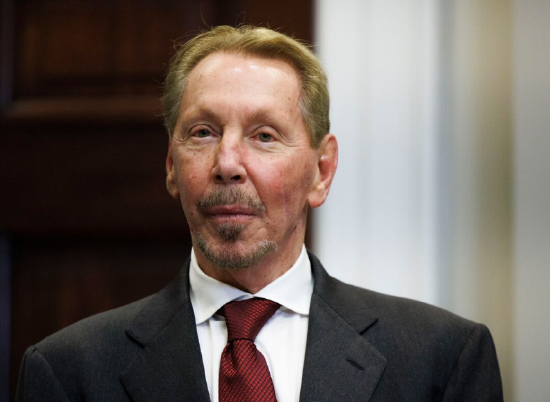
Founder Cai Hongliang was a frequent guest at entrepreneurship forums, sharing how he had transformed from building a snack empire—Bestore—into becoming a so-called “revolutionary of convenient food.” Capital enthusiasm reached a fever pitch. CMC Capital, Gaorong Capital, Hony Capital and other top-tier funds rushed in, pushing the company’s valuation close to RMB 10 billion, while annual sales once surged to nearly RMB 2 billion.
Yet in business, the most unforgiving rules often activate at the moment of greatest glory. From the second half of 2022, Zihai Guo began disappearing from prime retail locations. The once-overwhelming advertising faded. Complaints about product quality surfaced more frequently on social platforms. More troubling still, founder Cai Hongliang had already been restricted from high consumption due to debt-related issues, even while the brand was still enjoying its spotlight.
As the pandemic-driven consumption dividend gradually faded, and as capital markets shifted from frenzy to caution, cracks began to appear in a business built heavily on traffic and capital momentum.
This is not merely the rise and fall of an internet-famous brand. Zihai Guo’s trajectory mirrors the broader dynamics of China’s new-consumer era: how traffic-first thinking drags companies into endless marketing competition; how blind expansion strains fragile supply chains; and how, when external conditions change, risks once hidden by rapid growth can erupt all at once, triggering systemic collapse.
One Heating Pack That Ignited a Billion-RMB Track
In 2017, China’s consumer market stood on the eve of transformation. A rising middle class, over 240 million single adults, and the flourishing “lazy economy” all signaled an imminent revolution in how people eat. That year came to be known as the dawn of self-heating foods.
After selling Bestore to Haoxianglai, Cai Hongliang chose not to retire into financial freedom. Instead, he set his sights on the emerging self-heating hotpot category. Chongqing Jinlingyang E-commerce was quietly established, and a year later, the internet-savvy brand name “Zihai Guo” burst onto the scene.
Cai’s original insight was both simple and sharp. Food delivery offered variety but was limited by time and location. Traditional instant noodles were convenient but compromised on quality and experience. Into this gap stepped the self-heating pack—derived from military technology—requiring only cold water and 15 minutes to produce a hot, meat-and-vegetable-filled meal anywhere. It was not just a product innovation, but a precise capture of modern urban lifestyles and emotional needs.
From day one, Zihai Guo spoke fluently to young consumers. Even the brand name carried a tone of self-mockery and instant gratification, effortlessly narrowing the psychological distance with its audience.
Capital followed quickly. Huaying Capital, Matrix Partners China, CICC Capital, CMC Capital, and Gaorong Capital all placed their bets, pushing Zihai Guo’s valuation to as high as RMB 7.5 billion.
Each funding round acted as an accelerator. Capital was rapidly converted into capacity, channels, advertising, and an ever-expanding product line. In investors’ visions, Zihai Guo was not just a viral product, but a platform brand poised to redefine convenient meals and even the prepared-food market.
Fueled by hot money, Zihai Guo accomplished in a few years what traditional brands might take decades to build. Online, it dominated Tmall and JD.com, while thriving in livestream ecosystems on Douyin and Kuaishou. Offline, its orange packaging penetrated more than 50,000 retail outlets nationwide—from premium supermarkets to convenience stores and highway service areas.
Its sales curve was astonishing: over RMB 100 million in 2018, RMB 500 million in 2019, surpassing RMB 1 billion in 2020, and nearing RMB 2 billion in 2021.
After establishing itself with classic flavors like spicy beef and tomato brisket, Zihai Guo rapidly expanded into self-heating rice, noodles, barbecue, and more, with SKUs once exceeding 100. It emphasized “real meat chunks,” positioning itself against the dehydrated vegetables of traditional instant foods, and attempted to build a quality moat through higher costs.
The brand continued to fracture outward—launching the more affordable “Huamian” line, creating “Xiao Qi Kitchen” to bet on prepared meals, and executing textbook-level marketing. It embedded itself in popular TV dramas, sponsored hit variety shows, enlisted top celebrities, saturated elevator ads via Focus Media, and ignited massive UGC sharing on Xiaohongshu and Douyin.
At its peak, Zihai Guo was not just a capital darling or industry benchmark, but a cultural symbol.
Yet the blaze lit by a single heating pack was also quietly accumulating the energy to burn itself out. Extreme speed tested management, supply chains, and cash flow to their limits. A sprawling empire demanded continuous capital infusions. When external conditions turned cold, the foundations of this traffic-and-capital-built myth began to creak.
Why Did a Viral Product Collapse?
Looking back, the real catalyst behind Zihai Guo’s explosion is obvious: COVID-19. Lockdowns constrained dining out and delivery, creating ideal conditions for self-heating foods to shine.
But as the pandemic faded, so did the category’s core scenarios. Demand driven by quarantine and emergency stockpiling proved one-off and unsustainable. With daily life returning to normal, delivery convenience rebounding, and outdoor consumption recovering, urgency for self-heating products dropped sharply.
The data was stark. In 2022, growth in the self-heating food category plunged from over 50% annually to single digits. Capital retreated just as fast. Financing events fell from ten in 2020 to only three in 2022. Brands exited en masse: Uni-President pulled its “Cooking Time” hotpot, and Weilong abandoned its self-heating lines.
For Zihai Guo—whose business model and valuation were built on aggressive growth expectations—this was a devastating blow. Revenue halved in 2022 from its near-RMB-2-billion peak, while channel inventory alarms rang loudly.
Internally, cracks were already deep. Despite strong sales, parent-company financials told a different story. From 2020 to 2021, Jinlingyang posted revenues of RMB 958 million and RMB 992 million respectively, yet suffered losses of RMB 151 million and RMB 313 million. Profitability briefly appeared in 2022, but revenue slipped to RMB 820 million.
Legal troubles followed. Advertising disputes, enforcement actions, credit restrictions, and repeated consumption bans accumulated, revealing mounting financial strain.
Under capital pressure, Zihai Guo pursued distorted growth—spending astronomical sums on marketing, at times nearing 40% of revenue. From 2020 to 2021 alone, advertising expenses reached tens of billions of yuan. This “bleeding for growth” model collapsed the moment financing dried up.
Meanwhile, blind diversification overwhelmed the company. Hundreds of SKUs diluted R&D and quality control, triggered complaints, and wreaked havoc on inventory management. Channel stuffing created an illusion of prosperity that quickly unraveled into a death spiral of overstock, distrust, and declining sales.
Eventually, collapsing revenue, heavy payables, frozen credit lines, and lawsuits converged. The financial structure gave way, and the once-ubiquitous orange boxes vanished from shelves almost overnight.
Cooling Ashes, Searching for New Fire
Zihai Guo’s rise and fall compresses the entire cycle of China’s new-consumer wave—from euphoria to sobriety—into a single accelerated narrative.
Its retreat from center stage leaves behind a heavy question: after traffic worship and capital carnivals, what truly sustains a consumer brand?
In the post-Zihai Guo era, the industry searches the cooling ashes for lasting sparks. Capital has reversed course. Where GMV growth and market share once dazzled investors, now margins, cash flow, repeat purchases, and healthy unit economics dominate due diligence.
Surviving brands are forced into painful “slimming”—cutting unprofitable SKUs, shrinking channels, slashing ineffective marketing, and refocusing on products and supply chains. The process is brutal, but it returns the market to solid ground: only companies that generate positive cash flow deserve a future.
Consumers, too, have evolved. Early “new consumption” was largely driven by new marketing. Today’s buyers are calmer and more discerning, voting instead for true value—whether cost-effectiveness or emotional resonance.
Zihai Guo’s pot has cooled, but the lessons still radiate warmth. Its collapse delivered a costly but invaluable public lesson: there is no shortcut to sustainable business through storytelling and spending alone. When the fireworks fade, only brands built on respect for fundamentals, products, efficiency, and users will endure.
The ashes are not pure despair. They clear space for new fires—fires that burn steadier, brighter, and longer than the fleeting blaze of bubbles past.