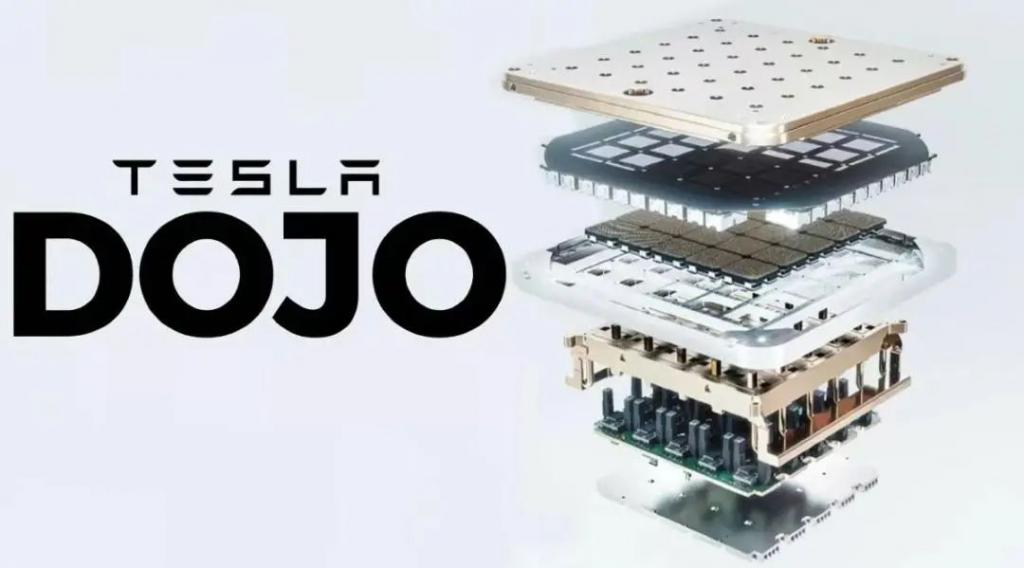
Elon Musk has confirmed that Tesla has officially disbanded its ambitious in-house Dojo supercomputer team. Launched in 2019, the project carried Tesla’s vision of AI compute autonomy, with billions of dollars invested and years of effort from top engineering talent — yet it has now reached its end.
Musk’s explanation was straightforward: with limited resources, developing both Dojo training chips and AI5/AI6 inference chips “is not reasonable.” The decision was followed by the departure of Dojo project leader and semiconductor veteran Peter Bannon, along with around 20 core engineers who joined DensityAI, a startup founded by former Tesla AI chief Ganesh Venkataramanan. Remaining members were reassigned to more urgent business lines such as autonomous driving hardware, Robotaxi, and the Optimus humanoid robot.
This sudden pivot has sparked speculation about Tesla’s technology roadmap and AI strategy. Is it a technical bottleneck, financial pressure, or a higher-level strategic choice?
1. The Triple Dilemma of Dojo
(1) Technical Overlap and Performance Stagnation
Dojo aimed to build an AI training platform optimized for massive video data processing. However, since the launch of its D1 chip in 2021, development stalled. The Dojo2 chip, released in 2025, failed to meet internal performance expectations and faced serious mass production challenges.
Meanwhile, Tesla’s car-based inference chips advanced rapidly. The new AI5 chip, built on TSMC’s 3nm process, delivers 2500 TOPS — five times faster than its predecessor and surpassing Nvidia’s Thor-X (2000 TOPS). Musk acknowledged that AI5/AI6 chips not only excel at inference tasks but also deliver top-tier training performance, causing significant functional overlap with Dojo.
(2) Financial Pressures and Resource Reallocation
Chip development is capital-intensive. Tesla’s 2025 capex is projected to exceed $9 billion, with AI as a major cost driver. Maintaining Dojo as a standalone supercomputing ecosystem required billions annually, but its output failed to match the scale of investment.
In a financial transition period, cutting high-cost, low-output projects with viable alternatives allows Tesla to focus resources on more commercially promising ventures like Robotaxi and Optimus — a rational “cut to survive” decision.
(3) The Rise of Cortex Supercomputer Clusters
The final blow to Dojo was the rise of Cortex supercomputer clusters.
Cortex 2.0, now under rapid construction at Tesla’s Texas Gigafactory, uses Nvidia’s H100 GPUs instead of custom chips. Training efficiency is reportedly several times higher than Dojo’s. Tesla has deployed about 50,000 H100 GPUs and plans to double that to 100,000, already handling 5%-10% of autonomous driving data processing. With superior performance, faster deployment, and a mature ecosystem, Cortex made Dojo redundant.
2. Power Reshuffle and Industry Ripples
(1) Talent Migration to Emerging Players
Dojo’s disbandment triggered an exodus of core talent. DensityAI absorbed around 20 Tesla veterans, including former executives Bill Chang and Ben Floering, focusing on AI data center chips and hardware — potentially becoming a new competitive force.
(2) Centralized AI Leadership at Tesla
Tesla has restructured its AI leadership:
- Ashok Elluswamy promoted to VP of AI Software, overseeing Robotaxi and Optimus
- Aaron Rodgers continues to lead AI5 chip development
- Silvio Brugada takes over firmware teams
This marks a shift from “multi-front expansion” to “concentrated breakthrough.”
3. The Strategic Logic Behind the Shift
While abandoning Dojo may appear to reduce Tesla’s chip independence, in reality it’s a “retreat to advance”:
- Cortex ensures training capacity
- AI5/AI6 secure top-tier inference performance
- Resources are funneled into highly commercializable projects
Morgan Stanley once predicted Dojo could add $500B to Tesla’s market cap if successful. Now, investor attention has shifted toward Cortex compute services and scaling Robotaxi.
Competitors remain aggressive — Waymo retains a head start in Robotaxi, while Chinese players like Baidu are accelerating. Tesla’s pivot is a pragmatic response to intensifying global competition.