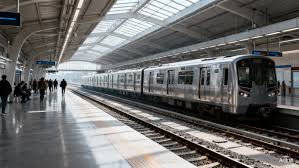
Recently, official responses from Shenzhen and Foshan have sent signals of tightened subway project approvals.
01. Approval Tightening in Shenzhen and Foshan
- Shenzhen: When residents asked if Metro Line 18 would be included in Phase 5 revision, the Shenzhen Development and Reform Commission replied that “the project has not been approved by national evaluation.” This 63 km line connecting Bao’an, Guangming, Longhua, Longgang, and Yantian districts, crucial for Shenzhen’s third-tier development, has halted at the approval stage.
- Shenzhen Line 14 East Extension (Huizhou segment) was also paused because Huizhou does not yet meet national urban rail construction criteria.
- Foshan: The Metro Bureau stated that the previously approved Line 2 Phase II and Line 11, as “approved but not implemented projects,” must be resubmitted under current policy.
Shenzhen and Foshan, as economically and demographically important cities, highlight the tightening signal.
02. Approval Tightening Across China
- Ningbo: Although Phase III added over 100 km, Phase IV was postponed due to insufficient passenger flow.
- Luoyang, Harbin, Quanzhou: Phase II plans were returned due to low passenger flow or fiscal constraints.
- By 2025, subway approvals nationwide slowed, with more than 20 cities awaiting new planning decisions.
- During the “15th Five-Year Plan,” approvals are expected to become stricter, using city population, passenger flow, and finances as hard thresholds.
03. Reasons for Stricter Approval
Dual pressures:
- High cost, low revenue: Subway construction is expensive, with underground sections costing over 600 million RMB per km; most operations rely on government subsidies.
- Low utilization: Over two-thirds of subway lines fall below passenger flow standards, creating a “build-loss-subsidy” cycle.
Policy background: 2018 State Council guidelines for subway project approval:
- Public budget revenue ≥ 30 billion RMB
- GDP ≥ 300 billion RMB
- Urban resident population ≥ 3 million
- Initial passenger flow ≥ 7,000 passengers/km
Recent policies are stricter; even previously approved but unbuilt projects must undergo re-evaluation.
Conclusion
The Shenzhen and Foshan cases, together with nationwide slowdown, indicate that the era of rapid subway expansion has ended. Future approvals will emphasize matching demand and efficiency, encouraging cities to optimize operations, increase ridership, and integrate with other transport for high-quality development.