At the start of 2026, Alibaba made its stance on instant retail unmistakable: Taobao Flash Sale will prioritize market-share gains and aims to become the “undisputed No.1.” With CEO Eddie Wu and Taotian CEO Jiang Fan backing the goal publicly, the strategy shifts from “participating” to “must-win.”
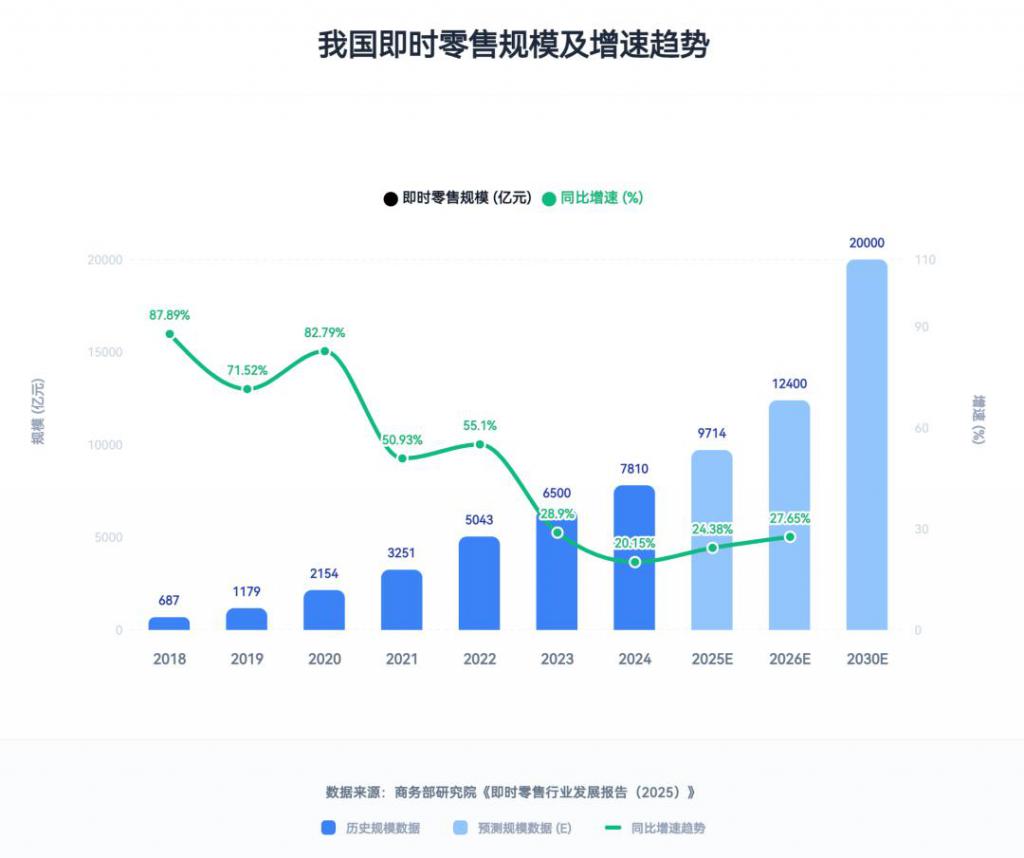
Alibaba is willing to spend aggressively because instant retail is both a growth engine and a high-frequency entry point that can lift traffic and monetization on Taobao/Tmall. With the sector widely viewed as a trillion-RMB opportunity, being No.1 would strengthen user mindshare, pricing power, and ecosystem control.
Alibaba’s edge comes from cash reserves and an end-to-end ecosystem loop: Taobao’s massive traffic and premium users on one side, and Ele.me fulfillment, Freshippo/Tmall Supermarket supply, plus Cainiao logistics on the other—forming a “traffic → near-field fulfillment → data feedback” flywheel.
The trade-off is real: heavy subsidies, rider capacity, and marketing have pressured profits, forcing Alibaba to balance investments across instant retail, cloud, and international commerce. Tactically, Taobao Flash Sale is moving from subsidy-driven expansion to efficiency-led operations, using AI tools to improve merchant productivity and scaling “dark stores/flash warehouses” and “near-field official brand stores” to densify supply.
Key challenges remain: weaker infrastructure in lower-tier markets, rising service expectations as order value increases, and uncertain retention once subsidies fade.
Competition is intense—Meituan leads with fulfillment scale, JD targets high-trust high-ticket categories with its logistics, while Douyin attacks asymmetrically via content-driven demand and instant delivery. Whether Alibaba can turn ecosystem synergy into a decisive No.1 position will define the next phase of this battle.