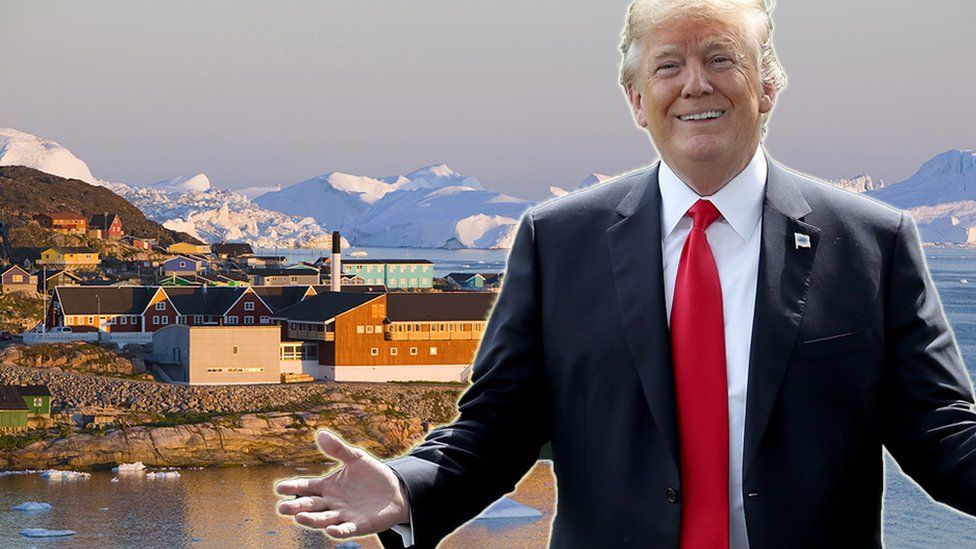
Trump’s abrupt pullback this week from threatening new tariffs linked to Greenland may signal that investors have uncovered the ultimate way to rein in the president.
The retreat followed a brutal bout of market selling, underscoring that—even if the U.S. president is willing to antagonize Washington’s closest allies—investors still wield real influence over his decisions.
On Tuesday, U.S. equities were hit by a savage sell-off that erased more than $1 trillion in market value, the worst session since Trump unveiled his “Liberation Day” tariffs in April. While he publicly brushed off the decline as insignificant compared with the market’s gains over the past year, he nonetheless abandoned plans by Wednesday afternoon to impose steep tariffs on the UK, France, Germany, and other countries.
“Governments are absolutely sensitive to stock market performance,” said Kristina Hooper, chief market strategist at Man Group, which oversees $214 billion in assets. “That sensitivity is clearly reflected in this decision to step back.”
Karl Schamotta, chief market strategist at Corpay, said Trump’s comments on Wall Street’s reaction to his threats against Europe were “a signal that this hit a nerve.”
The sudden U-turn marks the latest example of financial markets exerting pressure on Trump—a dynamic widely joked about as “TACO,” short for “Trump always chickens out.” It also shows investors increasingly trying to gauge Trump’s personal pain threshold, while gradually becoming desensitized to ever more extreme policy proposals.
“‘TACO thinking’ is now deeply embedded in markets,” said Jason Bobora-Sheen, a portfolio manager at Ninety One. “Investors are convinced Trump is the boy who cried wolf. The risk is that one day this dynamic gives the wolf enough room to get closer than expected.”
A White House spokesperson, Kush Desai, pushed back, saying: “Anyone who doubts whether President Trump is willing to follow through when others refuse to make deals should ask Nicolás Maduro or Iran what they think.”
Investors first learned the “TACO” lesson during the turmoil that followed Liberation Day, when the scale and scope of Trump’s trade war shocked markets. The announcement left U.S. equities reeling and dealt a heavy blow to the Treasury market, as trade tensions undermined confidence in America’s safe-haven status.
Yet the rebound that followed was just as violent, punishing those who dumped stocks during the downturn. Since then, markets have reacted more cautiously to Trump’s aggressive trade rhetoric and his attacks on Federal Reserve chair Jerome Powell, with investors increasingly reluctant to overreact.
“The difference between then and now is that Trump has far less political capital,” said Luca Paolini, chief strategist at Pictet Asset Management. “With midterm elections approaching, his tolerance for pain is much lower.”
Others argue this dynamic could embolden the targets of Trump’s policies. “If I were advising certain European governments, I’d say you almost need to create a bit of market volatility, because Trump cares about that more than most politicians,” said Michael Krautzberger, chief investment officer for public markets at Allianz Investment, shortly before Trump backed down.
On Thursday, as Trump returned to the United States, the S&P 500 closed up 0.6%.
Global investors have also grown accustomed to the pattern of Trump making major policy announcements over weekends, when equity, bond, and currency markets are closed.
Charles-Henry Monchau, chief investment officer at Swiss bank Syz, described a four-to-six-week “Trump tariff cycle,” beginning with a shock phase that drives stocks lower and volatility higher, followed by soothing messages from U.S. officials and ending with promises of a negotiated solution.
“This time—the Greenland episode—the cycle was much shorter,” Monchau said. “Perhaps because the cost was simply too high for everyone.” He pointed to other episodes, including a sharp one-day drop in the dollar last July after reports that Trump had asked lawmakers about firing Powell. The dollar later rebounded after Trump said he had “no intention of doing anything.”
Some investors worry that the widespread expectation of a “TACO” outcome is dulling markets’ sensitivity to genuine economic or political shocks. At the height of the Greenland crisis, one relatively unmoved government bond investor said they were trying to “actively ignore all the Greenland noise.”
For investors operating across multiple asset classes, the response has been tactical: trimming exposure ahead of Trump’s high-stakes speeches or flashpoint events, while maintaining long-term positions in gold and other commodities that may benefit from rising uncertainty.
Gold extended its record-breaking rally this week and continued to climb even after Trump reversed course on Greenland. On Friday, spot prices briefly approached $5,000 an ounce.
Trevor Greetham, head of multi-asset at Royal London Asset Management, said he has been buying gold to hedge against the risk that Trump could still push through more extreme policies—such as curbing the Federal Reserve’s independence under Powell’s successor.
“It feels a bit like a frog being slowly boiled, and the temperature is rising,” he said. “The danger is that you become immune to triggers that would have caused massive sell-offs 10 or 20 years ago.”