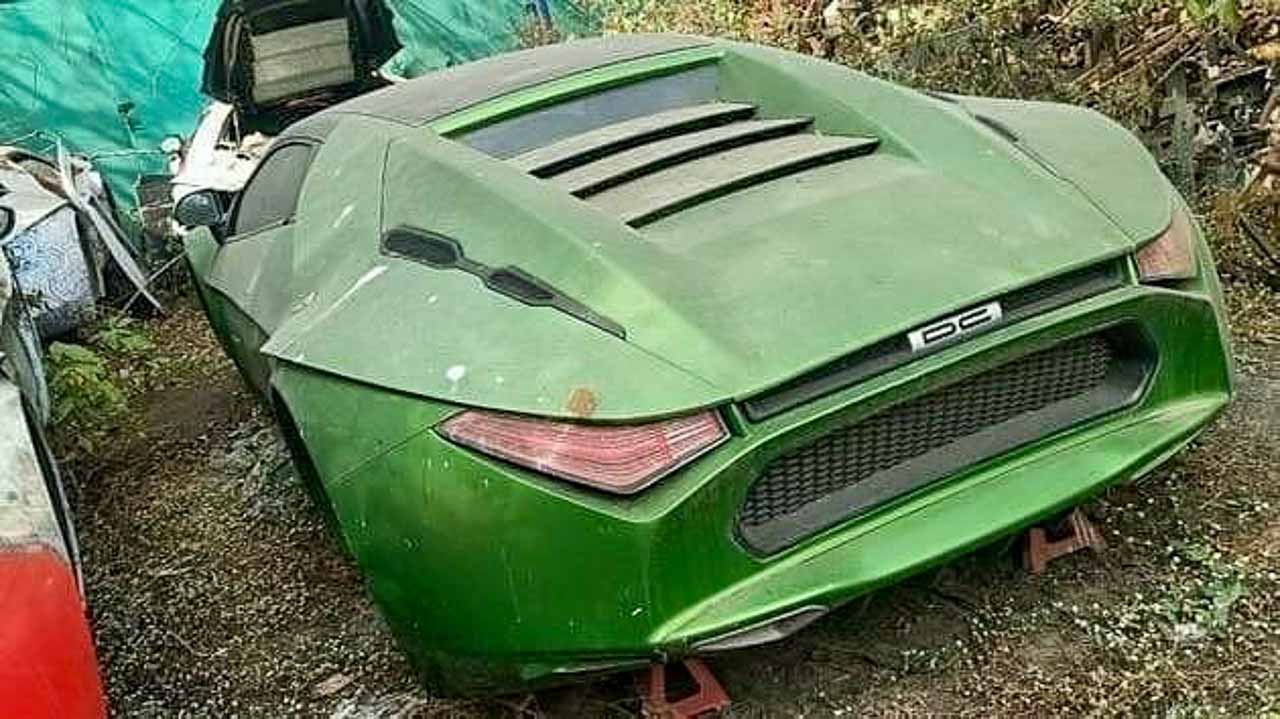
Across many cities, rare vehicles from defunct automakers can still be seen cruising the streets — relics of once-ambitious brands. Some of them bear witty bumper stickers reading, “Careful when tailgating — no spare parts available,” a mix of humor and helplessness from their owners.
What were once futuristic machines costing two or three hundred thousand yuan — icons of innovation and design — have since lost their digital heartbeat. When the manufacturer’s servers shut down, their smart systems turned silent, leaving owners anxious about maintenance and parts. Yet on the other side of the market, as prices plummet to rock bottom, a new generation of young enthusiasts sees opportunity — and their first taste of high performance for a bargain.
Bargain Hunting: Turning Leftovers into Legends
Outside Beijing’s Fifth Ring Road, in a quiet parking lot, dozens of JiYue 07 sedans sit lined up under the banner “Special Clearance.” Once promoted as a direct rival to the Zeekr 001 — a “smart performance coupe” — these cars now resemble near-expired goods in a supermarket aisle. Dust covers their sleek bodies, and signs read: “Original price ¥229,900, now only ¥148,000.” One curious visitor summed it up: “Under 150K for a near-new EV? Of course, the discount comes with a little risk.”
“I’m not betting on the brand’s comeback,” said Xiaolin, a 29-year-old programmer who had just quit his tech-giant job. “I’m betting that CATL’s battery cells won’t die.” He ran his hands over the car’s curves like picking the best cabbage at the market. With the money saved, he plans to live in Yunnan for half a year. “The company’s gone, the servers are offline, the infotainment’s dead — but if the battery’s fine and the suspension’s quiet, that’s all I need.”
The Graveyard Becomes a Playground
In 2025, a scroll through any EV enthusiast group, Xiaohongshu “Hidden Gems” tag, or Xianyu’s “Bankrupt Cars” listings reveals a wild new second-hand ecosystem taking shape.
There’s no brand loyalty, no after-sales promises, no “lifetime warranty.” Instead, you’ll find cold, hard specs written like treasure maps: “100 kWh CATL ternary lithium + Qualcomm 8295 chip + double-wishbone suspension + 30% off retail.”
Every major city now has its own “EV graveyard.” Cars once hailed as pioneers of China’s smart-electric revolution are now reborn as champions of pure value. “We call it the hardware gamble,” said a blogger who brands himself “The EV Hunter.” “You’re betting that the supply chain outlives the automaker.”
He recently helped several fans score deals on JiYue stock cars sitting in a Ningbo warehouse. “Ten cars sold in a month — all to young buyers. Some even flew in from Inner Mongolia,” he said.
From the WM EX5 to the HiPhi X, from Nezha U to JiYue 01, models once dazzling onstage now sell at 30–70 percent of their original price — the ultimate “bang-for-buck beasts” for Gen Z.
From Faith to Function
“You see this HiPhi X?” a used-car dealer said, pointing to the car famous for its “dancing doors.” “It used to cost 730,000 yuan. Now it’s 180,000. Young buyers don’t care if the company’s dead — they care about the hardware inside.”
Indeed, the gull-wing doors still open like a spaceship’s, even if the brand behind them is gone. Once-mocked names like WM, Nezha, and JiYue have become cult favorites in the used-EV scene. Flashy features are out; solid engineering is in.
“I didn’t buy a car — I bought a moving hardware rig,” said A-Kai, a 24-year-old designer who picked up a WM W6 for 60,000 yuan — down from its original 280,000. He documents how he reflashes the system, scavenges parts from scrapped cars, and joins online groups for peer-to-peer maintenance. “Car companies are just assemblers,” he said. “All I need is the spec sheet.”
These “salvage players” are pragmatic minimalists. They no longer chase autopilot dreams or pay for brand premiums. What they want is mobility — a car that runs, protects, and carries. For them, a few thousand yuan and a weekend in a car-accessory market can revive the luxury once locked behind a dead server.
The Rise of DIY Revivalists
Many adapt these “orphan EVs” into basic daily drivers — stripped-down, functional, and affordable. A modified Nezha S, for example, keeps the motor and battery but removes smart gateways and online dependencies. Add heat-resistant film, curtains, a phone holder, and it becomes a quiet escape pod amid city noise.
Others go the geek route — installing mobile Wi-Fi, colorful seats, and subwoofers in the trunk. For the cost of a smartphone, they reclaim half the “premium feel” once lost with the brand’s collapse.
“There Are No Dead Cars — Only Uncreative Owners”
This movement reveals a deeper shift in how young people perceive car value. Raised in the internet era, they respect specs over brand prestige. Laggy infotainment? Fine. No more OTA updates? Whatever. As long as the hardware is strong, the price fair, and the tech stack credible — CATL batteries, Qualcomm chips, Bosch suspensions — that’s enough.
“I don’t trust startups that can’t even publish a financial report,” said a user who traveled from Shenzhen to Tianjin to buy a Nezha S. “But I trust CATL. I trust Qualcomm. I trust Bosch. If the core is intact, the car lives.”
From Warranty Dreams to Grassroots After-Sales
Of course, risk comes with the discount. Many learn the hard way what “orphan car” really means. One WM owner lost access to navigation and remote controls when the servers shut down. Another HiPhi driver couldn’t find a replacement door handle anywhere in the country. Some insurers even blacklisted bankrupt EV brands, doubling premiums — or outright refusing coverage.
In response, a cottage industry of independent brokers has emerged, specializing in securing insurance and spare parts for “abandoned” EVs. Online communities swap firmware, jailbreak tools, and dismantled components. Third-party garages now focus exclusively on these orphaned models.
Experts are calling for a nationwide “After-Sales Responsibility Fund,” where automakers contribute a portion of revenue to a shared pool that covers basic service if a brand collapses. Standardized parts, they argue, are key to lowering repair barriers. For now, grassroots cooperation — “repair clubs” and “owner alliances” — are the glue holding this underground ecosystem together.
A Fragile Future
In a rare glimmer of hope, WM Motor announced plans to resume production in September, signaling that some brands may rise again. Yet the broader picture is sobering: China’s new-energy vehicle brands have dropped from over 400 in 2018 to around 40 in 2025. Analysts predict only 19 will remain by 2030.
Meanwhile, technology races ahead — CATL’s all-solid-state batteries promise 1,500 km range by 2027. Ironically, today’s “hardware bargains” may soon become outdated relics themselves.
Still, many buyers don’t care. “Maybe it’ll be obsolete in three years,” said one new owner, “but I need a car now — and I’ve only got 100,000 yuan.”
In this brave new world of post-brand mobility, yesterday’s failed dreams are being rebuilt — by the hands of fearless young drivers who see treasure where others saw tragedy.