On the evening of December 28, Yijing Optoelectronics (600537.SH) announced that it had recently received a Hearing Notice from the Administrative Committee of the Anhui Quanjiao Economic Development Zone. The notice indicates the committee intends to issue an administrative decision regarding the company and its subsidiaries—Changzhou Yijing and Chuzhou Yijing—for failing to fully perform obligations under their investment agreements. Yijing Optoelectronics has applied for a hearing in accordance with the law, but the hearing process has not yet begun.
The planned administrative hearing directly targets the company’s photovoltaic (PV) project in Quanjiao County, Chuzhou, Anhui. Due to alleged non-performance, the Administrative Committee is proposing to terminate the investment agreement and its supplemental agreement, recover RMB 140 million in contributed funds, and pursue additional breach-related liabilities, including construction-on-behalf fees, rent, and other related costs.
On December 29, reporters from Time Weekly repeatedly called Yijing Optoelectronics’ securities department and sent interview questions, but the calls went unanswered. As of publication, no response had been received.
That same day, Time Weekly also attempted to contact the Administrative Committee of the Anhui Quanjiao Economic Development Zone by calling multiple numbers listed on its official website, but no one answered.
Chuzhou Project Hits the Brakes
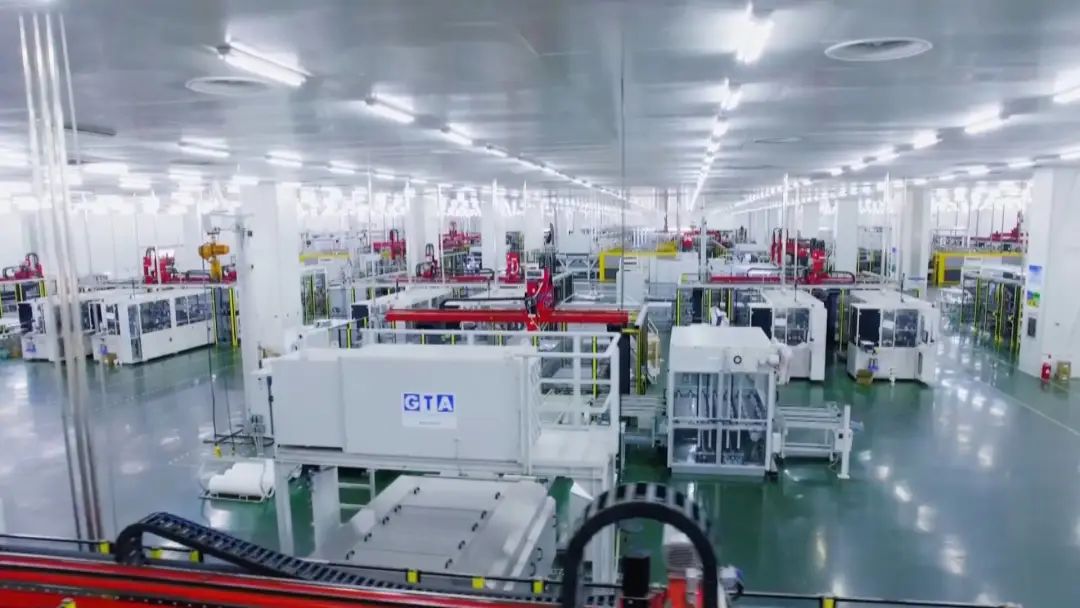
The timeline goes back to 2022, when the PV industry was still enjoying a strong cycle. At that time, Yijing Optoelectronics planned a major investment in Quanjiao County, Chuzhou, to build capacity of 10GW PV cells, 10GW PV wafers, and 10GW PV modules. The project was advanced by Chuzhou Yijing, a project company jointly established by the company’s controlling subsidiary Changzhou Yijing and Jiachen Fund, a platform entity of Quanjiao County.
The project was designed to be built in phases. Construction officially began in November 2022, and production started to come online in July 2023.
However, industry conditions shifted quickly. As the solar supply chain expanded aggressively across multiple segments, structural capacity mismatches emerged. Falling prices and lower operating rates became widespread across the industry.
Against this backdrop, Yijing Optoelectronics noticeably slowed the pace of its Chuzhou rollout. To date, the project has only completed roughly 7.5GW of the Phase I PV cell capacity. The remaining cell capacity, as well as Phase II and Phase III wafer and module plans, have not seen substantive progress.
Beginning in October 2024, citing industry and market conditions, Yijing Optoelectronics implemented a step-by-step production suspension at the Chuzhou base.
According to the announcement, the Administrative Committee believes the company failed to fully meet its investment obligations under the agreements. It therefore plans to terminate the agreements, recover RMB 140 million, stop further capital contributions, and hold the company accountable for potential breach-related payments such as construction-on-behalf fees, rent, and capital occupation costs.
Loss Pressure Could Intensify
Founded in 2003, Yijing Optoelectronics’ core business covers the R&D, manufacturing, and sales of high-efficiency crystalline silicon solar cells and modules, and it has extended into the PV power station segment. The company currently operates two major manufacturing bases in Changzhou and Chuzhou.
In its 2024 annual performance pre-loss announcement, the company stated that due to the industry cycle, it had already suspended 5GW PERC cell capacity at the Changzhou base and 7.5GW TOPCon cell capacity at the Chuzhou base. Its module capacity utilization was around 40%, and the company said it would restore capacity as soon as market conditions improved.
As of publication, the company had not responded to questions on whether the Chuzhou suspension is temporary or when production might resume.
A review of recent financials shows sustained pressure. From 2020 to 2021, Yijing Optoelectronics recorded net losses attributable to shareholders of RMB 652 million and RMB 603 million, respectively. Even during the stronger market years of 2022 and 2023, the company reported only RMB 127 million and RMB 68 million in net profit attributable to shareholders. In 2024, it swung back into loss territory, posting a loss of RMB 2.09 billion.
The losses continued into 2025. In the first three quarters of the year, the company reported a net loss attributable to shareholders of RMB 214 million, representing a year-on-year narrowing of losses.
From an operating perspective, the Chuzhou production halt and the potential administrative liabilities are unfolding while the company remains under earnings strain. If the RMB 140 million recovery is implemented as proposed, that amount alone would equal roughly 65% of the company’s net loss attributable to shareholders in the first three quarters of 2025.
If the administrative decision ultimately takes effect—combined with possible additional payments for construction-on-behalf fees, rent, and capital occupation costs—it could add further pressure to both current-period profit and cash flow, increasing the risk that losses widen.
Yijing Optoelectronics noted in its announcement that the hearing has not yet begun, and the final amount involved cannot currently be determined. The company also stated that the impact of the hearing on current or future profits remains uncertain.
The Company Has Entered a “No Actual Controller” Phase
Notably, Yijing Optoelectronics has experienced multiple rounds of control changes and has now entered a phase with no controlling shareholder and no actual controller.
The company was founded in 2003 by Xun Jianhua.
In 2017, Xun reached a share transfer agreement with Shenzhen Qinchengda Investment Management Co., Ltd. (“Qinchengda Investment”), selling a 20% stake for approximately RMB 2.9 billion. The transfer was fully completed in 2019, and Gu Yaoming, the ultimate controller of Qinchengda Investment, formally took control of the company.
This change became a turning point in Yijing Optoelectronics’ trajectory. However, the entry of real-estate capital did not create effective synergy with the PV core business, and it also planted the seeds for another future shift in control.
Control briefly passed within the Gu family. At the end of 2020, Gu Yaoming gifted 99% of his stake in Qinchengda Holding to his son Gu Hanning, who became the company’s actual controller in early 2021.
Later, spillover from the debt crisis of affiliated entities within the Qinchengda Group triggered further instability. Weizhi Energy (formerly Qinchengda Investment) became involved in a series of disputes linked to external guarantees and debt defaults. A total of seven lawsuits were reported, with defaulted principal related to guarantee debts totaling about RMB 5.803 billion. Starting in 2023, the relevant equity was gradually frozen and eventually moved toward judicial auction.
According to the 2025 interim report, because related parties of Weizhi Energy were involved in real-estate contract disputes, the controlling shareholder and actual controller provided guarantees for those related-party businesses and were sued by financial institutions, with sizeable debts coming due without repayment.
In 2025, Weizhi Energy’s shares in Yijing Optoelectronics were auctioned and transferred in batches. 150 million shares were acquired by three individual investors—Li Yantao, Yang Xiqing, and Zhang Shouchun—each winning 50 million shares. The former actual controller Gu Hanning fully exited, and Weizhi Energy no longer holds any shares in the company.
At present, Yijing Optoelectronics has no controlling shareholder and no actual controller. Ownership is highly dispersed, with each of the top four shareholders holding less than 5%. Industry observers told Time Weekly that under a no-controller structure, major issues—such as adjusting large investment projects, responding to administrative disputes, and managing potential financial risks—place higher demands on corporate governance coordination, decision-making efficiency, and external communication capability.
As of the market close on December 29, Yijing Optoelectronics fell 2.31% to RMB 4.23 per share. Compared with its historical peak of RMB 60.42 per share in 2011, the stock has declined by roughly 93%.