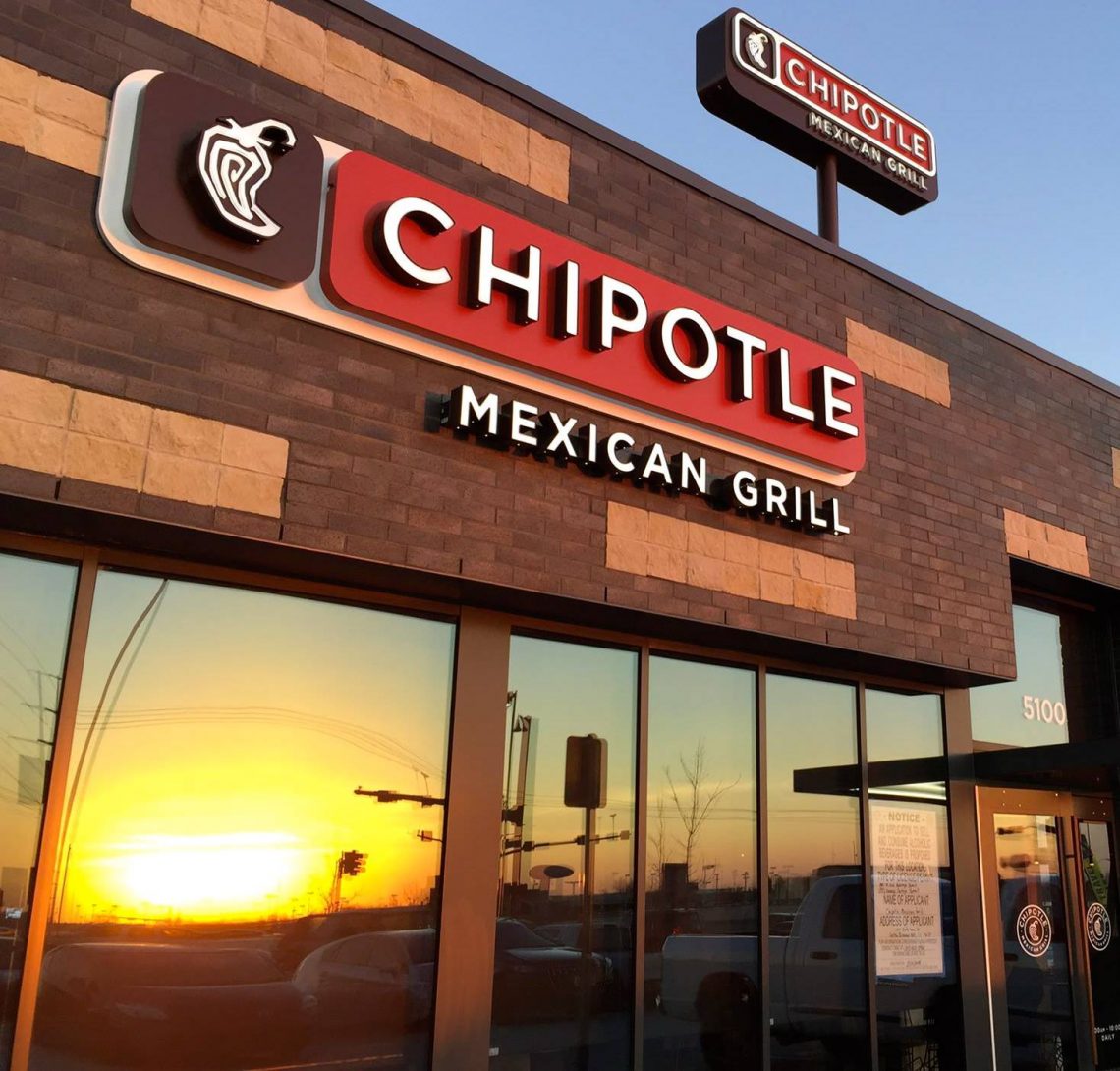
Chipotle may not be nearly as famous in China as Shake Shack, but on the global restaurant stage, it’s one of the most impossible brands to ignore—a true “hidden champion.”
By footprint, it has just over 4,000 stores. By market value, it has often outpaced Yum! Brands for years, ranking among the industry’s elite—behind only giants like McDonald’s, Starbucks, and Compass Group.
How did it earn that position?
While much of the industry leaned on frozen inputs and microwave-friendly workflows, Chipotle bet obsessively on fresh-made food. No microwaves. No freezers. Just about 53 core ingredients powering an entire menu. While competitors expanded through franchising, it doubled down on company-owned stores, scaling steadily and generating billions in annual revenue.
That stubborn commitment to “fresh, made-to-order” won the hearts—and spending power—of the middle class. But it also exposed the company to a harsh reality: fresh operations at scale can carry painful food-safety consequences.
Chipotle later engineered a remarkable comeback through a deep digital transformation, pushing efficiency to new heights. Yet in a colder macroeconomic climate, a different problem emerged—portion inconsistency. Under the scrutiny of customers’ cameras and social media, trust took a hit, and the stock fell nearly 40% this year.
Chipotle’s journey isn’t just a modern story of American fast-casual rise and turbulence. It’s also a mirror for restaurant leaders everywhere, including China—reflecting the ultimate tension between scale and quality.
1) A “No-Pre-Made Food” Growth Engine: $3B+ Annual Revenue and a Global Top Four Player
In 1993, in Denver, Colorado, a young man rented a cramped space converted from an ice cream shop and started making burritos.
His name was Steve Ells. Trained in classic French cooking and shaped by a stint at the high-end Stars restaurant in San Francisco, Ells originally dreamed of opening an elegant French dining room with white tablecloths and expensive wine.
Chipotle—the burrito shop with a name many Americans struggled to pronounce—was never meant to be the destination. In Ells’ first business plan, it was simply a cash-flow project to fund the “real dream.”
Then he stumbled into something bigger: the emerging continent of fast-casual dining.
1. Resonating With a Mass Audience—and a Growing Backlash Against Frozen Food
Mexican food already had a deep and natural foothold in the American diet.
A large Mexican immigrant population gave Ells an immediate customer base. More importantly, the foundational structure of Mexican cuisine—beans, grains, grilled meats—carried a “less processed, more natural” identity that aligned perfectly with middle-class preferences for healthier eating.
At the time, fast food was dominated by “mediocrity.” Competitive advantage had been reduced to two words: cheap and consistent.
To achieve extreme efficiency, major chains turned kitchens into assembly lines: frozen patties, vacuum-sealed sauces, additive-heavy pre-made components—this was the operating system of the industry.
Meanwhile, America’s millennials were approaching a tipping point in skepticism about processed foods—an emotional wave that strongly resembles today’s Chinese consumer anxiety around “pre-made meals.”
2. Fresh-Made Food + Minimal SKU: Winning With ~53 Core Ingredients
Ells did something unusual: he brought fine-dining “ingredient transparency” into a roughly $10 meal.
He pushed a “Food with Integrity” message, banned microwaves and freezers in stores, and committed to choices like cage-free chicken and pork raised without antibiotics.
To maintain quality without destroying margins, Chipotle embraced a ruthless minimalist logic. The menu focused on a small set of formats—burritos, bowls, and a few close variants.
To this day, the core ingredient list stays around 53 items. That extreme simplicity builds bargaining power in the supply chain and reduces waste.
The ingredients are standardized—but the combinations are endless.
Customers move along the glass counter and watch the process: steak on the grill, avocados being mashed, toppings assembled in real time. They choose the base, the protein, and a near-infinite mix of sides and sauces.
That “what you see is what you get” authenticity restored trust in a post-industrial food era—and helped Chipotle build a massive, loyal fan base around a powerful promise: fast-food speed with better quality and a healthier feel.
3. Growing With McDonald’s Money—While Refusing Breakfast and Franchising
In 1998, McDonald’s invested in Chipotle and eventually owned about 90% of the company.
McDonald’s leadership offered highly tempting playbooks: add drive-thru lanes to increase throughput, launch breakfast to expand dayparts, introduce franchising to unlock exponential store growth.
Ells resisted with near-irrational stubbornness.
He ignored most expert recommendations. And when McDonald’s pushed through eight franchised locations, Chipotle reportedly paid heavily to buy them back and restore the company-owned model.
“McDonald’s was the wealthy uncle, and Chipotle was the headstrong nephew,” one executive famously summarized. “We took the money with gratitude—but we were stubborn and strong-willed enough to use it exactly the way we wanted.”
With McDonald’s capital, Chipotle expanded quickly. In 2006, it went public, and McDonald’s sold its entire stake.
McDonald’s made a huge return at the time—but in hindsight, it arguably sold off a beast that could one day challenge it.
2) The Food-Safety Shock—and a Rebuild Through Values and Digital Reinvention
In 2015, Steve Ells’ “Food with Integrity” empire ran into a devastating curse.
From Boston to Seattle, outbreaks of E. coli, salmonella, and norovirus pushed the brand into crisis and shattered consumer trust.
The disaster exposed the model’s core vulnerability: at the scale of thousands of stores, fresh on-site prep creates thousands of risk points—each one harder to control.
1. Moving Some Prep Upstream—Without Abandoning the Core Promise
In 2018, Chipotle’s board brought in Taco Bell veteran Brian Niccol as CEO.
Many observers feared he would “fast-food-ify” Chipotle. Instead, Niccol showed strategic restraint. He insisted the brand’s core value—excellent cooking and strong service—could not be compromised.
Chipotle did not pivot to frozen food. It strengthened food-safety systems, upgraded preparation and storage protocols, and centralized the washing and portioning of higher-risk ingredients like tomatoes and lettuce in commissary-style facilities.
In parallel, it launched the “For Real” campaign, transparently presenting ingredient details, encouraging team members to think like chefs, asking customers for feedback, and taking that feedback seriously.
2. Separating Dine-In and Delivery Lines to End “Order Conflict”
Niccol also tackled a quieter operational illness: order conflict.
In the old model, sudden spikes in online orders often pulled employees away from the physical line, leaving in-store customers frustrated and the dine-in experience collapsing.
The transparent assembly line was Chipotle’s soul—but its physical capacity had a ceiling.
Niccol’s answer was bold: split the kitchen.
Chipotle carved out a second, closed production line run by a dedicated team—designed specifically for digital orders. No dine-in customers. No shared flow. Just a separate engine for app and online demand.
This “dual-track” model prevented interference between the in-store line and the digital line—and unlocked a step-change in throughput.
3. Loyalty, Digital Kitchens, and the Evolution Into a Restaurant-Tech Company
Niccol upgraded the mobile app to make ordering frictionless and built a loyalty program with more than 40 million active members, enabling deeper personalization and smarter demand shaping.
As digital orders crossed critical mass, Chipotle developed even more extreme store formats: “digital kitchens” with no dine-in seating at all.
Many locations also added “Chipotlanes”—dedicated pickup lanes for digital orders. Customers order ahead, pull in, and leave in seconds.
At that point, Chipotle no longer looked like just a fast-casual chain. It had become a data-driven restaurant technology company.
3) The New Wall: When Peak Efficiency Meets a Thinner Wallet
Without Ells’ obsessive commitment to fresh food and company-owned growth, Chipotle might have ended up as just another Subway-style scale story.
Without Niccol’s digital surgery, it might have suffocated under food-safety pressure and the throughput limits of a single assembly line.
At its peak, Chipotle’s market value once reached around $100 billion. Compared to its IPO, it had grown more than 70x—an efficiency machine that looked flawless in the rearview mirror.
In 2024, Chipotle delivered $11.314 billion in revenue, up 14.61% year-over-year. Net income reached $1.534 billion, up 24.85%. Comparable sales growth and steady new store openings supported its long-term story.
And yet, this “flawless” machine ran into an invisible wall: consumers’ wallets—and the cameras in their hands.
1. Portion Backlash: Cameras Turned Into a Trust Stress Test
In May 2024, a TikTok complaint by top influencer Keith Lee about shrinking portions landed like a boulder in a quiet lake.
It sparked a rare social media “uprising.” Customers began filming employees at the line, using direct surveillance as a form of negotiation—trying to secure what they believed should be a “generous” burrito.
Chipotle later acknowledged that around 10% of stores showed abnormal portion inconsistency and invested hundreds of millions of dollars into “portion recovery.”
Financially, this was brutal.
With labor costs surging in key markets like California and ingredient prices (including avocado) fluctuating amid tariff and supply pressures, “more food for the same price” squeezed restaurant margins at exactly the wrong time.
2. Middle-Class “Trading Down” Breaks the Growth Myth
In 2025, weakening U.S. consumer confidence removed the last layer of protection.
Once pricing crosses a psychological threshold, a “middle-class staple” is forced into a “light luxury” evaluation.
Chipotle’s historic moat—customers earning roughly $75,000 to $100,000 annually—has been under pressure. This segment contributes about 40% of Chipotle’s sales, and it is now “trading down” at scale.
Current CEO Scott Boatwright put it bluntly: “Our competitor has become the home kitchen.”
Financial reports show that across the first three quarters of 2025, Chipotle generated $8.942 billion in revenue, up 5.59% year-over-year—but much of that growth came from opening new restaurants.
Same-store sales for the first three quarters were -0.4%, -4%, and 0.3%. While the third quarter returned to growth, it was driven mainly by higher average ticket size. Transaction volume continued to decline.
By 2025, Chipotle’s stock had fallen nearly 40% from the start of the year—bringing the brand to a crossroads.
Closing Thoughts
Chipotle’s 32-year journey reads like a mirror of restaurant economics across cycles. Many of the challenges it faced may look uncomfortably familiar to Chinese operators today—or soon.
Steve Ells’ almost “pathological” commitment to freshness,直营-style control (company-owned operations), and non-industrial processes wasn’t just romance. It was sophisticated differentiation. It helped Chipotle escape the traditional fast-food swamp of low-price efficiency wars and create a new territory where middle-class identity and values could live.
Brian Niccol’s digital reinvention proved another truth: ideals attract customers, but systems protect profitability. By building a second production line and redesigning the kitchen around data, he rescued the brand from the ruins of a food-safety crisis and rebuilt it into a high-speed profit engine.
Today’s backlash is a warning with sharp edges: when brand logic shifts from “creating value” toward “extracting efficiency,” collapse quietly begins. Once consumers feel they’re being calculated against, they vote with their feet—especially when wallets get thinner.
Like every restaurant company, Chipotle never escapes the next wave. From its fierce dedication to fresh-made beginnings, to the redemption from food-safety crisis, to the peak of digital efficiency, and now the pain of consumer trading down—each step is an adjustment to economic seasons.
In the impossible triangle of scale, efficiency, and freshness, every myth must eventually face two judges: the customer’s wallet, and the customer’s appetite. Survival belongs to the brands that keep evolving.