I’m a little afraid the firecrackers on New Year’s Eve will be too loud, and I’m even more afraid the blessings on the first day will come pouring in nonstop. So, with almost a full month still to go before the New Year, Neck Bro is here early to wish all our dear readers a happy one in advance.
May the coming year bring you top scores in your studies, solid pay raises at work, and plenty of dumplings—dumplings and more dumplings.
While the editorial team is busy poking around and counting down to the holidays, many automakers have already unveiled their sales targets for 2026.
Comparing last year’s goals with what they actually delivered, some players remain as aggressive as ever—full throttle, no hesitation. Others have chosen a more measured approach, aiming simply to stay steady. And then there are a few brands making decisions so unexpected that they genuinely catch people off guard.
It’s all pretty fascinating, so Neck Bro is taking everyone through a quick review. You can also get a sense of what your favorite—or future—brand might look like in the year ahead.
Let’s start with the automaker currently under the spotlight: Xiaomi. Not long ago, during a livestream, Lei Jun shared that Xiaomi Auto’s sales target for 2026 would be a “not too high, not too low” 550,000 vehicles.
Compared with last year’s delivery volume of 410,000 units, this number doesn’t seem outrageous at first glance—just a “modest” 34% increase. But don’t forget, Xiaomi’s original target last year was only 300,000 units, which it exceeded by a massive margin.
That overperformance quickly turned Xiaomi into a runaway hit, but it also put enormous pressure on production capacity—something that usually takes years to scale up for a new automaker.
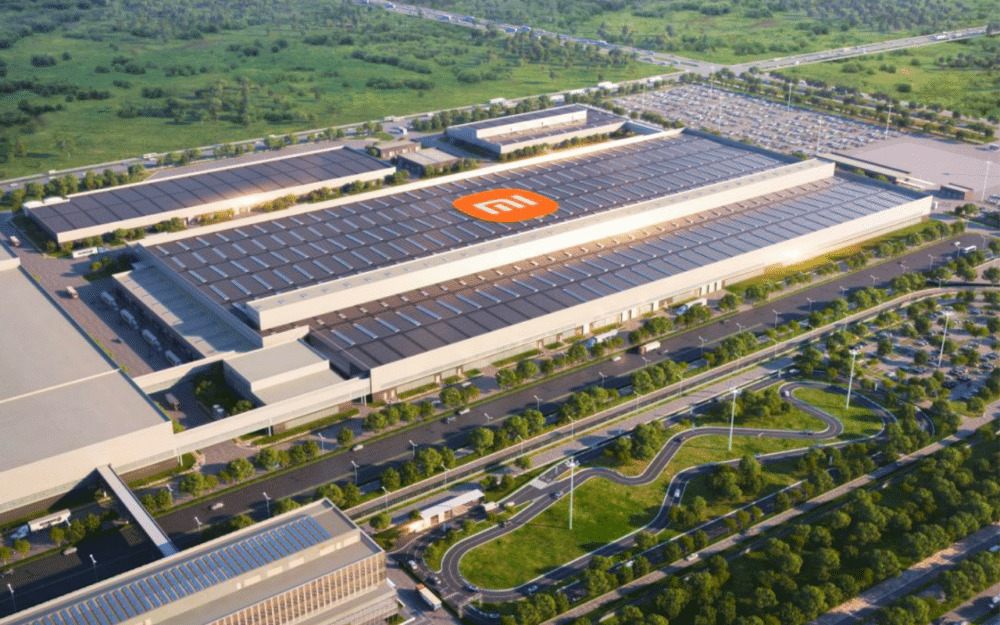
Xiaomi’s first-phase factory in Yizhuang had an annual capacity of just 150,000 units. To keep up with the flood of orders, the company rushed out a second-phase plant mid-year and pushed production line utilization to an astonishing 200%.
Even then, all it managed was to shorten the SU7’s delivery cycle from an initial 40 weeks down to around 10–20 weeks. By year-end, certain configurations of the YU7 still required a wait of three to four months.
From a customer’s perspective, the experience was far from ideal.
That’s why, even though Xiaomi’s Yizhuang Phase III factory and its Wuhan plant will both come online this year—bringing total planned annual capacity to over 2 million units—and multiple new models are set to launch, including refreshed SU7 variants, a long-wheelbase SU7, and the Kunlun SUV, the sales target has only increased by a little over 100,000 units compared to last year.
The message is clear: the priority is faster deliveries, getting cars into customers’ hands sooner, and winning back buyers who may have turned to competitors due to long wait times.
Compared with Xiaomi’s relatively cautious stance, BYD’s target for next year can be summed up in one word: all-out attack. The battlefield, however, isn’t domestic—it’s overseas.
Late last year, BYD executives told analysts from Goldman Sachs and Citi that the company’s overseas sales target for 2026 is 1.5 to 1.6 million units. That’s a more than 50% jump from just over 1 million units in 2025.
What many people may not realize is that while BYD remained China’s top seller last year, its domestic sales actually declined. In 2024, BYD sold 3.83 million vehicles in China, but that number fell to 3.5 million last year.
Part of this was due to competitors like Geely joining the price war and siphoning off customers with models such as Xingyuan. Another factor is simple math: annual sales nearing 4 million units already account for roughly one-tenth of China’s total passenger car market—essentially the ceiling for a single automaker without resorting to even more brutal price cuts.
Overseas, however, BYD’s growth has been nothing short of explosive. Last year, it delivered over 1 million vehicles abroad, more than double the 433,000 units from the previous year.
Its footprint now spans 119 countries, and in traditional European markets like the UK, BYD has even outsold Tesla.
Clearly, consumers around the world are just as drawn to affordable, capable vehicles as those at home.
This year, the barriers facing Chinese automakers overseas are also easing. Europe’s long-discussed anti-dumping tariffs ultimately failed to materialize, replaced instead by pricing rules that prevent cars from being sold too cheaply—significantly lowering the hurdle for Chinese brands entering the market.
Meanwhile, during a recent visit to China, Canada’s prime minister announced plans to import 49,000 Chinese EVs this year at a low tariff rate of just 6.1%.
Given Canada’s close alignment with the US, this is effectively a signal that the door to the American market is beginning to open.
American consumers may finally get their hands on the affordable, intelligent Chinese cars they’ve heard so much about—and honestly, good for them.
With both Europe and North America showing green lights, it’s only logical for a global exporter like BYD to set ambitious goals.
Another brand targeting a 50% growth rate—surprisingly enough—is NIO, once notorious for being an “investment black hole.”
At a briefing held about two weeks ago, William Li outlined NIO’s plans for the year. While no specific sales figure was disclosed, he stated that growth of 40–50% annually is the goal going forward. Last year, NIO’s three brands combined delivered 326,000 vehicles—making this one of the fastest growth trajectories among new-energy startups.
There won’t be any earth-shattering new models, but existing vehicles like the ET5 and ES6 will migrate to the same third-generation platform used by the ES8 and ET9. And as for full-year profitability—NIO is aiming squarely for it.
This confidence stems from what may be the company’s smoothest period in years.
Since the launch of the third-generation ES8, momentum has been strong. Thanks to an aggressively competitive price, NIO delivered 50,000 units in just 120 days and surpassed the milestone of 1 million total production vehicles—effectively turning a ¥400,000-class model into a high-volume seller.
According to Li, the third-generation ES8 is also the most profitable model in the NIO lineup, with a gross margin of around 20%. That’s higher than both the previous ES8 and second-generation models like the ET5 and ES6. In other words, NIO is now selling more and earning more—a virtuous cycle.
As for exactly how NIO boosted the ES8’s margins, that’s a long story best saved for another day. But once all core models transition to the third-generation platform, there’s a strong chance we’ll see broad price cuts this year, potentially driving sales even higher.
NIO is also stepping up its overseas push, planning to enter more than 40 countries. Beyond the main brand, Firefly is set to launch in Singapore shortly after the Lunar New Year, signaling a full-scale domestic and international offensive.
Viewed in this light, a 50% growth target doesn’t seem entirely unreasonable.
That said, NIO’s biggest unanswered question isn’t sales growth—it’s when we’ll finally see those Q4 financial results. Li, we’re waiting.
After covering representative domestic brands, let’s briefly look at foreign automakers.
Overall, last year was arguably the toughest in China’s history for traditional luxury brands. Porsche’s sales in China plunged 26%, dealerships shut down one after another, and there were even reports of overnight store closures that left customers unable to take delivery after paying.
Looking ahead, Porsche China CEO Alexander Pollich avoided specific targets, stating only that the decline was an expected result of competition and that regaining the Chinese market is a long-term, highly challenging goal.
BMW and Mercedes-Benz have fared little better. Mercedes sold just over 550,000 vehicles in China last year, down nearly 20% year-on-year. BMW did slightly better at around 620,000 units, but still fell 12.5% compared to the previous year.
According to reports from 36Kr, both brands have recently provided preliminary 2026 demand forecasts to domestic suppliers. Insiders say projected annual production for locally made models at both companies is under 500,000 units—essentially reverting to their China sales levels from a decade ago.
And this is after BMW launched sweeping price cuts on over 30 models starting January 1.
All we can say is: thanks to domestic brands, consumers can now buy more affordable BBA cars.
Finally, there’s one more brand that arguably owes Chinese automakers a thank-you: the joint-venture giant Toyota.
After adopting underlying technologies and vehicle architectures inspired by Chinese new-energy players, Toyota saw a modest rebound last year, selling over 1.78 million vehicles in China—an estimated year-on-year increase of 0.23%.
Between 2026 and 2027, Toyota plans to launch more than five China-exclusive models based on local technology, aiming to return to a so-called “growth track.” The outlook looks bright.
One can’t help but wonder what Nissan, still down 6.3%, and Honda, which saw a steep 24.28% drop, are thinking as they watch their old ally turn things around.
That wraps up this quick year-end review and outlook for several representative automakers. In a Chinese market where competition is intensifying and the overall pie is no longer expanding rapidly, leading players will be fighting on two fronts: stimulating domestic demand to outpace rivals, and pushing overseas to capture new growth.
With purchase tax incentives tightening this year, buyers may actually be heading into one of the biggest discount waves the new-energy vehicle market has ever seen.
This year could well be the easiest in recent memory to buy a new car.
So, to all the wait-and-see crowd—are you still waiting?