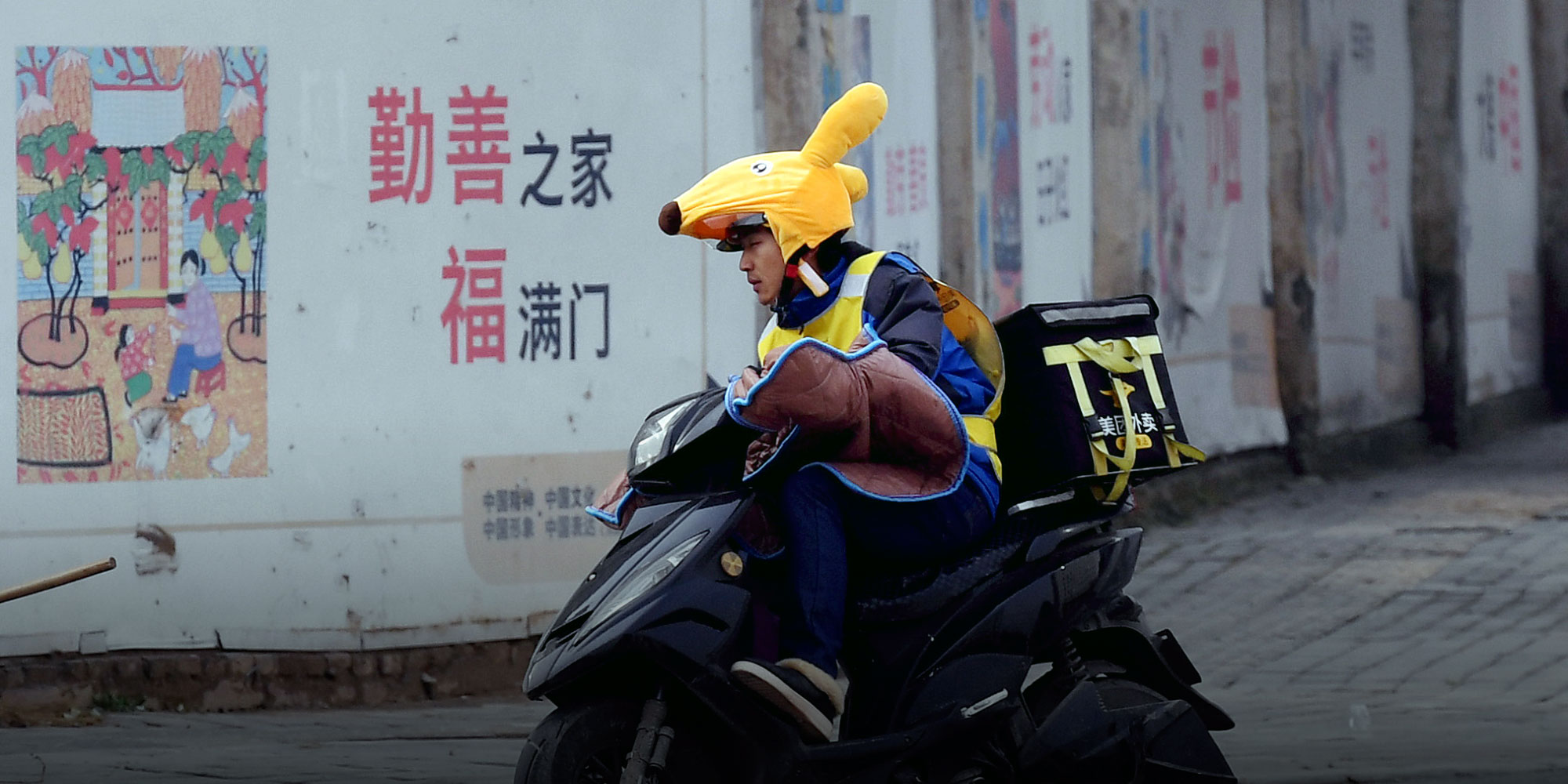
Endless calls urging faster deliveries, mixed with harsh insults. Malicious reviews that cost riders platform penalties. Threats of complaints used to coerce riders into unreasonable demands. For too long, delivery workers have been the silent targets of unfair treatment — but not anymore.
Recently, Meituan launched a pilot program in seven cities including Jinjiang and Shaoxing, introducing a new rider feedback and user-blocking system. The feature allows riders to leave anonymous evaluations of customers within 48 hours after completing an order. If a rider encounters verbal abuse, threats, or malicious reviews, they can now choose to “no longer deliver to this customer,” effectively blocking that user.
This move marks the official arrival of a “two-way review” era in the food delivery industry. Ensuring fairness and transparency in this system — and preventing riders from being trapped by algorithms once again — will be key to shaping more balanced and humane service standards.
A New Way for Riders to Be Heard
Currently, each rider can block up to two users at a time, with each block lasting 365 days before automatically expiring. Though limited in scope, riders see this as an important step toward having a voice.
According to Meituan rider Li Wei (pseudonym) in Jinjiang, blocking a user is not a casual action. “We have to submit proof of verbal abuse or threats. The platform reviews it before approving the block,” he told IT Times.
“This new two-way review system isn’t about giving riders the right to ‘fight back’,” explained Dr. Lao Guoling, Distinguished Research Fellow at Shanghai University of Finance and Economics and Director of the E-Commerce Research Center. “In the past, platforms focused excessively on user satisfaction — whether through harsh delivery penalties or refund-only policies — under the belief that ‘whoever wins the user wins the market.’ Now, by prioritizing the experience of service providers like riders, platforms are improving operational efficiency while also responding to regulatory and public expectations. It’s about restoring balance to a long-tilted system.”
But riders and customers aren’t the only stakeholders. Merchants also play a crucial role. Meituan’s earlier “Chucanbao” system allowed both users and riders to track meal preparation in real time. Yet, as competition in the food delivery market intensified and some restaurants resisted using pre-made meals, riders noticed longer wait times — escalating tension between merchants and riders.
The delays aren’t always intentional; heavy order volumes can cause real pressure. But some merchants deliberately delay meal preparation to maximize efficiency or profit. Because users can’t see what happens behind the scenes, riders often bear the blame for late deliveries, facing complaints and penalties.
A Meituan survey of 60,000 riders found that 90% cited “excessive meal preparation times” as a major obstacle during deliveries, and 70% said most delayed orders were caused by waiting for food.
“When a restaurant takes too long, one delay affects all my subsequent deliveries,” Li Wei said. “Customers think it’s my fault, give a bad review, and I get fined. It’s frustrating. If only we could also block certain merchants.”
Dr. Lao agrees that a “merchant-blocking” feature deserves consideration. Beyond empowering riders, she suggests splitting responsibility into distinct stages — one for meal preparation with defined time standards, and another for delivery. This would reduce misplaced blame and encourage restaurants to streamline their operations.
Breaking Free from the Algorithm
The 2020 viral article “Delivery Riders, Trapped in the System” exposed how algorithmic pressure forced riders to race against impossible deadlines, with no way to say “no.”
Now, Meituan’s new system granting riders the right to evaluate and block users is a step toward restoring fairness. Still, the challenge lies in ensuring the mechanism remains transparent, just, and effective in freeing riders from the system’s constraints.
According to lawyer Huang Qi from Shanghai Xiaocheng Law Firm, riders and users are equal civil parties. Giving riders equivalent rights aligns with civil law principles and fosters a healthier business environment.
Some users worry the change could lead to “soft rejections” — riders avoiding certain locations like walk-up apartments or gated communities. But Huang says those concerns are overblown. “The blocking limit is strict, and riders rely on income, so they won’t block paying customers without cause. Blocking usually happens only after serious verbal or abusive incidents. It’s not a refusal of service — just the right to choose. Other riders can still take the order.” He even suggests expanding this two-way model to ride-hailing platforms.
Huang further recommends platforms build a dual “verification and remedy” system — distinguishing genuine feedback from malicious reviews, offering clear appeal channels, and assigning staff to ensure timely resolutions. “Malicious reviews are rare,” he emphasized, “and shouldn’t overshadow the positive impact of two-way evaluation.”
Caring for Riders: The New Competitive Edge
As China’s delivery industry heats up into a “three-kingdoms battle,” rider welfare has become the new frontier of competition.
Soon after Meituan’s pilot launch, Ele.me announced reforms to its penalty policy, testing a new service-score system that replaces late-delivery fines with point deductions. The trial began in cities including Nantong, Changzhou, Jieyang, and Jingdezhen, and is set to expand nationwide by October.
JD.com took the lead in providing full social insurance for its 150,000 full-time riders, covering all costs itself. Meanwhile, Taobao Flash Sales and Ele.me followed suit, pledging pension and medical insurance subsidies for couriers — up to 100% coverage.
Many riders interviewed by IT Times said they’ve felt a clear improvement in how platforms treat them — with doubled bonuses and peak-hour earnings reaching 500–1,000 yuan per day in some regions.
On a deeper level, this “rider care race” reflects not only corporate competition but also compliance with new government guidance. On September 24, China’s State Administration for Market Regulation released draft Basic Requirements for Food Delivery Platform Services, emphasizing the need for fair pay and proper labor protections for riders.
In this environment, the platforms that take real action will win long-term advantage. As Dr. Lao summarized, “Whoever wins the riders wins delivery power — and whoever secures delivery power wins the users.” When platforms treat riders not as tools of the system but as dignified workers, they don’t just boost efficiency — they create a sustainable, balanced ecosystem linking platforms, riders, merchants, and customers in mutual respect.