From Big-Money Hires at OpenAI and Google to a Sudden Hiring Freeze: Inside Meta MSL’s Core Team — 50% Chinese Talent and 75% PhDs Leading the Way
Meta’s High-Stakes AI Gamble: From Record-Breaking Talent Poaching to a Sudden Hiring FreezeIn mid-A...
Meta’s High-Stakes AI Gamble: From Record-Breaking Talent Poaching to a Sudden Hiring Freeze
In mid-August 2025, The Wall Street Journal dropped a bombshell: Meta, fresh off an aggressive hiring spree for top AI talent, abruptly hit pause on recruitment for its artificial intelligence division. Almost immediately, reports of high-profile resignations began to surface.
Meta’s recent months have been a whirlwind — billion-dollar talent acquisitions, repeated restructuring of its elite superintelligence team, a shift toward closed-source models, departures of key members, mounting internal management issues, and a public falling-out with Scale AI. A strategy meant to close the gap with rivals like OpenAI and Google is now threatening to backfire.
The $15 Billion Deal That Sparked It All
The saga traces back to June, when CEO Mark Zuckerberg made a bold move: acquiring a 49% non-voting stake in Scale AI for nearly $15 billion, securing not just data but key talent for Meta’s AI race. Scale AI’s founder, Alexandr Wang, parachuted into Meta to lead the newly minted Meta Superintelligence Labs (MSL), joining forces with researchers recruited from OpenAI, DeepMind, Anthropic, and other top-tier AI labs.
Zuckerberg personally reached out — via email, WhatsApp, and more — offering nine-figure signing bonuses, with some total compensation packages reaching $100 million. This unprecedented “spend big to win big” strategy quickly made Meta one of the most aggressive players in the global AI talent war.
But just as the momentum built, the brakes slammed. In August, Meta froze AI hiring, even banning internal transfers into the division. A spokesperson called it “basic organizational planning,” framed as part of stabilizing post-hiring and aligning with annual budgets — but it was clearly a strategic reset rather than a mere pause.
The Fallout: High Hopes, High Turnover
Despite the official spin, the freeze amplified perceptions of a “high start, low follow-through.” Within weeks, MSL’s talent frenzy turned into a slow bleed. According to Financial Express, researcher Rishabh Agarwal left after only five months; at least three others returned to OpenAI. Reports also indicate nine departures — from PyTorch veterans to Silicon Valley prodigies — within just two months of MSL’s creation.
Some seasoned employees felt sidelined by the lavish packages offered to newcomers, sparking resignations. “Attrition of this scale is normal,” a Meta spokesperson insisted, but internal sentiment told a different story.
Alexandr Wang’s Leadership: Bold Moves, Divisive Reactions
At only 28, Alexandr Wang — the self-made billionaire behind Scale AI — commands both admiration and skepticism. His rapid rise delivering top-tier data labeling for AI firms is undeniable, but critics question his lack of deep AI research experience.
Wang’s style is unapologetically direct. In an internal memo, he declared that even AI luminary Yann LeCun and industry veteran Nat Friedman would report directly to him. Control over FAIR’s publication rights also shifted into his hands.
Some saw this as overreach. “You shouldn’t lead a field you don’t fully understand,” one critic noted, while others labeled it “overbranding without the technical foundation.”
Yet Zuckerberg stands firmly behind him, calling Wang “one of the most remarkable founders of his generation” and crediting him with a keen grasp of superintelligence’s historic significance. Wang’s restructuring divided MSL into four specialized groups, each tackling critical AI domains from research to infrastructure.
A Talent Matrix Built on Industry Heavyweights
Wang is far from Meta’s only star recruit. By July 19, MSL had 44 employees — 40% from OpenAI, 20% from DeepMind, 15% from Scale AI — with projected annual salaries ranging from $10 million to $100 million. Half the team is of Chinese origin, 75% hold PhDs, and most are first-generation immigrants.
Notable figures include:
- Nat Friedman — Former GitHub CEO and open-source leader, now co-leading MSL’s AI product vision alongside Wang.
- Daniel Gross — Ex-Y Combinator partner and AI investor, heading AI products.
- Yann LeCun — Turing Award winner and Meta’s Chief AI Scientist, still leading FAIR.
- Joel Pobar — Veteran Meta engineer, now VP of Compilers & Infra.
- Mat Velloso — Former Microsoft and Google DeepMind executive, VP of Developer Platform Products.
The roster also boasts ten elite hires from OpenAI, Anthropic, and Google DeepMind, including creators of GPT-4o, Gemini, and foundational LLM technologies.
The Trigger: Restructuring Meets Cost Pressure
Behind the freeze is a blend of organizational overhaul and financial caution. Analysts from Morgan Stanley warned in August that Meta’s lavish stock-based compensation could dilute shareholder returns if innovation doesn’t follow. An MIT report noting that 95% of generative AI projects fail to monetize quickly only deepened market skepticism.
Meta’s AI division is now split into four core teams:
- TBD Lab — Led by Wang, focused on superintelligence research.
- AI Products & Applied Research — Led by Friedman, turning research into consumer and enterprise products.
- MSL Infra — Led by Aparna Ramani, building the infrastructure to power AI at scale.
- FAIR — Led by LeCun, continuing long-horizon foundational research.
The restructure aims to integrate Meta’s expensive new hires into a coherent, high-output AI machine — shifting from expansion to optimization.
The Other Side of the Story: Culture Clashes and Resource Wars
Despite the hiring freeze, Meta still selectively recruits for critical roles. Former Apple AI executive Frank Chu is set to join MSL Infra with a special exemption from the freeze.
But under the surface, tensions simmer. Within two months, nine MSL members resigned, including former Scale AI exec Ruben Mayer and ex-OpenAI researcher Avi Verma, who quit before even starting. Senior Meta veterans — like Chaya Nayak and Loredana Crisan — also exited, citing resource imbalances that favored the new recruits.
Cultural mismatches have emerged, with newcomers frustrated by Meta’s bureaucracy and veterans resentful over broken promises of compute access. “Things feel too dynamic,” said former AI scientist Chi-Hao Wu. “My manager changed several times in just months.”
Quality concerns over Scale AI’s data have further fueled discontent, with insiders criticizing its crowdsource-heavy approach as outdated for today’s complex models.
A Pivotal Moment for Meta’s AI Ambitions
Amid technical setbacks and user engagement struggles — Meta’s AI assistant reportedly reaches only 10% of monthly active users — MSL leadership has even floated using Google Gemini or OpenAI models as stopgaps.
For Zuckerberg, the billion-dollar question is clear: can this handpicked elite team restore order, deliver breakthrough AI, and place Meta at the forefront of the superintelligence race? Or will the company’s most expensive talent bet yet prove a cautionary tale in Silicon Valley’s AI gold rush?
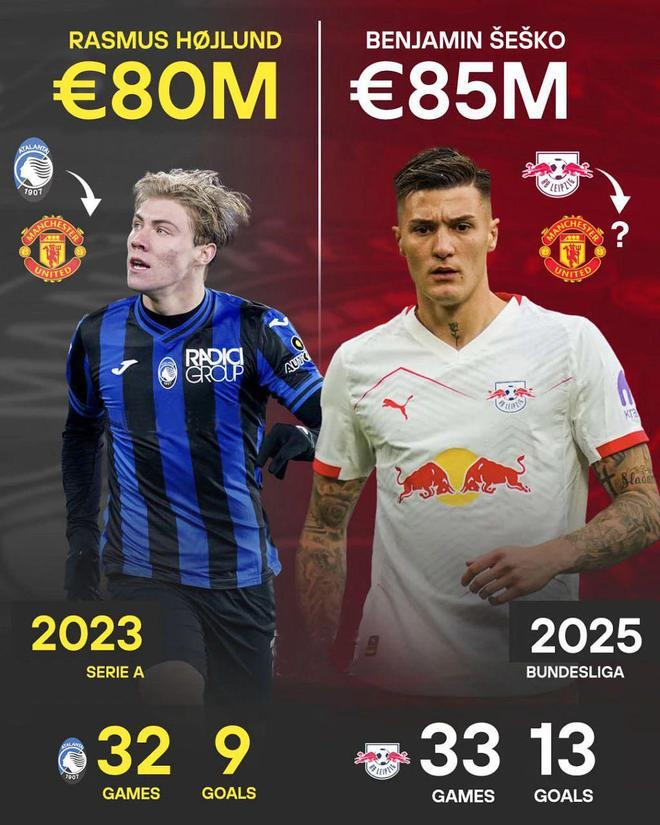
[Exit Incoming?] Højlund Considers Leaving Manchester United as World Cup Pressure Mounts – Rejects Leipzig Swap Deal
Once seen as the future of Manchester United’s frontline, Rasmus Højlund now faces a major career cr...

Famous Actress Bai Lu Drastically Slims Down to 43kg Due to Illness — “Too Weak and Desperate to Eat Anything”
On October 10, actress Bai Lu revealed during the wrap-up ceremony of her new drama “Mo Li” that she...
293 Banks Exit the Financial Arena in 2025: A Major Reshuffle in China’s Banking Landscape
Saying Goodbye: The Great Reshuffle of China’s Banking Sector In recent years, China’s banking indus...
Walmart, with $5 Trillion in Revenue, Announces New CEO
On November 14, Walmart announced that CEO Doug McMillon will retire on February 1, 2026, and John F...
Apple Implements Rare Layoffs, Cutting Dozens of Positions
CUPERTINO, Nov 25 — Apple is cutting dozens of sales roles and restructuring its business units serv...
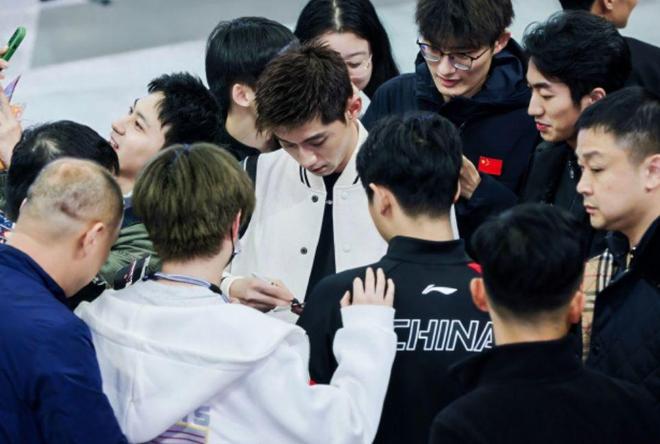
Zhang Jike: “I Made Table Tennis Popular! I Haven’t Retired—and I Can Still Rank Top 8 in China.”
Recently, Zhang Jike stated during an interview and a livestream that he has never retired and still...
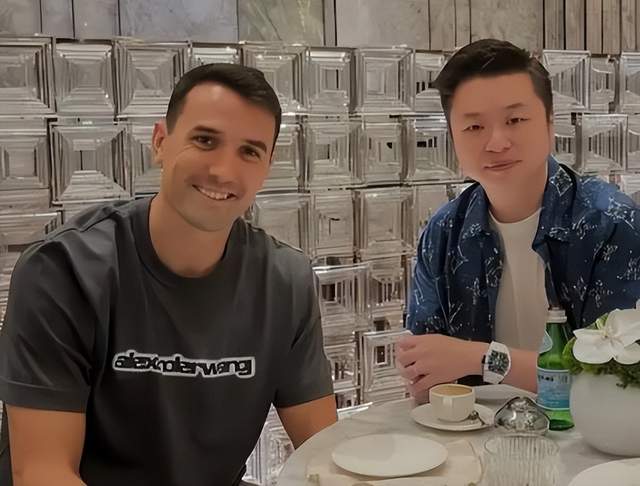
Takeoff! Zhou Dingyang Nears Shenzhen Xinpengcheng – Midfield Quartet Worth €5.7 Million Signals Luxury Lineup
Shenzhen Xinpengcheng is about to soar! Sources reveal that this winter’s top target, Zhou Dingyang,...

Zhou Shen teases Lin Yilun: “I’ve been fooled for so long.”
On New Year’s Eve, Zhou Shen delivered one line—“I’ve been fooled for so long!”—and instantly turned...
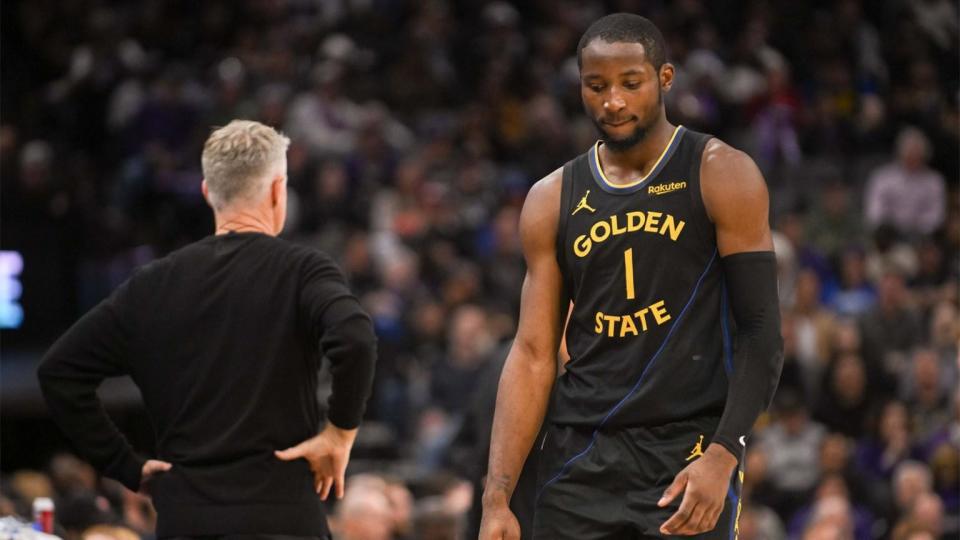
Kerr to Reignite Kuminga! Relationship Fractured, Kings & Mavericks Potential Trade Targets
On January 21, following Jimmy Butler’s season-ending ACL injury, Warriors head coach Steve Kerr con...
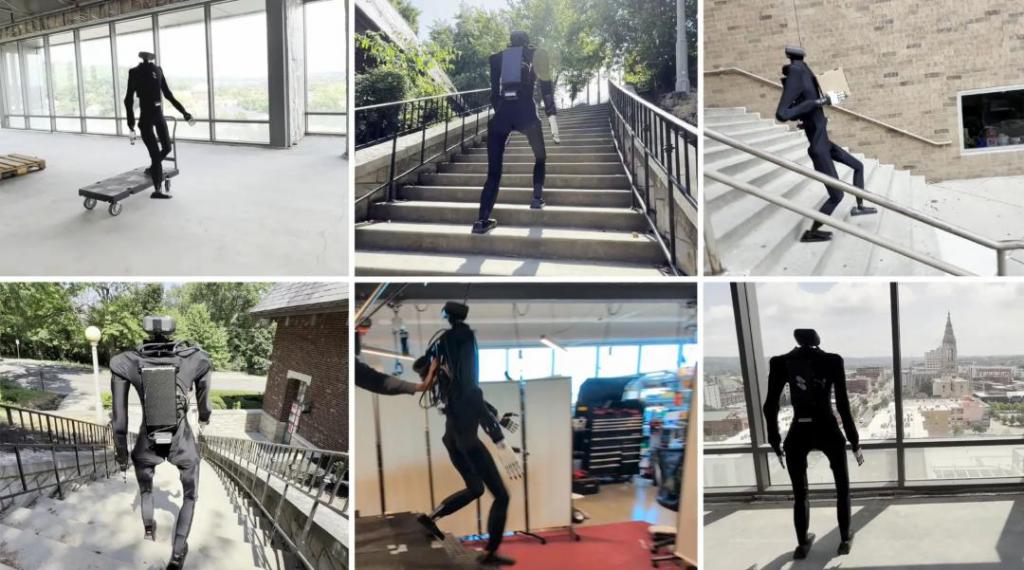
With $1.4B Raised, Skild AI Builds a General Embodied Brain Across Tasks and Hardware
AI typically evolves from specialized systems to general-purpose models, and then into high-value ve...

Late-night explicit WeChat messages exposed: alleged sexual harassment and coercion to wear a “dog bell” spark outrage
Workplace harassment — a recurring yet deeply disturbing issue — has once again shaken the automotiv...

Sexy female singer’s concert slammed as “striptease-like” performance — she fires back: “This is art!”
Recently, Turkish pop star Hadise has found herself at the center of controversy after footage from ...